A Summer Morning Ritual for When Your Body Needs a Gentle Start
The content on this site was created with the help of AI. LOVEOWE LLC participates in the Amazon Services LLC Associates Program and other affiliate programs. As an Amazon Associate, I earn from qualifying purchases. This means I may earn a small commission—at no extra cost to you—when you make a purchase through links on this site. All opinions are my own. Learn more click here. Thank you for your support!

Most summer morning content assumes you wake up energized.
It assumes you bound out of bed toward the golden light and the cold glass of lemon water and the twenty-minute meditation and the journaling and the movement routine — that the morning is a project you attack with resources that replenish overnight and arrive in full by seven a.m. It assumes the body cooperates. It assumes the night before wasn’t a difficult one. It assumes the day ahead isn’t already heavy with the management that chronic illness and pain require before the rest of life even begins.
This morning ritual assumes none of that. It was built for the other kind of summer morning — the one where waking up is itself the first accomplishment, where the quality of light through the curtains is beautiful but your body is not yet sure what it has to offer the day, where the ritual needs to meet you where you are rather than requiring you to meet it somewhere you aren’t. A morning that starts gently and builds slowly and asks nothing of you that you don’t actually have.
A gentle summer morning is not a lesser morning. It is a specific kind of morning that has its own beauty — the slower unfolding, the warmth that arrives without demanding anything in return, the particular quality of tending to yourself before the day makes its first request. This ritual is designed for that morning. For the summer version of it: warm, unhurried, built around what the season offers a body that needs a soft landing into the day.
Before you get up: the two minutes that set everything else
The most important part of a gentle morning ritual happens before you leave the bed. Not because getting up is bad — it isn’t — but because the transition from sleep to upright is where the body is most vulnerable to being rushed, and where the quality of the day’s beginning is most directly shaped by what you choose to do or not do in the first few moments of consciousness.
For anyone with POTS, orthostatic hypotension, or simply the significant morning fatigue that many chronic conditions produce, the transition from horizontal to vertical is genuinely physiological and genuinely worth slowing. But even for people without those specific complications, the first two minutes of consciousness are a threshold — a moment when the nervous system is still in the liminal space between sleep and full waking, when the quality of attention available is soft and receptive rather than alert and directed, and when small acts of intentional gentleness can set a tone for everything that follows.
The first breath with intention. Before opening your eyes, before checking the phone, before assessing the body’s pain levels or cataloguing what the day requires — take one slow, deliberate breath. Inhale through the nose for a count of four. Hold briefly. Exhale through the mouth for a count of six. This is not a breathing exercise requiring sustained practice. It is a single breath that says: I am waking up intentionally. This morning has a quality. I am choosing it.
The body check-in without judgment. Gently bring your attention to the body. Not to assess it for productivity — not to calculate what it will be able to offer the day — but simply to acknowledge it. Where is there sensation? Where is there warmth or coolness or heaviness or ease? What does the body feel like this particular summer morning? This check-in, done without agenda and without judgment, is one of the most significant acts of self-love available in the first moments of the day. It says: I see you. I’m not asking anything of you yet. I am simply noticing what is here.
The electrolyte water before standing. For anyone whose conditions require it — POTS, dysautonomia, any condition involving blood pressure regulation or significant morning fatigue — a glass of electrolyte water or cold water kept on the nightstand and drunk before getting up is not a wellness habit. It is clinical preparation. For everyone else, it is still a meaningful act: the body has been without fluid for hours, and offering it something before asking it to be upright and functional is a form of care that costs very little and returns measurably.
Then: rise slowly. Sit at the edge of the bed for a moment. Let the body catch up to the change in position before asking it to do anything else. This is not laziness. This is the gentlest possible handshake between the sleeping body and the waking day.
The first two minutes of your morning are the ones you have the most control over. Not because everything gets easier after that — but because those two minutes establish the quality you’re bringing to everything that follows.
For the gentlest possible morning start

A vacuum-insulated carafe filled with electrolyte water the night before keeps it cold until morning without needing ice. Drinking before getting up — before the orthostatic challenge of moving from horizontal to vertical — supports blood volume and reduces the cardiovascular cost of the morning transition. This is the most important bedside item for anyone with POTS or morning dysautonomia symptoms, and a genuinely useful morning ritual tool for everyone else.

A box of electrolyte packets kept in the nightstand drawer means the morning electrolyte water is prepared without requiring any significant effort. Mix one packet into the carafe the night before. The morning ritual starts before you even wake up — in the small, preparatory act of the night before that makes the morning gentler.

A salt lamp on the nightstand provides the softest possible light source for waking — warm amber, non-stimulating, completely unlike the blue-spectrum light of a phone screen or overhead light. Turning it on before opening your eyes fully eases the nervous system into light gradually rather than abruptly. For anyone with light sensitivity or migraine history, this is the morning light intervention that costs the least and changes the most.

A weighted eye pillow placed over the eyes during the pre-rising body check-in supports the quality of inward, receptive attention the practice asks for. The gentle pressure activates the parasympathetic nervous system and creates the physiological conditions of calm that the first moments of conscious morning benefit from. Keep it on the nightstand and reach for it before opening your eyes.
The tea ritual: warmth before the world begins
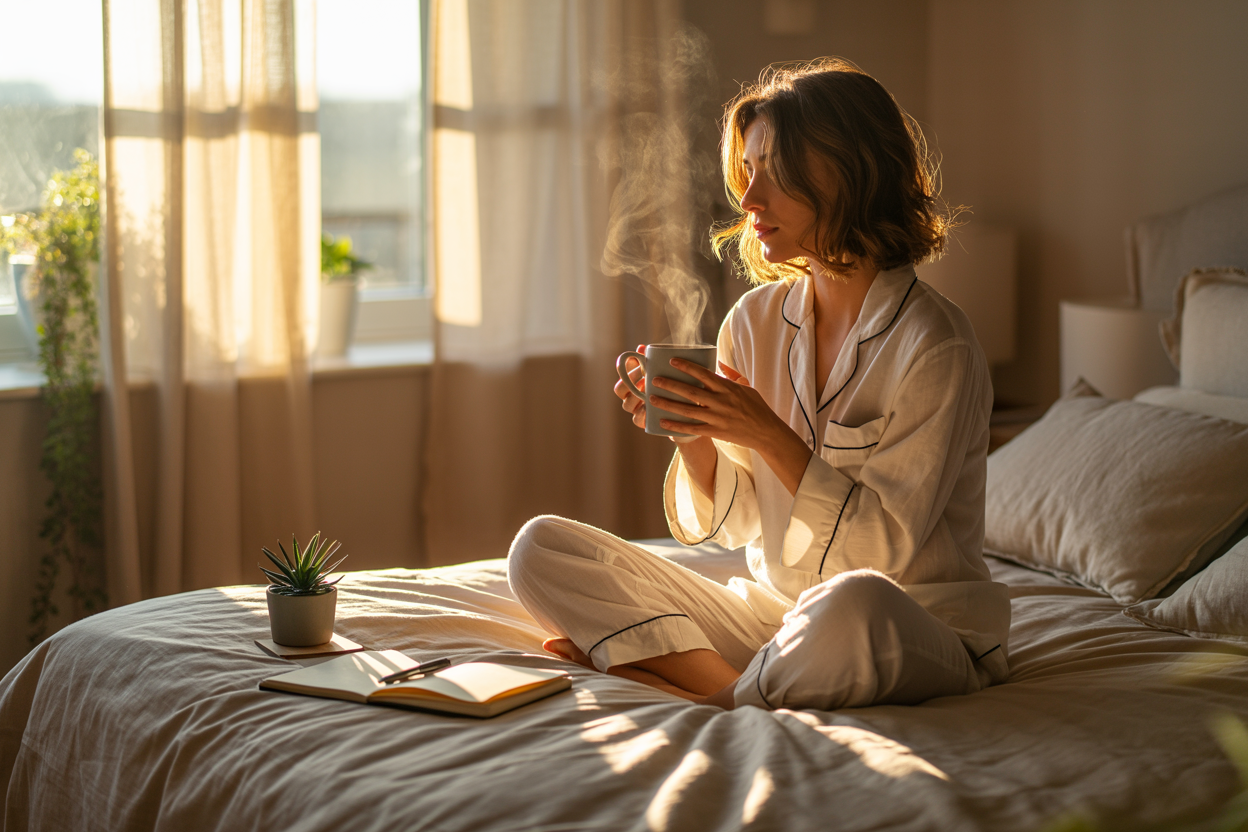
There is something specific that a warm cup of something does in the first part of the morning that nothing cold or caffeinated quite replicates. It is not primarily about the liquid — it is about the ritual of the making. The kettle. The choice of what you’re drinking and what it does for your body. The few minutes of waiting. The holding of the cup with both hands. The first sip taken without looking at a screen. This is the moment in the gentle morning ritual where the day begins to have a quality beyond just existing.
For a summer morning specifically, the tea ritual adapts: lighter botanicals, cooling herbs, something that works with the season rather than against it. The heavy, spiced teas that feel perfect in winter become too much in July. What works in summer is something that hydrates as it nourishes, that supports the body’s relationship with heat and with the particular demands of a warm season.
The summer herbal teas worth making this your ritual:
Peppermint creates a genuine physiological cooling sensation and has anti-inflammatory properties — a mild, practical intervention for heat sensitivity. Made the evening before and refrigerated, it becomes a cold morning infusion for very hot days.
Hibiscus is tart, high in antioxidants and vitamin C, and associated with circulation and cardiovascular support — relevant for anyone with conditions affecting blood pressure. Iced hibiscus made the night before and sweetened lightly with raw honey is one of the most beautiful and functional summer morning drinks available. The deep ruby in a clear glass is its own moment of beauty.
Lemon balm gently reduces anxiety and nervous system overactivation in a way that suits morning use — steadying rather than stimulating, which is exactly what a chronic illness morning tends to need most.
Chamomile with honey is the most universally accessible summer morning tea — anti-inflammatory, gently calming, supportive of digestion. A chamomile with raw honey and a squeeze of lemon is five minutes of pure morning gentleness.
The ritual is not which tea you choose. The ritual is: you make something specifically for yourself, you hold it with both hands, you drink the first cup before looking at anything that requires a response. The morning belongs to you first. The tea is the physical expression of that claim.
For the summer morning tea ritual

A collection covering all four summer morning teas means you choose based on what your body is asking for on any given morning rather than defaulting to the same thing every day. Variety in a herbal tea practice is itself a form of body attunement — noticing what you’re drawn to and letting that inform the choice is a small, consistent form of listening to the body that the gentle morning ritual is designed to cultivate.

The cup you drink your morning tea from matters more than it sounds like it should. A mug that is beautiful, that fits comfortably in both hands, that feels like something chosen with care — changes the quality of the ritual. Not because the tea tastes different, but because the act of holding something beautiful is itself a morning experience worth having. Choose a mug that you actively want to reach for each morning. That wanting is the ritual doing its work.

Prepare hibiscus or peppermint tea the night before in a glass pitcher in the refrigerator for a cold morning infusion that requires zero effort on the day itself. On the hardest summer mornings — when the kitchen feels far and the kettle feels like too much — having a cold, beautiful pitcher of herbal tea already in the refrigerator waiting for you is one of the most practically useful overnight preparations available. This is caring for your morning self the night before.

Raw honey in the morning tea adds its own mild anti-inflammatory and antioxidant properties alongside the sweetness. Used as a small drizzle rather than a full spoonful, it finishes the tea in a way that feels like an indulgence without functioning as one. Keep a small jar on the tea-making counter specifically — not in the pantry, not somewhere that requires searching — so the ritual stays frictionless even on the mornings that have the least available.
The light moment: ten minutes with summer morning sun
Summer mornings have something no other season offers in quite the same way: the quality of early light before the heat arrives. The particular golden quality of the first hour or two of summer sun — warm rather than hot, bright without yet being harsh — is one of the most genuinely therapeutic things the season provides. And for people with chronic illness who spend significant time indoors, deliberately placing themselves in that light — even briefly, even just in the square of sunlight that comes through a window — is both a physiological intervention and an act of simple, uncomplicated pleasure.
Morning light exposure has documented effects on circadian rhythm regulation, cortisol, melatonin, mood, and sleep quality the following night. For anyone with conditions involving circadian disruption — which includes most conditions affecting the autonomic nervous system, most conditions treated with medications that affect sleep, and the general disruption that chronic pain and fatigue produce in the sleep-wake cycle — morning light is a daily recalibration. It is not a cure. But it is a genuine, free, consistent input that the body uses in ways that compound over time.
The gentle summer morning version of this looks like: sitting by an open window in the morning light with your tea. Stepping outside for five minutes — barefoot on the grass if possible, a chair on the porch if not, standing in the doorway in the warmth if even that is all that’s available. Positioning yourself near the window that receives the best morning light and simply being in it — not doing anything with it, not optimizing it, but receiving it. The light doing what it does, and you letting it.
Combine this with the barefoot grounding practice — five minutes of bare feet on the earth or wooden floor, attention brought to the soles of the feet — and the morning light moment becomes a complete body ritual: light as a circadian signal from above, grounding as a stabilizing signal from below. Two inputs, one brief practice.
The intention: one word for the day
A morning intention is not a to-do list. It is not a resolution or a goal or an affirmation requiring conviction you don’t currently have. It is one word — chosen in the quiet of the morning, before the day’s demands have fully arrived — that holds the quality you’re bringing to whatever comes.
For the chronic illness morning specifically, the intention is not about what you will accomplish. It is about how you will move through whatever the day actually holds, which may look nothing like what you planned. An intention of patience or gentleness or presence or ease does not depend on the body cooperating or the day going as hoped. It is a quality you can bring to a flare day as readily as a good day. It is a direction rather than a destination.
After the tea, in the morning light, before the phone — ask yourself what quality you want to carry through this day. Not what you want to achieve. What you want to be like. One word. Write it somewhere you’ll see it — a notepad, the mirror in dry-erase, a piece of paper propped against the carafe. Let it be a small claim on the day’s quality before the day makes any of its own claims on you.
Summer intentions worth returning to: ease, soft, present, open, enough, cool, slow, whole, spacious, receive. None of these require anything in particular of the body. All of them are available on the hardest days as well as the best ones. All of them are summer in quality — something about their sound and meaning matches the season even when the season is proving difficult.
For the morning light and intention practice

A small notepad kept beside the morning tea station specifically for the daily intention — one word, written fresh each morning, left visible through the day. The physical act of writing rather than typing the intention matters: the hand moves slowly, the word lands on paper that holds it, and something about the permanence and the slowness of handwriting makes the intention feel more real than a phone note. Refill as needed. This is the smallest and most consistent journaling practice available.
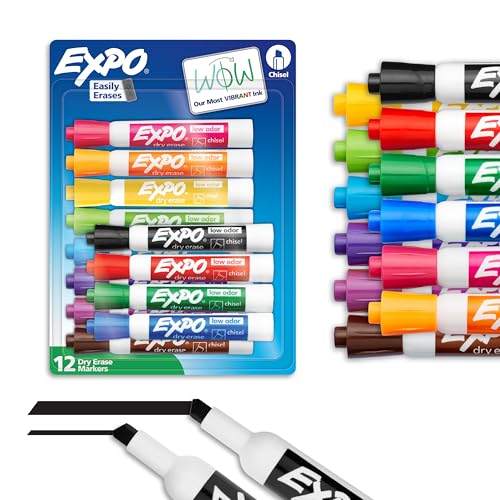
Writing the morning intention on the bathroom mirror in dry-erase marker means you see it every time you look at yourself through the day. This is the most effective placement for a word you want to carry — in your own reflection, where you cannot avoid seeing both it and yourself simultaneously. The visual reminder works on the hardest days specifically: you don’t have to remember the intention if it’s written where your eyes land.

A comfortable outdoor chair that is easy to set up and put away — or that lives in a permanent position where the morning light is best — removes the logistical barrier from the morning light practice. A chair that requires significant effort to retrieve and position will not be used consistently on limited-energy mornings. One that is already there, already comfortable, already in the right place, will. The investment is in the consistency, not the chair.

For anyone with photosensitivity or who is on medications that increase sun sensitivity, the morning light practice still belongs in the ritual — with a wide-brim hat providing head and face shade while the body receives the light and warmth through the arms and legs. Ten minutes of morning light with a hat is physiologically equivalent to ten minutes without one for circadian regulation purposes. The light still reaches the eyes peripherally. The ritual still works.
The getting-dressed ritual: choosing something beautiful before the day starts
Getting dressed for the chronic illness morning is not a neutral act. It is a negotiation — with the body’s sensitivity, with the day’s likely demands, with what is comfortable versus what is presentable versus what actually makes you feel like yourself. On the hardest mornings, it can feel like the first significant expenditure of a limited budget, the first tax on a system that hasn’t yet been replenished.
The gentle morning ritual reframes getting dressed not as a negotiation with limitation but as a choice made in your own favor. The question is not “what can I put on that will get me through the day” — though that question is sometimes the right one. It is, when the morning allows it: “what do I want to feel like today, and what fabric, what color, what silhouette comes closest to that?”
For a summer morning, the answer is almost always something light, something soft, something that breathes. Linen or bamboo or cotton gauze. Something that moves easily and doesn’t create heat or pressure or the sensory friction that can make the day louder than it needs to be. But within those functional requirements, there is still room for the choosing — for the particular shade of dusty rose or sage green or warm cream that happens to be what the day feels like today. For the piece of simple jewelry that goes on and stays on and adds something that costs nothing energetically but returns consistently in the quality of feeling like yourself.
The ritual version of getting dressed is this: lay out what you’re going to wear before you’re standing in front of a wardrobe making decisions. The night before if possible, the morning before the tea if not. Remove the decision from the most depleted moment of the day and make it in a moment when you have a bit more available. Then, when it’s time to dress, the choosing is already done and what remains is only the putting on — which is a different and much smaller ask.
On the very hardest mornings, the ritual is simpler: the softest thing. The bamboo set or the linen robe or the most comfortable dress you own. Getting dressed in something that feels good against skin that may be sensitive is its own form of morning gentleness — a signal that this body will be treated with care even today, even when it has the least to offer.
For the getting-dressed ritual and the summer morning wardrobe

The morning robe is the piece that goes on immediately after the body check-in and stays on through the tea and the light and the intention — the layer between waking up and getting dressed that makes both transitions gentler. A lightweight kimono in linen or bamboo breathes in summer heat, feels like something chosen rather than functional, and provides the middle ground between pajamas and dressed that the gentle morning ritual needs. This is the piece that makes the morning feel like it belongs to you.

The chronic illness summer wardrobe staple that makes getting dressed on hard mornings a single decision rather than many. A matching bamboo or modal set — top and bottom in the same soft fabric — is the complete outfit that requires no coordination and no thought and is genuinely comfortable through the full range of what summer asks of it. In oatmeal, dusty rose, sage, or warm white, it reads as intentional rather than comfortable-by-default.

The single piece of jewelry that goes on in the morning and stays through everything — appointments, rest, sleep if necessary — without requiring attention or adjustment. Simple gold studs or a delicate chain necklace in a weight that is not felt during wear is the chronic illness jewelry ritual: chosen once, worn consistently, providing the daily felt sense of looking like yourself without the energy cost of a jewelry decision each morning.

Applied during or after dressing — a summer-weight body oil or lotion with a scent that the body associates with warmth and care — makes getting dressed a sensory ritual rather than a purely logistical one. The scent anchors the morning; the texture signals that this body is worth tending before the day asks anything of it. Choose something light enough to absorb quickly and beautiful enough to look forward to reaching for.
A gentle morning ritual tends to the parts of you that the medical system doesn’t — the quality of the day’s beginning, the relationship with the body before it’s asked to perform. But the medical system matters too, and showing up there with confidence and clarity is its own form of morning-level self-advocacy. Say This: 30 Scripts for Chronic Pain Communication gives you the language for 30 real situations — so you can carry the gentleness of your morning ritual into every room you walk into. Get your copy of SAY THIS here
The morning that was always yours
The gentle summer morning ritual is not a productivity hack. It does not promise to make you more functional or more efficient or more anything in particular. What it promises is more modest and more real: that the first hour of your day will have been spent in your own favor. That you will have tended to yourself — with water and warmth and light and the small choosing of one word — before the day began making its requests. That whatever the day holds, it will begin with a moment that was yours.
That matters more than it sounds like it should, for people whose days are structured largely around management and response and the chronic, effortful business of navigating a body that requires more attention than most. The morning ritual is the one place in the day where the structure is entirely in your service — where nothing is required of you, where everything is offered to you, where the quality you’re cultivating is not productivity or endurance but simply the felt sense of being cared for in the gentlest possible way.
Build it slowly. Start with just one element — the body check-in before rising, or the cup of tea without the phone, or the ten minutes in the morning light. Let one practice become habitual before adding the next. By the end of summer, you may have a morning ritual that spans an hour, or you may have five minutes that you have kept consistently. Both are success. The gentleness is not in the duration. It is in the quality of the attention you bring.
This summer morning belongs to you. Begin it accordingly.