
Tarot Spreads for Healing: What the Cards Say About Chronic Illness, Rest, and Advocating for Yourself
The content on this site was created with the help of AI. LOVEOWE LLC participates in the Amazon Services LLC Associates Program and other affiliate programs. As an Amazon Associate, I earn from qualifying purchases. This means I may earn a small commission—at no extra cost to you—when you make a purchase through links on this site. All opinions are my own. Learn more click here. Thank you for your support!
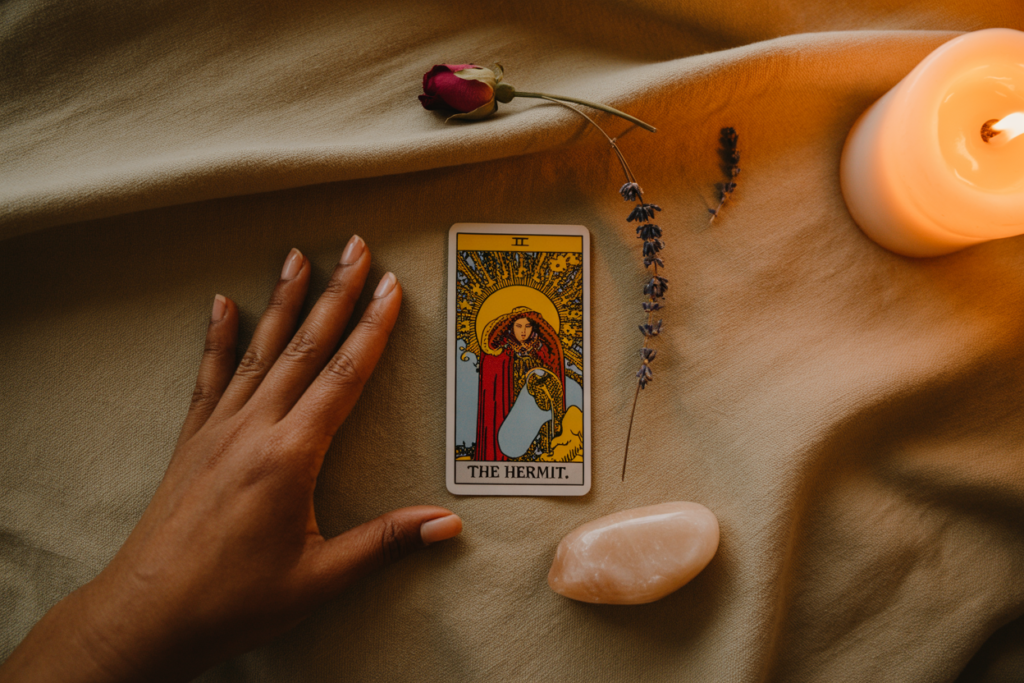
The first time I did a tarot reading during a flare, I was lying flat on my back, deck balanced on my stomach, pulling cards one at a time because sitting up wasn’t an option. I wasn’t looking for magic. I was looking for something to hold onto — some framework that made sense of what my body was doing when nothing else did. The card that landed in the center of my spread was the Four of Swords. Rest. Retreat. Recovery. Not defeat, not stagnation — rest as an active, necessary, sacred thing.
I cried. Not because the card was surprising, but because it was the first time anything had named what I was doing as intentional instead of inadequate.
That’s what tarot does for chronic illness that almost nothing else does: it reframes. It takes the experience of a body that doesn’t cooperate and gives it language, meaning, and sometimes — when you need it most — permission. Permission to rest. Permission to fight. Permission to grieve the life you planned and build something real in its place.
This post is for you if you’ve ever pulled cards and wondered what they could possibly mean for someone whose life doesn’t look like the textbook interpretation. If you’ve ever stared at the Ten of Wands and thought, yes, that’s exactly it, that’s my body, that’s every day. If you’ve ever wanted a tarot practice that meets you in your actual life — not the life you had before you got sick, not the life you’re trying to get back to, but the one you’re living right now.
We’re going to cover tarot spreads built specifically for chronic illness, the cards that tend to show up in healing journeys and what they’re actually trying to tell you, how to use tarot as a self-advocacy tool, and everything you need to build a reading practice that works on your worst days and your best ones.
Why Tarot and Chronic Illness Are a Natural Pairing
Tarot has been used for centuries as a tool for self-reflection, not prediction. The cards don’t tell you what will happen — they hold up a mirror to what’s already happening inside you, the things you know but haven’t said out loud yet, the fears you’ve been carrying without naming them, the strengths you’ve forgotten you have.
For people navigating chronic illness, that kind of mirror is genuinely therapeutic. When you’re living in a medical system that often moves slowly, dismisses your symptoms, or offers language that pathologizes your body without honoring your experience, tarot gives you something different: a symbolic vocabulary that is entirely yours, that shifts with you, that cannot gaslight you.
The cards don’t tell you your pain is in your head. They don’t ask you to rate it on a scale of one to ten. They don’t suggest you try yoga or lose weight or just manage your stress better. They sit with you in the complexity of it. And that is, surprisingly, exactly what a lot of people with chronic illness have been missing.
There’s also something practically important about tarot for chronic illness: it is a practice that can be done in bed, on a couch, on a bad pain day, during a hospital stay, in five minutes or fifty. It scales to your capacity in a way that a lot of wellness practices don’t. You don’t need a perfectly set altar. You don’t need to be sitting upright and energetically regulated. You just need your deck and whatever questions are sitting heaviest on your chest today.
Building Your Healing Tarot Practice: The Essentials
Before we get into spreads, let’s talk about what you actually need — and what you don’t. You don’t need a deck that was gifted to you (that’s a myth). You don’t need to cleanse every card under a full moon. You don’t need to memorize 78 card meanings before you start pulling. You need a deck that speaks to you visually, a journal to capture what comes up, and the willingness to sit with uncertainty long enough to hear what it’s saying.
For chronic illness specifically, I’d also add: you need a setup that doesn’t require more energy than you have on a flare day. That means keeping your deck somewhere reachable, having your journal nearby, and giving yourself full permission to do a one-card pull and call it a complete reading. The practice belongs to you. There are no rules you’re breaking by making it smaller.
—
Tarot Decks That Speak the Language of Healing
The deck matters more than people admit — not because one is more powerful than another, but because you need to be able to look at the imagery and feel something. For chronic illness, that usually means decks with softer, more embodied imagery rather than traditional Rider-Waite severity. Here are four worth exploring.

This is one of the most inclusive, emotionally resonant decks available. The imagery is diverse, soft, and deeply human — figures that actually look like people living full lives, not archetypes hovering above the mundane. The Strength card alone, showing a person gently resting their head against a lion, is enough to make a chronically ill reader feel seen. The guidebook is thorough without being overwhelming.

A modern reimagining of the Rider-Waite Smith deck with contemporary characters in everyday settings. If you’re already familiar with traditional tarot meanings, this deck lets you apply that knowledge through a fresh visual lens. The art is clean, vibrant, and full of characters who feel like people you might actually know — grounding for days when the mystical feels too far away to reach.

Warm, slightly whimsical, and genuinely approachable. This deck is particularly good for beginners or for days when you want your practice to feel gentle rather than weighty. The scenes are cozy and grounded, which makes it an excellent flare-day deck — the kind you reach for when you need comfort alongside clarity.

Minimalist black-and-white illustrations with small touches of color. For people with visual sensory sensitivity — which is common in chronic illness — this deck is a relief. The imagery is spare enough not to overwhelm, but rich enough to provoke genuine reflection. One of the most nervous-system-friendly decks available.
The Four Cards That Show Up Most in Chronic Illness Readings
If you’ve been doing tarot for any length of time while managing chronic illness, you’ve probably noticed certain cards showing up repeatedly. Not because the universe is torturing you, but because those cards hold the exact energy you’re moving through. Here’s what they’re actually saying.
The Four of Swords: Rest Is Not Giving Up
This is the chronic illness card. A figure lying in repose, swords suspended overhead, completely still. In traditional interpretations it means retreat, recovery, temporary withdrawal from the battlefield. For someone with chronic illness, it often arrives on days when resting feels like failure — and it arrives to tell you it isn’t. The Four of Swords doesn’t ask you to be productive. It asks you to be still long enough to come back to yourself. When this card appears, take it literally: rest today, without guilt, as an act of deliberate self-care.
Strength: The Quiet Kind
The Strength card in most decks shows a figure gently, calmly holding open the mouth of a lion. Not dominating it. Not fighting it. Holding it. This is the card of inner resilience, of managing something enormous through gentleness rather than force. For chronically ill readers, this card often appears when you’ve been white-knuckling through pain instead of working with your body. It’s an invitation to try a different kind of strong — the kind that rests, adapts, accepts, and keeps going anyway.
The Hermit: Your Own Authority
The Hermit carries his own light. He doesn’t wait for someone to illuminate the path — he moves through the darkness with what he has. In chronic illness readings, the Hermit frequently appears around medical advocacy — around the moment when you realize that you know your body better than any specialist does, and that waiting for external validation is keeping you stuck. The Hermit asks: what do you already know? And what would you do if you trusted it?
The Ten of Wands: You’re Carrying Too Much
A figure bent nearly double under a massive burden of wands, almost at the destination but barely making it. This card shows up when you’ve been pushing through at a cost you haven’t fully acknowledged — managing your illness while also managing everyone else’s feelings about your illness, while also trying to perform wellness, while also grieving, while also surviving. The Ten of Wands is not a badge of honor. It’s a question: what can you put down?
The Tools That Make a Chronic Illness Tarot Practice Sustainable
The practice only works if it’s sustainable on your hardest days. These are the accessories that make that possible — a journal that holds your readings over time, a cloth that makes even a bed-bound reading feel intentional, and a few small tools that add ritual without adding effort.

The gold standard of tarot journaling. The dotted grid is perfect for sketching card layouts, writing reflections, or tracking patterns across readings over time. Hardcover means it works flat on a bed without needing a surface underneath. Available in soft, muted colors that feel right for a healing practice.

A reading cloth creates a contained, intentional space for your practice wherever you are. On a bed, a couch, a hospital tray table — laying down a cloth signals to your nervous system that something different is happening here. Look for natural fabrics in muted tones: deep green, blush, cream, or black.

For days when holding cards is physically difficult, a card stand lets you lay out your spread and read from it without gripping anything. Small, simple, and genuinely useful for anyone dealing with hand pain, tremors, or fatigue.

The smoothest writing experience for journaling, which matters when your hands hurt. These pens glide — no pressure required — and come in a range of colors that make it easy to color-code your readings by suit, by emotion, or by theme. A small thing that makes the practice feel more like self-care and less like homework.
Four Tarot Spreads Built for Chronic Illness
Standard tarot spreads assume a life of decisions, relationships, and career crossroads. The spreads below were designed for a different kind of crossroads — the ongoing, nonlinear, unpredictable experience of living in a body that requires more management than most people understand.
The One-Card Flare Day Pull
On days when a full spread is too much, pull one card and ask: What do I need to know today? That’s it. Read the card, sit with it for a few minutes, write one sentence about what it’s bringing up. This is a complete practice. Don’t let anyone — including yourself — tell you it doesn’t count.
The Body Wisdom Spread (Three Cards)
This spread treats your body as an intelligent communicator rather than a problem to be solved.
Card 1 — What my body is trying to tell me right now. Read this card as a message from your physical self, not about your physical self. What is it asking for? What is it warning you about?
Card 2 — What I’ve been ignoring. This card often surfaces something uncomfortable — the rest you’ve been skipping, the boundary you’ve been avoiding, the grief you haven’t let yourself feel. Don’t rush past it.
Card 3 — What would help most right now. Practical, specific, actionable. Let this card point you toward something concrete you can do today — even if that thing is nothing at all.
The Advocacy Spread (Five Cards)
Use this spread before a difficult medical appointment, before having a hard conversation with someone who doesn’t understand your illness, or any time you need to speak up for yourself and aren’t sure how.
Card 1 — What I know about my situation that hasn’t been acknowledged. Your own wisdom, often dismissed. This card validates what you already know.
Card 2 — What’s blocking me from speaking up. Fear, shame, past experiences of dismissal, exhaustion — this card names it so you can work with it rather than around it.
Card 3 — What I need to say. The essential truth. What needs to come out of this conversation for it to matter.
Card 4 — What I need to hear. Sometimes from the other person, sometimes from yourself. What outcome would feel like being genuinely seen?
Card 5 — How to carry myself into this conversation. Energy, posture, approach. What does this card suggest about how you walk in?
The Advocacy Spread works beautifully alongside a real script.
If tarot can help you identify what you need to say, Say This: 30 Scripts for Chronic Pain Communication gives you the exact words to say it. From dismissive doctors to well-meaning family members who don’t understand, these scripts were written for the conversations that matter most — the ones where you need to advocate for yourself and don’t know where to start.
The Healing Season Spread (Seven Cards)
This is a bigger spread for moments of reflection — a flare that’s finally lifting, the start of a new treatment, a season change, or any time you want to take stock of where you are and where you’re going. Lay the cards in a circle.
Card 1 — Where I’ve been. The season behind you. What you’ve moved through.
Card 2 — What I’ve survived. Acknowledge it. Let this card witness what you’ve carried.
Card 3 — What I’ve learned about my body. Wisdom earned through experience. Let this card articulate what you now know that you didn’t before.
Card 4 — What I’m releasing. The belief, the habit, the expectation, the grief you’re ready to put down.
Card 5 — What I’m building. The thing taking shape, even slowly. Even on bad days.
Card 6 — What my healing needs most right now. A single focus. One direction.
Card 7 — A message from my highest self. Pull this card last. Read it as the thing you already know but needed to hear from somewhere outside yourself.
Crystal Companions for Your Tarot Practice
Working with crystals alongside tarot isn’t required — but for many people with chronic illness, having something physical to hold during a reading anchors the practice in the body, which is exactly where most of this work needs to happen. These four are particularly well-suited to healing-focused readings.
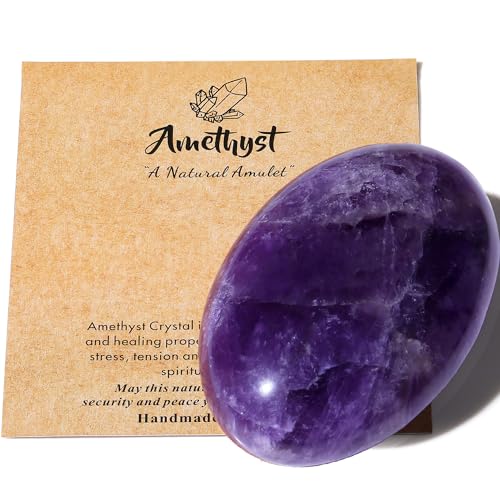
The quintessential healing crystal. Amethyst is associated with calm, clarity, and nervous system regulation — all of which are useful during a tarot reading when what’s coming up feels emotionally heavy. A palm stone specifically is sized for holding during a reading without fatigue.
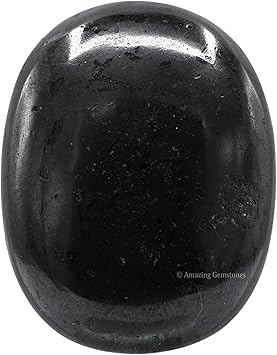
Grounding and protective. For readings that venture into hard emotional territory — grief, advocacy, anger at your diagnosis — black tourmaline keeps you tethered to the present rather than spiraling. Many chronically ill readers keep a piece on the table during every spread.
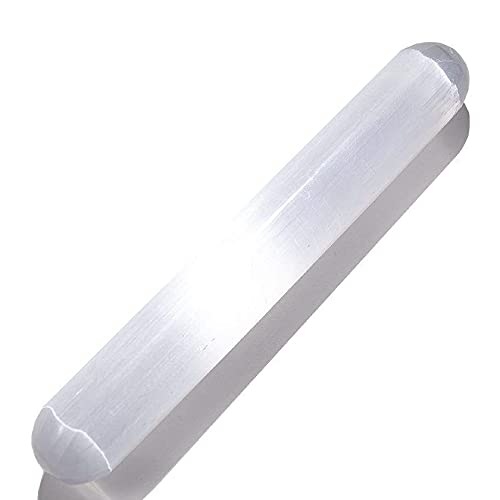
Used to cleanse other crystals and to clear energy between readings. For chronic illness, it’s also associated with pain relief and energetic clarity — running a selenite wand along the body is a low-effort somatic practice that many people find genuinely soothing during flares. Pairs naturally with a tarot practice as a before-and-after ritual.

The self-love crystal in its most portable form. Rose quartz is particularly powerful during readings that center grief, body image, or the chronic illness and self-worth conversation — which is most of them, if you’re honest. Hold it in your non-dominant hand while you read. Let it remind you that the body you’re reading for deserves gentleness.
How to Read Tarot on Days When You Have Almost Nothing Left
A bad pain day is not a reason to skip your practice. It’s a reason to make it smaller. Here’s what a flare-day tarot practice can look like:
Keep your deck on your nightstand. Pull one card without shuffling extensively — just cut the deck once and pull from wherever feels right. Lay it on your chest or prop it against something you can see from lying down. Look at it for one full minute. Notice what you feel. Write one word in your journal, or don’t write anything. That’s the practice. That’s a complete reading. The cards don’t require your full capacity. They meet you where you are.
If even pulling feels like too much, try a different approach: fan your deck out face-down and run your non-dominant hand slowly across the cards until one feels different — warmer, cooler, or like it’s pulling slightly. Pull that one. You didn’t need to shuffle, you didn’t need to ask a formal question, you didn’t need to be sitting upright. You needed to be present for thirty seconds. That’s enough.
Tarot as a Self-Advocacy Tool
This might be the most underutilized application of tarot in the chronic illness space: using it to prepare for hard conversations. Before a medical appointment where you know you’ll need to push back. Before telling a family member that their comments about your diet aren’t helping. Before setting a limit with an employer who keeps forgetting that your illness is real.
The Hermit, The Justice card, The Queen of Swords — these are advocacy cards. When they appear in a spread before a hard conversation, they’re telling you something important: you know what’s true, you have the right to say it, and your clarity is a form of power. Tarot can help you locate that clarity when anxiety and exhaustion have buried it.
The advocacy spread outlined earlier in this post was designed specifically for this purpose. Pull it the night before an appointment. Journal what comes up. Go into that room knowing what you need to say — because you named it the night before, in the quiet, with your cards.
Completing the Ritual: Candles, Incense, and Comfort for Your Practice Space
A tarot practice doesn’t require ambiance — but ambiance helps your nervous system shift into a state where reflection is actually possible. These are the low-effort additions that transform a reading from a quick card pull into a genuine ritual, even on a hard day.

Beeswax burns clean without synthetic fragrance — important for people with chemical sensitivities, which are common in chronic illness. The warm light softens a space immediately and signals the brain that something intentional is happening. A single tea light next to your spread is enough.

Sustainably sourced palo santo has a warm, woody scent that many people find instantly grounding. It’s softer than sage and less likely to trigger respiratory sensitivity. Light it, let it catch, blow it out, and allow the smoke to move through your reading space. A ten-second ritual that does real work.
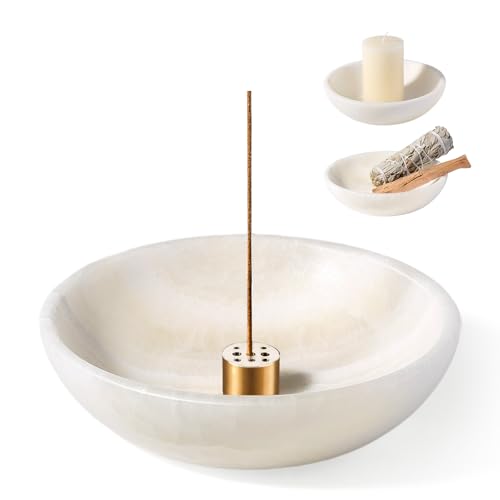
A dedicated holder for incense or a palo santo stick keeps ash contained and makes the ritual feel finished — which matters for people whose energy doesn’t stretch to cleanup afterward. Look for simple, unglazed ceramic in neutral tones that will work on any surface.

Keeping your deck and crystal companions in a dedicated box is both practical and meaningful. It signals that these things are sacred to you — worth protecting, worth returning to. Carved wooden boxes with a hinged lid are ideal: durable, beautiful, and available in sizes that fit a full deck plus three or four stones comfortably.
A Final Word About What the Cards Are and Aren’t
Tarot is not a substitute for medical care. It is not a diagnostic tool, and a card that suggests struggle does not mean your condition is worsening. The cards are a mirror, not a crystal ball — and the mirror only shows you what’s already inside you, waiting to be seen.
What tarot offers that medicine often doesn’t is permission to be complex. Permission to be somewhere in between sick and well, between grieving and healing, between fighting and resting. The cards don’t ask you to resolve that complexity. They sit in it with you. And sometimes, that is the most healing thing of all.
If you’re building a tarot practice alongside your chronic illness journey, start small. One card. One question. One minute of sitting with whatever surfaces. The practice will grow in the direction your life needs it to go — and it will stay with you through every season of this, the hard ones and the ones that feel, finally, like something is shifting.
You deserve a spiritual practice that doesn’t ask more of you than you have. This one doesn’t. It meets you exactly where you are.
Ready to take what the cards revealed into your next doctor’s appointment?
Say This: 30 Scripts for Chronic Pain Communication was written for exactly the moments your tarot practice helps you identify — when you know what’s true about your body and need the words to make someone else understand it too. Thirty real scripts for real conversations: dismissive doctors, skeptical family, workplaces that don’t get it, and the quiet ones you have with yourself at 2am.