Boho Outdoor Patio Ideas That Bring Chill, Earthy Vibes to Your Backyard
The content on this site was created with the help of AI. LOVEOWE LLC participates in the Amazon Services LLC Associates Program and other affiliate programs. As an Amazon Associate, I earn from qualifying purchases. This means I may earn a small commission—at no extra cost to you—when you make a purchase through links on this site. All opinions are my own. Learn more click here. Thank you for your support!
I didn’t always have a backyard. For years I lived in apartments where outdoor space meant a narrow balcony just wide enough for one chair and a plant that never quite got enough sun. So when I finally had access to a real outdoor space, I stood in it for a long time before I did anything with it.
What I wanted — what I think most of us want from an outdoor space — wasn’t complicated. I wanted somewhere that felt like a genuine exhale. Somewhere that didn’t require anything from me the moment I stepped into it. Somewhere that felt soft and earthy and a little wild, where the lighting was warm and the seating was the kind you sink into, and where being outside felt like a form of rest rather than just a change of scenery.
The boho aesthetic — in its truest, most grounded expression — is exactly that. It’s not about perfectly arranged rattan and coordinated throw pillows. It’s about layers. Texture. Natural materials that age beautifully and feel better the more lived-in they become. Plants that don’t apologize for growing in every direction. Lighting that turns an ordinary evening into something worth staying outside for.
Whether you have a sprawling backyard, a modest patio, or a concrete slab you’re determined to transform, this guide covers everything — furniture, lighting, ground surfaces, textiles, and plants — so you can build an outdoor space that genuinely feels like a sanctuary. The kind your nervous system recognizes as a place to rest.
Boho outdoor furniture: the pieces that do the most
Furniture is where the boho outdoor aesthetic lives most visibly, and it’s where most people either get it exactly right or overthink it into something too coordinated to feel real. The best boho patios look like they came together over time — a rattan chair here, a curved loveseat there, a hanging chair that someone bought because it made them happy. That un-curated quality is actually the goal, and it’s one that’s much easier to achieve than a perfectly matched set.
The materials to lean into are rattan, wicker, teak, bamboo, and wrought iron with softer cushions. These are the textures that give the boho outdoor aesthetic its distinctly earthy, lived-in quality. They also happen to be materials that weather well and improve with age — which is exactly what you want from outdoor furniture that you’re going to leave out through a season.
The anchor seating piece. Every boho patio needs one large, comfortable anchor — something that says this is where we actually sit. A deep-seated wicker sectional with thick cushions in off-white, terracotta, or warm sage. A curved rattan loveseat with a low back that invites you to sprawl. A pair of oversized rattan chairs facing each other across a low table. Soft enough to spend real time in — because the whole point of this space is that you actually use it.
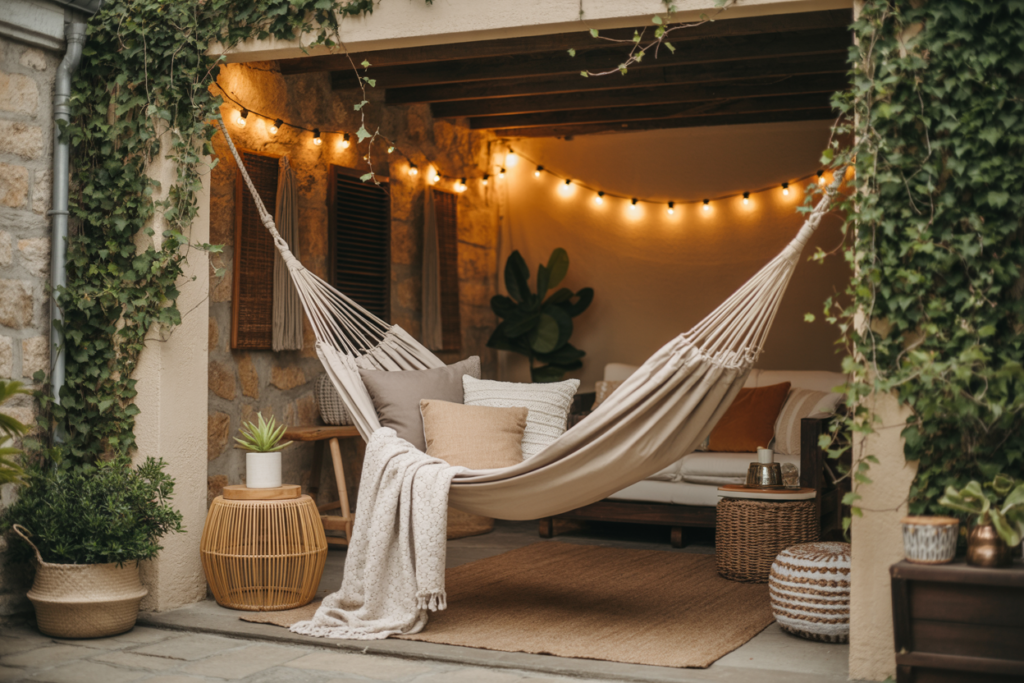
The hanging chair or hammock. This is the piece that makes a boho patio feel like itself more than almost anything else. A rattan hanging egg chair suspended from a sturdy frame. A macramé hammock chair between two trees or on a porch beam. A classic rope hammock strung low between two posts. There is something about suspended seating — the gentle sway, the way it holds you rather than just supporting you — that is uniquely restoring for a body and mind that carries a lot. It belongs in this space.
The low coffee table. Keep it low and natural. A teak or acacia slab. A rattan drum table. A large flat stone on legs if you want something more unexpected. The low height keeps the visual profile of the space open and airy, and it encourages the kind of slow, horizontal lounging that a genuine rest space should invite.
A side table or plant stand that doubles as one. Boho patios layer surfaces in an organic way — a small table here, a wooden stool there, something that holds a drink and a candle and a trailing plant without it looking deliberate. This is where mismatched works better than matched.
Boho outdoor furniture worth investing in

The single piece that transforms a patio from nice to actually boho. Look for one with a powder-coated steel stand for stability, deep cushioning in a neutral fabric, and a wide enough seat that you can pull your legs up. This is the piece you’ll spend the most time in — invest accordingly.
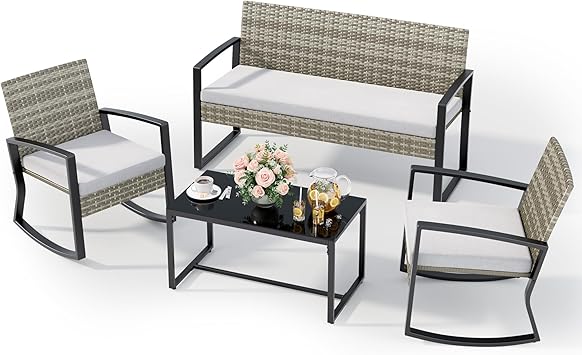
A deep-seated wicker loveseat with thick cushions in off-white or warm beige anchors the seating area and creates the kind of comfortable that makes you stay outside longer than you planned. Look for all-weather wicker with UV-resistant cushion fabric if it will be exposed to sun.

A solid acacia or teak low table grounds the seating area and provides the surface you need without competing with the organic textures around it. Wood that’s sealed for outdoor use will last years and develops a beautiful silver-grey patina if left to weather naturally.
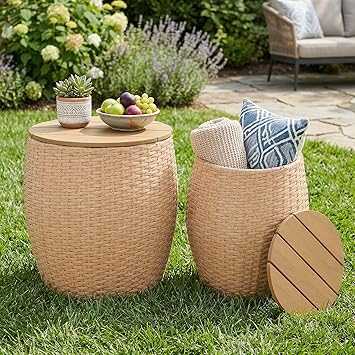
One of the most versatile pieces in a boho outdoor space — use it as a side table, a plant stand, a surface for candles, or rotate it between all three depending on the evening. The organic weave texture adds visual warmth without adding visual weight.
Boho outdoor lighting: how to make the evening the best part
Lighting is what separates a patio you walk through from one you actually stay in. Get the lighting right, and an ordinary Wednesday evening outside becomes something worth protecting — a ritual rather than a leftover part of the day.
The boho outdoor lighting formula requires layering — at least three sources at different heights, all warm-toned. Cool white light does something to the nervous system that warm amber light does not. In a space designed for decompression, every light source should feel like it’s working with your body, not against it.
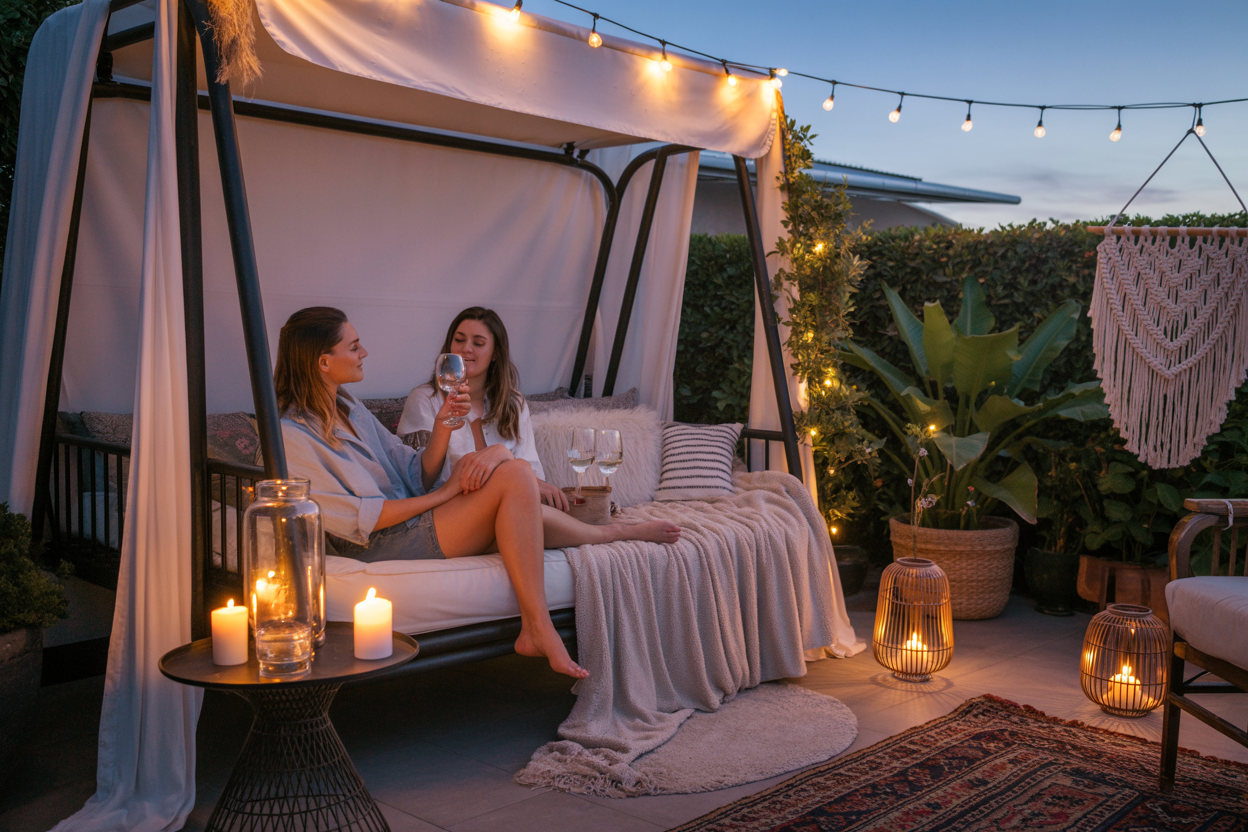
String lights as your ceiling. This is the foundational layer of boho outdoor lighting and the one that does the most work for the least effort. Warm Edison bulb string lights draped overhead — between two posts, along a fence line, across a pergola, zigzagged above a seating area — create an instant ceiling of ambient warmth that transforms the space after dark. Cafe-style bulbs at a lower density give a more dramatic, moody effect. Globe bulbs spaced more closely give something softer and more romantic. Either works; what matters is that they’re warm (2700K or lower) and generous in quantity.
Lanterns at ground level and mid-height. Lanterns are the most characteristically boho lighting element, and they work at every price point. Moroccan-inspired metal lanterns with cut-out patterns that cast dappled light. Rattan lanterns that glow from within. Simple glass hurricane lanterns with pillar candles. Cluster three to five of them at different heights at the corners of your seating area, along a pathway, or grouped on a low table. Flameless LED candles inside them keep the look without the fire risk and without having to remember to blow them out when you come inside.
Solar stake lights along pathways and garden edges. These do double duty — they define the edges of your space and add a layer of low, warm ambient light that makes the whole area feel larger and more intentional after dark. Solar options have improved enormously and the best ones now run for six to eight hours on a full charge. Look for warm white rather than cool white, and for styles with a natural material element — bamboo, rattan, stone — that fits the aesthetic.
Candles and fire as the finishing layer. A small fire pit, a tabletop fireplace, or simply a collection of pillar candles in varying heights on your coffee table. Fire is irreplaceable for the quality of presence it creates — it gives you something to look at that isn’t a screen, draws people together around a center point, and produces exactly the kind of warm, flickering light that the boho aesthetic is built around. Even on solo evenings, a lit candle changes the quality of being outside in a way that’s difficult to overstate.
The right lighting doesn’t just make a space look beautiful — it tells your nervous system it’s safe to slow down.
Outdoor lighting that makes the evening worth staying for

The non-negotiable foundation of a boho outdoor lighting setup. Look for shatterproof bulbs, a weatherproof cord, and 2700K warmth — that’s the amber tone that creates the golden-hour effect you want every evening. String them generously; more coverage is always better than less.

A set of two or three lanterns in varying heights gives you the layered, collected look that’s central to the boho aesthetic. The cut-out pattern casts intricate shadows on surrounding surfaces when lit — one of those small details that makes an outdoor space feel genuinely atmospheric.

Line the edges of your space, define a garden path, or cluster them in a planted area for a layered glow at ground level. The best solar stake lights now run reliably for six-plus hours — look specifically for warm white (not cool white) and a natural material casing.
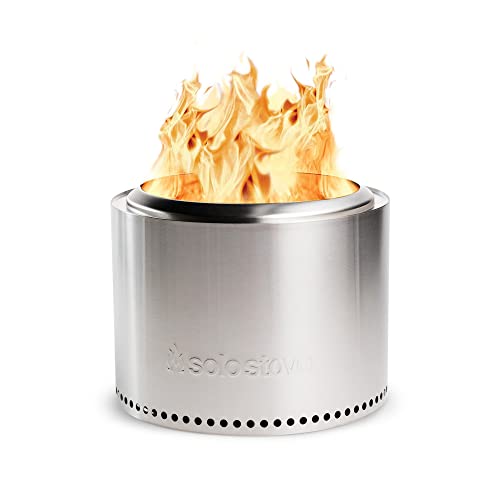
A small tabletop fire pit — propane, gel fuel, or bioethanol — brings the one element no string light can replicate: actual flame. The quality of presence it creates on an evening outside is different from anything else in this list. Even a modest one earns its place on a boho patio the first time you use it.
Boho patio ground surfaces: what you stand and sit on matters more than you think
The ground surface is the element people most often underestimate in an outdoor space, and it’s the one that most defines the feel and function of what you build on top of it. The right surface makes a patio feel intentional and complete. The wrong one — or no intentional surface at all — makes even beautiful furniture and lighting feel like they’re sitting on an afterthought.
The boho aesthetic works with natural, textured, imperfect surfaces beautifully. It is not the aesthetic of perfectly uniform concrete or pristine pavers with precise grout lines. It’s flagstone with moss growing between the cracks. Pea gravel that crunches underfoot. Reclaimed wood decking that has a story. A mix of surfaces that flows organically from one area to the next. Here’s how to think about each option.
Flagstone and stepping stones. Flat natural stone — flagstone, slate, bluestone — laid in an irregular, organic pattern is one of the most beautiful and durable ground options for a boho outdoor space. The imperfect edges and natural color variation are features, not flaws. You can lay it over existing grass or compacted gravel base, fill the gaps with ground cover like creeping thyme or Irish moss, and the result looks like it has always been there. Stepping stone paths through planted areas are especially effective — they add structure without rigidity and invite exploration of the space.
Pea gravel. Budget-friendly and deeply effective for the boho aesthetic. A layer of pea gravel defines a seating area without permanent installation — edge it with timber or natural stone, and it drains perfectly after rain. The sound underfoot and the way it catches light are both genuinely pleasant. Add outdoor rugs over the gravel in seating areas for softness.
Wood decking (reclaimed or pressure-treated). A wooden deck creates the most defined, living-room-like outdoor space of any surface option. Reclaimed wood with natural weathering and color variation is the most authentically boho option — the imperfections are the point. If reclaimed isn’t available or in budget, pressure-treated wood stained in a warm grey or natural tone achieves a similar aesthetic. Add an outdoor rug and the deck becomes an extension of your interior in the best possible way.
Mixed surfaces. The most characteristically boho approach combines surfaces — flagstone flowing into pea gravel, bordered by planted areas with stepping stones through them. Each material defines a different zone. The imprecise transitions between them are what give a boho space its feeling of having grown naturally rather than being installed in an afternoon.
Surface and ground accessories to define your space

An outdoor rug over gravel or a deck instantly defines the seating zone and adds the softness that makes an outdoor space feel like a room. Jute and natural flatweave rugs are the most authentically boho option — look for UV-resistant versions specifically made for outdoor use, as indoor naturals will deteriorate quickly in sun and moisture.
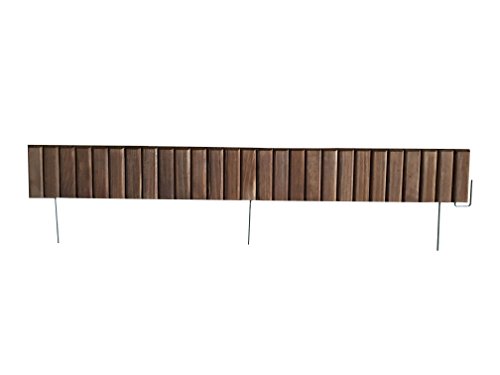
Clean edges between your gravel or decomposed granite area and surrounding lawn or planted beds make the whole space look intentional without requiring any hardscaping. Natural-look timber or stone-effect edging keeps within the boho material palette while doing the practical work of containing loose surfaces.
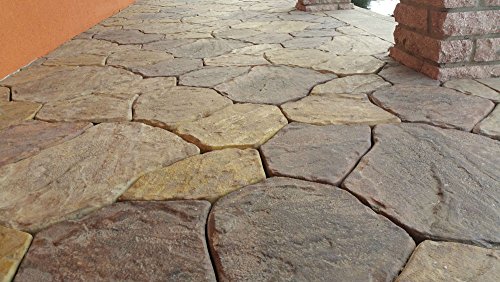
Make your own stepping stones in organic, irregular shapes using realistic concrete molds — a genuinely satisfying low-energy project done in stages. The result looks custom and natural at a fraction of the cost of purchased flagstone, and you can embed pebbles, glass pieces, or leaf impressions for a personal touch.

Interlocking deck tiles transform a concrete slab or bare ground into a defined patio surface without any tools, permits, or permanent installation. Wood-finish tiles in a warm tone are especially versatile and can be taken up and rearranged — ideal for renters or anyone who wants flexibility in how the space evolves.
Textiles and soft details: where the boho aesthetic fully comes alive
If the furniture and lighting are the structure of a boho patio, the textiles are the soul. This is where the warmth, the layering, the personal quality that makes a space feel genuinely lived-in rather than professionally decorated all comes from. And it’s the easiest category to add to incrementally — one good throw pillow at a time, one piece of macramé, one outdoor pouf — without spending a lot at once.
Throw pillows in earthy, mixed tones. Mix textures rather than matching patterns — woven cotton next to something with fringe, colors in the same warm family (terracotta, rust, cream, sage). Odd numbers read as more natural. Look specifically for fade-resistant, water-repellent outdoor fabric so you’re not rushing them inside every time clouds appear.
Macramé as wall and hanging art. A wall hanging on an exterior fence, a hanging planter, a plant holder suspended from a beam — macramé is the most distinctly boho element you can add to an outdoor space. The handmade quality and natural fiber add vertical dimension immediately. Jute or synthetic macramé holds up better to elements than cotton if it will stay out through weather.
A lightweight outdoor throw. Keep one folded on the arm of your anchor chair or hung over the back of the loveseat. For anyone whose body runs cold in the evenings — or who simply finds that being wrapped in something soft is its own form of decompression — having a throw already outside means you stay out longer rather than going in for warmth and losing the thread of the evening.
Outdoor curtains on a pergola or between posts. Sheer curtains hung between posts add privacy, filter afternoon light, and create an enclosed, room-like quality. In cream or soft terracotta, they billow in a breeze in a way that is quietly one of the most beautiful things a backyard can do.
Floor poufs and ground cushions. Moroccan leather poufs, rattan floor cushions, large outdoor floor pillows — seating at multiple heights creates the casual, gathered quality boho spaces are built around and invites you to sit low, sprawl, stay longer.
Plants: the living layer that makes everything else work
No boho outdoor space is complete without plants — and not the carefully pruned, perfectly symmetrical kind. The boho garden is generous, slightly wild, abundant in a way that feels like the plants made their own decisions about where to grow. The goal is layering: something tall and dramatic in the background, something medium and leafy in the middle, something trailing and soft at the edges.
Plants also do something furniture and lighting cannot. They filter air, regulate humidity, and create the visual rest that comes from looking at growing things. For anyone whose daily life involves a lot of screens, a lot of managing — sitting surrounded by plants is a genuinely different physiological experience. Nature does something to the nervous system that designed spaces alone cannot replicate.
Large statement plants. These define the scale of the space and give it drama. Bird of paradise (Strelitzia) for a tropical, architectural statement. Banana plants for a more lush, canopy-like feel. Large ornamental grasses for movement and texture. A mature olive tree in a large terracotta pot for something more Mediterranean and serene. Choose one or two large statement plants and let everything else layer around them.
Trailing and climbing plants. Pothos, sweet potato vine, and trailing rosemary cascade beautifully over raised planters and hanging baskets. Jasmine or climbing roses trained up a trellis create a fragrant vertical garden. Wisteria over a pergola — if you have the structure and the patience — produces one of the most calming outdoor experiences available.
Dried and preserved botanicals. Pampas grass in large terracotta or ceramic pots. Dried palm fronds. Preserved eucalyptus. These add the tall, architectural, earthy quality that photos of boho spaces always seem to have — and they require absolutely no maintenance once placed. A cluster of pampas grass in a corner is one of the easiest transformations available to an outdoor space and one of the most effective.
Building a space that supports your rest is one kind of self-care. Advocating for yourself in the medical spaces that shape your health is another. If you’re working on that second piece, Say This: 30 Scripts for Chronic Pain Communication gives you the exact language for 30 real situations — the appointments, the conversations, the moments when you need to hold your ground. Get your SAY THIS copy here →
Plants, planters, and botanical details for your boho patio

Terracotta is the most authentically boho planter material — warm, earthy, and beautiful whether brand new or weathered. A cluster of varying heights filled with a statement plant, a trailing herb, and pampas grass is one of the most effective corner arrangements available to an outdoor space.
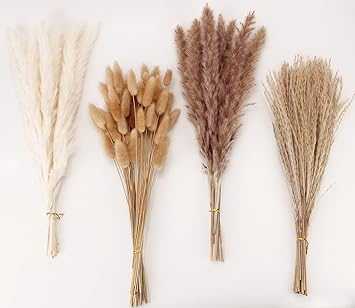
The most-photographed plant in the boho aesthetic and for good reason — the soft, feathered plumes in warm cream and blush add height, texture, and movement to any corner of an outdoor space. Place in a tall terracotta pot or woven basket and leave them entirely alone. They do their own work.

Hanging planters at different heights fill vertical space, bring trailing plants to eye level, and add the handmade, layered quality that distinguishes a boho patio from a simply decorated one. Fill with pothos, string of pearls, or trailing sweet potato vine for maximum cascade effect.

Lavender earns its place on a healing-focused outdoor space on every level — the scent is one of the most well-researched aromatherapy options for nervous system calm, it’s drought-tolerant and low-maintenance once established, and it looks exactly right in a terracotta pot on a boho patio. Brush it as you walk past in the evenings.
Build it for how you actually want to feel outside
The most beautiful boho patios are not the ones with the most furniture or the most plants or the most perfectly draped string lights. They’re the ones that feel like the person who built them — layered, a little imperfect, full of things chosen because they resonate rather than because they matched a set.
Start with what you have. One hanging chair. One good string of lights. A cluster of terracotta pots with whatever grows in your climate. A throw draped over the chair you’re going to sit in tonight. The boho aesthetic accumulates beautifully — each piece you add deepens the feeling of the space rather than cluttering it, as long as everything you choose is natural, warm, and genuinely yours.
Build it for the Tuesday evening when you need somewhere to exhale. For the slow Saturday morning with something warm to drink. For the kind of rest that only happens when you’re outside, surrounded by growing things and warm light, with no particular reason to go back in yet.
That’s the space worth building. And you deserve it.