

How to Talk to Your Doctor About Heat Sensitivity and Summer Symptom Changes
The content on this site was created with the help of AI. LOVEOWE LLC participates in the Amazon Services LLC Associates Program and other affiliate programs. As an Amazon Associate, I earn from qualifying purchases. This means I may earn a small commission—at no extra cost to you—when you make a purchase through links on this site. All opinions are my own. Learn more click here. Thank you for your support!

It took me three summers to figure out that I was allowed to bring this up at appointments.
Not because anyone told me I wasn’t — no doctor ever said “we don’t discuss seasonal symptoms here.” But because the implicit framing of most medical appointments is problem-focused in a specific, immediate way. There’s a problem. We address it. We move on. The more diffuse reality of living with chronic illness — that symptoms shift with seasons, that summer specifically changes things in ways that accumulate over weeks and affect daily function significantly — doesn’t always fit neatly into a ten-minute appointment slot. And when something doesn’t fit the format, it’s easy to leave it unsaid.
What I eventually learned — and what I want to pass on clearly — is that seasonal symptom changes are exactly the kind of information your healthcare provider needs. They need to know that your pain levels increase in heat, that your fatigue compounds in ways your winter baseline doesn’t predict, that the medications working in January feel insufficient by July. That summer is genuinely different for your body in ways that affect your quality of life and deserve clinical support.
The barrier is usually not willingness. It’s language. It’s not knowing how to raise a topic that feels vague or hard to quantify. It’s worry about being dismissed. It’s the fear of taking up too much appointment time on something that might be brushed off as “everyone finds summer hard.” And it’s not having the specific, confident framing that gets a clinical response rather than a generic one.
This post gives you that language. The questions worth asking. The information worth bringing. The symptoms worth tracking before the appointment so you walk in with data rather than impressions. And the self-advocacy framing that helps you get real answers — not just reassurance that summer is warm and you should drink water.
This post is for informational purposes only and is not intended as medical advice. Always work with your healthcare provider on decisions about your treatment plan.
Why this conversation is worth having — and why many people don’t have it
Seasonal symptom changes in chronic illness are real, well-documented, and clinically meaningful. Heat affects how the autonomic nervous system functions. It affects how medications absorb, distribute, and perform. It affects energy expenditure, inflammatory load, pain sensitivity, and sleep quality. For conditions like POTS, lupus, MS, fibromyalgia, ME/CFS, and others, heat is not a background variable — it is an active factor in how the condition behaves.
And yet, according to Harvard Health Publishing, patients with chronic conditions should not wait for a heat alert before taking action or raising concerns with their doctor — personal risk of heat-related illness can increase at temperatures below the threshold for formal heat alerts. The proactive conversation, before summer peaks, is more clinically useful than a reactive one after things have gotten difficult.
So why don’t most people have it? A few reasons that are worth naming honestly.
The minimization habit. People with chronic illness often develop a habit of minimizing symptoms in clinical settings — from previous dismissal, from uncertainty about whether what they’re experiencing is “bad enough” to bring up, or because seasonal changes feel cyclical and common and hard to quantify. The result is that a significant clinical variable — summer — never enters the medical record.
The appointment format doesn’t invite it. Routine appointments move through a specific agenda. The more contextual, longitudinal question — how does this condition behave across the full year, and what does summer specifically do to it — doesn’t arise unless you introduce it. Which means the responsibility of raising it is yours.
Not knowing what’s actually askable. Many people don’t fully know what their doctors can help with in a summer context — whether medication adjustments are appropriate, whether interventions for heat sensitivity exist, whether certain symptoms indicate a treatment plan needs seasonal calibration. Not knowing what’s possible makes it harder to ask. This post fills that gap.
Before the appointment: what to track, gather, and prepare
Walking into a medical appointment with specific information produces a different quality of conversation than walking in with a general sense of “summer is harder.” The difference is the difference between a provider engaging clinically with your data and a provider nodding and saying everyone finds heat difficult. Data gets taken seriously. Impressions get noted and moved past.
Tracking your symptoms for two to four weeks before raising this conversation gives you the specific, quantified information that moves a medical conversation from vague to actionable. Here’s what’s worth tracking.
Symptom severity by temperature and time of day. Keep a simple daily log: date, approximate high temperature, key symptoms, and a severity rating on a scale you define consistently. You don’t need a sophisticated system — a note in your phone works. What you’re looking for is the pattern: symptoms reliably worse above a certain temperature, fatigue arriving earlier in the afternoon on hotter days, pain levels elevated on days over a certain threshold. That pattern, shown across two to three weeks, is clinical data.
Functional impact. Symptom severity is meaningful; functional impact is more so. How many days in the past month did heat-related worsening affect your ability to work, maintain self-care, or function at your usual baseline? Quantifying function — not just sensation — gives your provider something to respond to that isn’t simply “I feel worse.”
What you’ve tried and what happened. If you’ve been implementing summer management strategies — cooling tools, electrolytes, timing activities, limiting heat exposure — document what you’ve tried and how symptoms responded. This demonstrates that you’ve been managing proactively and that the remaining difficulty is not from lack of effort. It also gives your provider a starting point for additional recommendations rather than beginning from zero.
Medication observations. Note whether any of your current medications seem less effective in summer, whether side effects seem more pronounced, or whether you’ve noticed any patterns around medication timing and heat sensitivity. These observations are clinically relevant and your provider may not be aware of them unless you report them specifically.
A one-page summary. Condense your tracking into a single page: the pattern you’ve observed, the functional impact, what you’ve tried, and the questions you want answered. This becomes the document you hand to your provider at the start of the conversation — changing the dynamic from you-trying-to-remember-everything to your-provider-responding-to-information-you’ve-already-organized. Preparation signals seriousness.
Tools for tracking and preparing before your appointment

A dedicated symptom tracking journal that provides structured space for daily entries keeps the information in one place rather than scattered across phone notes and memory. Look for one with dated entry pages, space for symptoms, energy levels, medications, and notes — the structure makes it easier to maintain consistency across a multi-week tracking period and easier to summarize before an appointment.

A small, professional notepad for writing out your prepared questions and key points before each appointment — and for taking notes during the conversation. Bringing written notes to an appointment signals preparation and makes it easier to remember what was discussed. A compact size fits in any bag without adding weight.
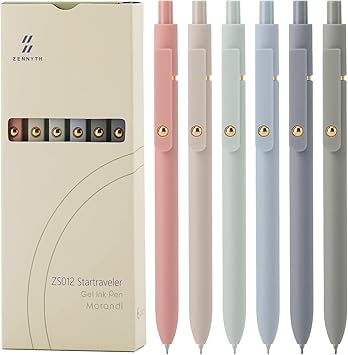
Pens that write smoothly enough that hand fatigue doesn’t interrupt the tracking habit. A set of three so there’s always one accessible — beside the bed for morning entries, in the bag for appointment notes, at the desk. The minor friction of a poor-quality pen that skips is a real barrier to daily tracking consistency when energy is already limited.

A slim folder that keeps your one-page symptom summary, your current medication list, and any relevant test results organized and accessible at appointments. Walking in with organized documentation changes the dynamic of a clinical conversation — it shifts you from patient-reporting-verbally to patient-presenting-data, which consistently produces more engaged clinical responses.
The specific questions worth asking: a complete guide by topic
Vague questions produce vague answers. Specific questions produce specific clinical responses. These are the questions — organized by topic — that are most likely to generate actionable information rather than general reassurance.
You won’t ask all of these in a single appointment. Choose the three to five that are most relevant to your current experience, write them down, and bring them in. If your provider runs out of time before you’ve covered them all, ask which ones can be addressed in a follow-up or through a patient portal message.
About your condition and heat specifically
- “Is heat sensitivity a recognized feature of my condition, and is what I’m experiencing typical for someone with my diagnosis?”
- “Are there any studies or clinical guidelines about managing [your condition] specifically in summer heat that I should know about?”
- “Do you have other patients with [your condition] who experience similar worsening in summer? What has been most helpful for them?”
- “At what point does a heat-related symptom increase become something I should contact you about, versus manage at home?”
About your medications and summer
- “Do any of my current medications affect my ability to regulate body temperature or my sensitivity to heat?”
- “Do any of my medications increase my sensitivity to UV light, and if so, what level of sun protection do I need?”
- “Are there any medications I take that need to be stored differently in summer, or that could be affected by high temperatures?”
- “Given that my symptoms seem more difficult to manage in summer, is there any reason to consider a seasonal adjustment to my current treatment plan?”
- “Are there any medications specifically used for heat sensitivity or autonomic dysfunction in the heat that might be appropriate for my situation?”
About hydration and electrolytes
- “Given my specific condition, what daily fluid intake target would you recommend for summer?”
- “Is increasing sodium and electrolyte intake appropriate for my condition and my current medications? Is there a target you’d recommend?”
- “I’ve been using [specific electrolyte product] to manage hydration — is there anything about my condition or medications that would make this inadvisable?”
- “Are there signs I should watch for that would indicate I’m under-hydrated, given that thirst isn’t always a reliable signal with my condition?”
About activity and pacing in summer
- “What temperature or heat index threshold should I use as a guideline for limiting outdoor activity?”
- “Are there any forms of summer exercise or movement that are safer or more appropriate for my condition than others?”
- “I’ve been timing outdoor activities for early morning and evening to avoid peak heat. Is there anything more specific you’d recommend based on my condition?”
About tracking and monitoring
- “I’ve been tracking my symptoms alongside temperature for the past [two to four] weeks. Would it be useful for me to share this with you? What patterns would be most clinically relevant to you?”
- “Are there any measurements I should be tracking at home in summer — blood pressure, heart rate, temperature — that would give us useful information?”
- “How would you like me to communicate with you if I notice a significant worsening in summer? Should I call, use the patient portal, or come in?”
For managing and monitoring your health through summer

For anyone whose provider recommends monitoring blood pressure as part of summer management — relevant for POTS, dysautonomia, lupus, and others — a home monitor that records readings with timestamps provides trackable data rather than single-point measurements. Look for one with memory storage that can hold at least 30 readings, and check with your provider which measurement position is most relevant for your condition.

A wrist-worn heart rate monitor that tracks resting heart rate trends over time provides objective data about how heat is affecting your cardiovascular response. For people with POTS specifically, tracking heart rate alongside symptoms and temperature gives a more complete picture of summer impact than symptoms alone. Look for one that logs data historically rather than only showing current readings.

A quick-read infrared thermometer for monitoring body temperature during high-heat days — useful for anyone whose condition involves temperature dysregulation or who has been advised to monitor for overheating. The non-contact format means you can check quickly without taking time or energy to prepare. Keep it accessible rather than stored away.

Temperature-sensitive medications — including biologics, insulin, and some autonomic medications — can be compromised within minutes in a hot car. An insulated cooler bag with a hard-sided cooling pack protects medications during appointments, outings, and travel. If your provider discussion includes summer medication storage, this is the immediate practical tool.
Scripts for the actual conversation: what to say when you’re in the room
Knowing what to ask is different from knowing how to open the conversation. The hardest part of raising a new topic in a medical appointment is often the first sentence — the one that introduces the subject and signals that this is something you need clinical engagement with, not just acknowledgment.
These scripts are designed to be direct without being aggressive, specific without being overwhelming, and confident in a way that conveys that this is a real clinical concern rather than a passing observation. Use them as written or adapt them to your voice.
Opening the heat sensitivity conversation for the first time:
“I want to talk about something I’ve been noticing for the past few summers that I haven’t brought up before. My symptoms — specifically [name your main symptoms] — are noticeably worse in summer heat in ways that affect my daily function. I’ve been tracking this for the past [two to four] weeks and I have some data I’d like to share with you. Can we make time for this today, or should we schedule a dedicated appointment?”
When you’re concerned about medication interactions with heat:
“I want to specifically ask about my medications and summer. I know some medications affect heat tolerance or sun sensitivity, and I want to understand whether any of mine fall into that category and what precautions I should be taking.”
When you’ve already tried standard management and it’s not enough:
“I’ve been implementing the cooling strategies and hydration approaches we’ve discussed — [list what you’ve tried] — and they help, but summer still significantly limits my function in ways that feel beyond what I can manage with lifestyle adjustments alone. I want to talk about whether there’s a clinical component to this that I’m missing, or whether there’s a treatment consideration we haven’t explored.”
When a previous provider dismissed this concern:
“I’ve tried to raise heat sensitivity in appointments before and it hasn’t gotten much clinical engagement. I want to be direct: this is significantly affecting my quality of life in summer, and I’d like us to treat it as a real clinical issue rather than a general heat complaint. I have tracking data I can show you. What would be most useful for you to see?”
When you want to understand what to watch for:
“Can you help me understand what level of heat-related symptom worsening is something I should monitor and manage at home, versus something I should contact you about, versus something that needs urgent attention? I want to have a clear framework so I’m not under-reporting or over-reacting.”
When you want to advocate for a seasonal treatment review:
“Given that my symptoms have a consistent seasonal pattern, I’d like to propose that we build a brief summer check-in into my care plan — either a short appointment or a patient portal check-in in late May or early June — so we can proactively adjust anything that needs adjusting before the worst heat arrives rather than reacting to it afterward. Is that something we can put in place?”
These scripts are a starting point — but the real skill of medical self-advocacy is knowing how to adapt your language to the specific conversation in front of you. What to say when you’re dismissed. How to ask for a referral you’ve been put off about. How to communicate symptom changes in a way that produces clinical action rather than reassurance. Say This: 30 Scripts for Chronic Pain Communication gives you 30 complete scripts for 30 real situations — including the ones where the first conversation didn’t go the way you needed it to. Get your copy of SAY THIS here
When the conversation doesn’t go the way you needed
Not every provider will engage with this conversation the way you need them to. Some will give generic advice. Some will minimizing heat sensitivity as a common complaint rather than a condition-specific one. Some will be genuinely stretched for time and not able to give this the attention it deserves in a standard appointment slot. Knowing how to respond to those outcomes is part of self-advocacy too.
If you receive generic advice (“everyone finds summer hard, stay hydrated and stay cool”):
Bring the conversation back to the specific. “I appreciate that — I want to make sure we’re talking about my condition specifically. For someone with [your diagnosis], are there clinical considerations beyond general heat safety that I should know about? I’ve been tracking my symptoms and the pattern is significant enough that I want to make sure we’re addressing it at the right level.”
If your concerns are acknowledged but no action is taken:
Ask directly what the next step is. “What would you need to see from me, or what would need to be true, for this to be something we address with a treatment change or a referral?” This converts a passive acknowledgment into an active clinical threshold — either your provider identifies what would justify further intervention, or the question itself prompts reconsideration.
If your provider doesn’t specialize in the heat-condition intersection:
Ask about referral. “Is there a specialist who would be better positioned to address the heat sensitivity aspect of my condition? I want to make sure I’m seeing someone who’s familiar with how [your condition] behaves in heat specifically.” Dysautonomia specialists, rheumatologists for autoimmune conditions, and neurologists for MS and other neurological conditions are the most likely referral destinations for condition-specific heat management.
If you leave an appointment feeling unheard:
Document what happened, including the date, what you raised, and what the response was. This record is useful for follow-up — either in the next appointment with the same provider, or in establishing a pattern if you’re considering a second opinion. You are entitled to a second opinion. You are entitled to a provider who takes this seriously. And you are entitled to return to this conversation until you have answers that actually help you navigate your summer.
For building your summer self-advocacy practice

A structured planner with pre-formatted sections for appointment preparation, notes, questions, and follow-up tracking keeps everything in one place across multiple providers and multiple seasons. The structure also reduces the cognitive load of appointment preparation — you’re filling in a framework rather than organizing from scratch each time.

A portable file organizer for maintaining copies of your current medication list, recent test results, diagnoses, and providers in one place. Arriving at appointments with organized medical history makes you a more effective self-advocate and ensures that relevant information reaches every provider, not just the primary one who holds the full record.

Medical appointments often involve waiting, walking, and environments with unpredictable temperature control. A cooling towel in your appointment bag means that the trip to and from the appointment doesn’t cost you the same physically as the appointment itself. Apply to neck and wrists in the waiting room, the car, and any waiting periods that involve heat exposure.

Cold electrolyte water available throughout the appointment and the journey to and from is part of the physical preparation for a day that involves exertion, stress, and likely some degree of heat exposure. A large insulated bottle that stays cold for hours ensures that hydration isn’t another variable you’re managing on top of everything else the appointment day requires.
What to ask for, specifically — the clinically useful outcomes
Knowing what you want from the conversation before you go in makes it significantly more likely that you leave with it. Here are the specific clinical outcomes worth naming and asking for directly.
A summer heat action plan. The CDC and Harvard Health both recommend that people with chronic conditions work with their doctors to create a personalized heat action plan — specific guidance for what to do when temperatures exceed certain thresholds, what symptoms warrant contact, and what emergency steps to take if heat illness develops. Asking for this specifically gives the conversation a concrete, document-able output.
A medication review for summer. Asking your provider to review your current medications for heat sensitivity considerations — photosensitizing effects, temperature storage requirements, hydration interactions — produces specific adjustments or precautions rather than a general note to be careful.
A target sodium and fluid intake for your condition. For anyone managing dysautonomia or POTS, asking for a specific daily sodium target — based on your condition, test results, and medications, not a general wellness range — is one of the most practically useful things you can leave a summer appointment with.
A clear threshold for escalation. What symptoms warrant same-day contact with your provider? What warrants urgent care? What warrants emergency services? Having this clearly communicated and documented removes a significant cognitive burden from the already-high-load experience of a bad summer symptom day.
A follow-up appointment or check-in in late summer. Proposing a brief late-summer check-in — in August or September — creates an accountability point for how the strategies you’ve discussed actually performed. It also signals to your provider that this is ongoing medical management, not a one-time concern. Conditions that behave seasonally deserve seasonal follow-up.
For taking care of yourself before and after difficult appointments

Medical appointments activate the nervous system even when they go well. A calming herbal tea before an appointment that involves self-advocacy — particularly one where you anticipate pushback — supports a regulated nervous system state that makes clear, confident communication easier. Chamomile and lemon balm specifically have documented calming effects without sedation.

A lightweight, beautiful bag that holds everything you bring to appointments — water bottle, symptom journal, medication organizer, cooling towel, snack — without the visual chaos of a bag that’s also holding everything else in your life. Having a dedicated appointment bag means everything is already packed and accessible, reducing the decision-making load on a day that already asks a lot.

Blood sugar stability before a medical appointment affects cognitive function, emotional regulation, and the confidence with which you communicate. Keep non-perishable snacks in your appointment bag — nuts, seed bars, dried fruit — so you’re never navigating a difficult conversation while also managing low blood sugar. This is practical self-advocacy infrastructure.

Post-appointment recovery is real — the physical and emotional cost of medical appointments, particularly ones that require self-advocacy, often lands afterward. Having something warm and comforting ready when you get home is part of the full picture of appointment care. A microwaveable neck wrap or portable heating pad waiting at home is the small, practical act of anticipating your own needs.
You are allowed to take up this space
The conversation about seasonal symptoms — about what summer does to your specific body, about the specific clinical support you need to navigate it — is a legitimate medical conversation. Not a complaint. Not a request for special treatment. Not something to apologize for raising or to preface with “I know this might sound trivial.” A clinical conversation about a real, documented aspect of how your condition behaves.
You are allowed to walk into an appointment with notes. You are allowed to ask specific questions and expect specific answers. You are allowed to say “that doesn’t fully address what I’m experiencing” and ask again. You are allowed to propose a summer check-in as part of your ongoing care. You are allowed to bring data, ask for a plan, and leave with something actionable rather than general.
The advocates among us — the ones who actually get the treatment adjustments, the seasonal check-ins, the medication reviews, the individualized heat action plans — are not the ones with the most dramatic presentations. They’re the ones who showed up prepared, asked specifically, and kept asking until they got real answers.
This summer, you can be one of those people. You have the language. You have the questions. You know what you’re asking for.
Go get it.