
What Are Chakras — And Why Do They Matter When You’re Living With Chronic Illness?
The content on this site was created with the help of AI. LOVEOWE LLC participates in the Amazon Services LLC Associates Program and other affiliate programs. As an Amazon Associate, I earn from qualifying purchases. This means I may earn a small commission—at no extra cost to you—when you make a purchase through links on this site. All opinions are my own. Learn more click here. Thank you for your support!

I want to start with the version of this conversation I wish someone had offered me years ago — the honest one, not the overwhelming one.
Not the version that assumes you already meditate, already own crystals, already have a relationship with your energy body and a Sanskrit vocabulary to go with it. The version that starts where most of us actually are: exhausted, in some degree of pain, skeptical of anything that sounds like it might be asking you to pretend you feel better than you do, and quietly open to the possibility that there might be more to healing than what Western medicine alone has been able to offer you so far.
That’s where I was when I first started learning about chakras. And I’ll be honest — my initial reaction was resistance. It sounded like something for people whose lives had more margin than mine. People who had the energy for elaborate rituals and the luxury of believing in things they couldn’t see. Chronic illness has a way of making you practical out of necessity. You learn quickly what works and what doesn’t, because the cost of what doesn’t work lands in your body.
What changed my mind wasn’t a dramatic spiritual experience. It was something much quieter. It was noticing that the language of chakra healing kept describing things I recognized — the disconnection from my own body, the difficulty trusting myself after years of medical dismissal, the grief sitting in my chest that physical treatment hadn’t touched, the way fear had settled into my nervous system in a way that felt almost structural. These weren’t problems a prescription could fully address. They were something else. And chakra work offered a framework for understanding and addressing that something else.
This post is the beginning of that conversation. It’s the introduction to a seven-part series — the LOVEOWE Chakra Series — that will move through each of the seven main energy centers of the body, exploring what they govern, how chronic illness affects them, and how to work with them in ways that are practical, beautiful, and genuinely accessible to a body that doesn’t always have a lot to spare.
You don’t need to believe in chakras to begin. You just need to be curious. That’s enough to start.
What is a chakra, actually?
The word chakra comes from Sanskrit and means wheel or disk. In the yogic and Ayurvedic traditions of ancient India — where the chakra system originated, at least three thousand years ago — chakras are understood as spinning centers of energy within the body. They are the points where consciousness and physicality meet: where what we feel emotionally, what we carry spiritually, and what we experience physically all converge.
There are seven main chakras, each located along the central channel of the body from the base of the spine to the crown of the head. Each one governs a specific domain of experience — safety, creativity, power, love, expression, intuition, connection — and each is associated with specific physical organs and body systems, specific emotional patterns, specific spiritual qualities, and specific symptoms when it’s out of balance.
If this sounds abstract, here’s a more concrete way to think about it: you already know, from your own experience, that emotions live in the body. You know what grief feels like in the chest. You know what anxiety feels like in the stomach. You know what shame does to your posture, or what joy feels like as a physical sensation, or how fear tightens the throat. The body-emotion connection is not a spiritual claim — it’s basic human experience, and it’s increasingly supported by research in fields like psychoneuroimmunology and somatic psychology.
Chakras are, in part, a map of that connection. They offer a framework for understanding why certain emotional experiences tend to manifest in certain physical locations, and why working with the body — through movement, breath, sound, intention, and conscious attention — can address things that purely intellectual or pharmaceutical approaches cannot fully reach.
You don’t have to believe the chakras are literal spinning wheels of light to find this framework useful. Many people who work with chakras think of them as metaphor — as a language for describing patterns of experience in the body and mind that are real and recognizable, even if the mechanism underlying them isn’t fully understood. Others work with them as literal energetic structures. Both approaches lead to the same practices, and both can produce real results. Start wherever feels honest to you.
Why chronic illness and chakra work belong in the same conversation
Western medicine is extraordinary at certain things. Emergency intervention, infection, structural repair, pharmaceutical management of symptoms and disease progression. But it has significant gaps when it comes to the chronic, complex, whole-person reality of living with conditions that don’t resolve, that affect every layer of life simultaneously, and that the current medical system was not, honestly, designed to address well.
Those gaps are where many people with chronic illness find themselves living. In the space between diagnoses that explain some things but not everything. In the emotional weight that accumulates when your body becomes a source of suffering rather than a home. In the disconnection that happens when you’ve spent years having your experience questioned, minimized, or dismissed by the systems meant to help you. In the grief of a life that looks different from what you planned, navigated in a body that requires more management than you ever expected.
Chakra work doesn’t claim to cure physical illness. That needs to be said clearly and honestly. It is not a replacement for medical care, and anyone who presents it as such is not being truthful with you.
What it offers is something different and genuinely complementary. It offers a framework for understanding and working with the parts of chronic illness that medicine doesn’t address — the emotional layers, the energetic depletion, the spiritual weight, the body-image wounds, the nervous system dysregulation, the broken self-trust. It offers practices that support healing at a level that goes beyond symptom management. And it offers a relationship with your own body that is active, intentional, and rooted in care rather than conflict.
For people with chronic illness specifically, each of the seven chakras maps onto recognizable patterns of experience:
The root chakra holds the fear and instability that chronic illness brings — the loss of the ground beneath your feet when your body can no longer be relied upon as the stable thing it once was.
The sacral chakra holds the grief of lost pleasure and creativity — the activities and expressions that pain or fatigue have made harder to access.
The solar plexus chakra holds the loss of autonomy and confidence — what happens to your sense of personal power when your body regularly overrides your plans.
The heart chakra holds the complicated love — for a body that hurts you, for a self that has been through so much, for a life that requires more forgiveness than you expected.
The throat chakra holds the voice that has been silenced — by dismissal, by the effort of having to advocate repeatedly for your own experience, by the thousand times you weren’t believed.
The third eye chakra holds the self-trust that gets eroded — when years of medical gaslighting teach you to doubt your own perception, your own knowing, your own reading of your experience.
The crown chakra holds the spiritual reckoning — the why questions, the meaning questions, the relationship with something larger than the day-to-day management of illness.
Every single one of these is territory that chronic illness touches. The chakra system gives you a language and a set of tools for each of them.
Healing is not only physical. Your energy, your emotions, your spirit are part of what needs tending. Chakra work tends those parts.
The seven chakras: a brief introduction to each
Here is the simplest possible introduction to each chakra — just enough to orient you before the series goes deeper into each one individually.
1. Root Chakra — Muladhara
Location: Base of the spine
Color: Deep red
Governs: Safety, stability, belonging, survival, the physical body as home
When balanced: You feel grounded, secure, and at home in your body and your life
Chronic illness connection: The foundation that illness shakes — security, physical safety, and the ability to trust that the ground will hold
2. Sacral Chakra — Svadhisthana
Location: Below the navel, lower abdomen
Color: Warm orange
Governs: Creativity, pleasure, emotions, flow, sensuality, joy
When balanced: You feel emotionally fluid, creative, and able to experience pleasure
Chronic illness connection: The grief of lost capacity — the things pain and fatigue have made harder, and the reclamation of joy in new forms
3. Solar Plexus Chakra — Manipura
Location: Upper abdomen, below the sternum
Color: Bright yellow
Governs: Personal power, confidence, identity, will, self-esteem
When balanced: You feel capable, motivated, and clear about who you are
Chronic illness connection: The autonomy that illness challenges — rebuilding a sense of personal power when your body regularly overrides your plans
4. Heart Chakra — Anahata
Location: Center of the chest
Color: Green (and sometimes pink)
Governs: Love, compassion, forgiveness, connection, grief
When balanced: You feel open, loving toward yourself and others, and able to give and receive care
Chronic illness connection: The complicated relationship with a body that hurts — learning to love yourself through and alongside illness, not only after it
5. Throat Chakra — Vishuddha
Location: Throat
Color: Bright blue
Governs: Communication, truth, self-expression, being heard
When balanced: You speak your truth clearly and feel genuinely heard
Chronic illness connection: The voice that chronic dismissal silences — reclaiming the ability to advocate clearly for yourself in every room, medical and otherwise
6. Third Eye Chakra — Ajna
Location: Between the eyebrows, center of the forehead
Color: Indigo
Governs: Intuition, inner sight, wisdom, clarity, self-trust
When balanced: You trust your own perception and access your inner knowing with clarity
Chronic illness connection: The self-trust that medical gaslighting erodes — and the work of coming back to believing your own experience
7. Crown Chakra — Sahasrara
Location: Top of the head
Color: Violet or white
Governs: Connection to something greater, spiritual awareness, surrender, meaning
When balanced: You feel connected to a sense of purpose and something larger than daily suffering
Chronic illness connection: The spiritual weight of illness — the why questions, the meaning-making, the search for peace that goes beyond physical management
Beginning your chakra practice: foundational tools

A clear, accessible reference guide to the chakra system that you can return to throughout the series. Look for one that covers all seven chakras with practical exercises rather than purely theoretical content — and ideally one written in plain language that doesn’t require prior spiritual knowledge. Having a physical reference alongside the series posts deepens the practice.

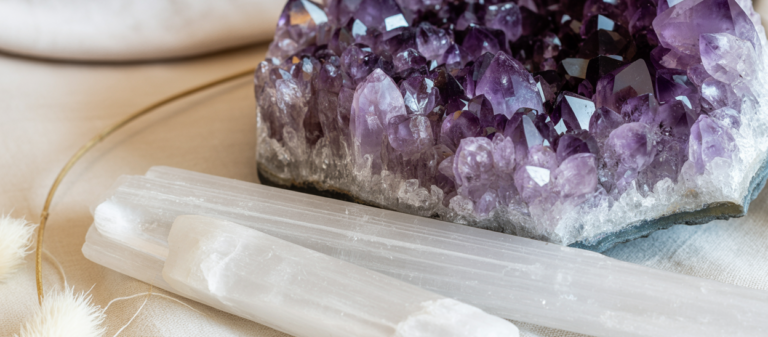
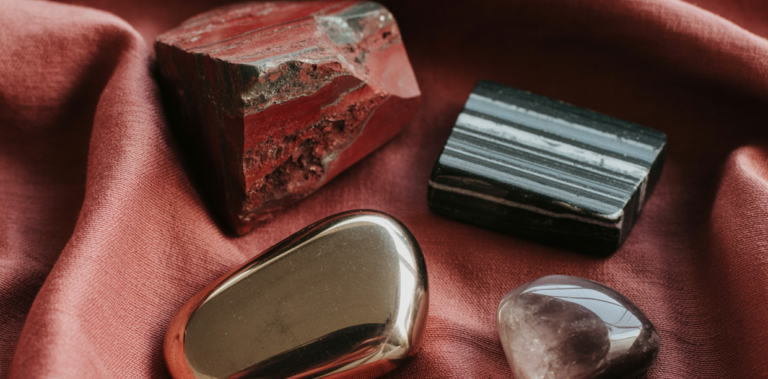
A complete set with one crystal representing each chakra — typically red jasper or garnet for the root, carnelian for the sacral, citrine for the solar plexus, rose quartz or green aventurine for the heart, blue lace agate or sodalite for the throat, amethyst for the third eye, and clear quartz or selenite for the crown. A set gives you a visual map of the whole system and a starting point for each individual post in this series.
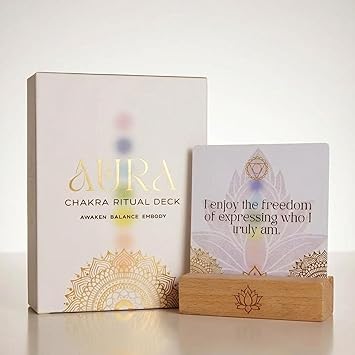
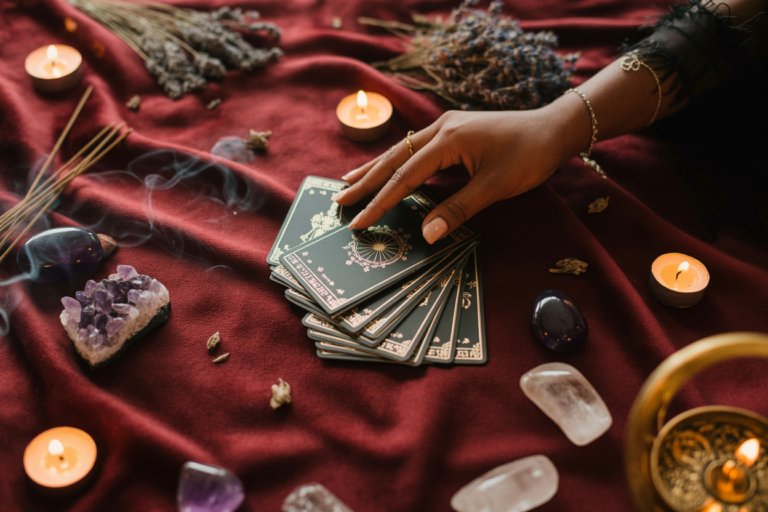
A card deck organized by chakra gives you a daily touchpoint — draw one card each morning and let it orient your attention for the day. Over the course of the series, rotating through a chakra deck builds familiarity with all seven energy centers in a low-effort, visually beautiful format. Look for decks with affirmations rather than predictive content.

A curated set of essential oils or blends corresponding to each chakra — typically including earthy oils like patchouli for the root, sweet orange or ylang ylang for the sacral, lemon or ginger for the solar plexus, rose or geranium for the heart, eucalyptus or peppermint for the throat, frankincense or clary sage for the third eye, and lavender or sandalwood for the crown. Diffuse the relevant oil during each post’s practices.
How to begin: a gentle entry point for anyone
The most common mistake people make when starting chakra work is trying to do everything at once. Reading about all seven chakras simultaneously, acquiring all the tools, beginning all the practices. The overwhelm of that approach tends to produce exactly the kind of scattered, foggy energy that chakra work is designed to clear. The beginning is simpler than that.
Start with curiosity, not commitment. You don’t need to believe in chakras. You don’t need to have a dedicated practice space or own any crystals. You don’t need to know Sanskrit or have a meditation background. You need to be willing to pay attention — to notice what resonates when you read about each energy center, to observe your own body’s response to the practices, to stay curious about what the framework might illuminate about your own experience. Curiosity is the only prerequisite.
Start with the chakra that calls to you. The LOVEOWE Chakra Series is designed to be read in any order. Look at the seven descriptions above and notice which one produces a flicker of recognition. Which one describes something you’ve been living with? Which one names something you’ve been trying to address without having the language for it? That’s where your work is right now. Start there.
Start with one practice. Each post in this series includes multiple practices — meditation, breathwork, journaling, crystal work, affirmations. You don’t need all of them. You need one, done consistently, long enough to notice its effect. Five minutes of quiet attention to a specific part of your body, repeated daily for two weeks, will tell you more about whether this work is useful for you than reading every chakra book ever published.
Start with compassion. Chakra healing is not a performance. It is not something you do correctly or incorrectly. It is a practice of turning toward yourself with attention and care — and for people with chronic illness, that turning toward rather than against a body that has been the source of so much difficulty is itself the work, regardless of which specific practice you’re doing. Be gentle with yourself in this. There is no timeline, no progression, no measure of success other than the quality of attention you bring.
What the LOVEOWE Chakra Series covers
Each of the seven posts in this series follows the same framework — so once you read one, you know what to expect from all of them. That consistency is intentional. The chakra system is a complete, interconnected whole, and working through it with the same structure for each energy center helps you see the patterns across the whole system as well as the specifics of each individual one.
Every post in the series includes:
What this chakra is — the location, the Sanskrit name, the color, the element, the qualities it governs, and what it feels like when it’s balanced versus blocked.
The chronic illness and pain connection — the specific ways this chakra intersects with the experience of chronic illness. This is the part that makes the LOVEOWE Chakra Series different from most chakra content — it’s written for people whose bodies and lives have been shaped by illness, not for people in optimal health looking for optimization.
Opening and healing practices — meditation, breathwork, movement, and sensory practices for working with this specific chakra. Every practice comes with a full version and an accessible version, because what’s available to you on a good day is different from what’s available on a bad one, and both deserve to be honored.
Crystals and ritual tools — the specific crystals most aligned with this chakra, what they each offer, and how to work with them. Plus the practical ritual tools — candles, oils, incense, sounds — that support the energetic work.
Journaling prompts — specific questions designed to help you explore this chakra’s territory in your own life, your own body, your own history. Some will land immediately. Some will take time. All of them are worth sitting with.
Affirmations — a set of statements written specifically for the chronic illness experience of this chakra. Not the generic “I am love” variety, but the specific, honest, hard-won language of someone who has had to fight for their own self-trust, self-worth, and self-love.
Creating your sacred space for the series

A dedicated tray for your chakra practice objects — crystals, a candle, an affirmation card, any botanicals — creates a contained, intentional space that you can update as you move through each post in the series. The tray itself doesn’t need to be elaborate. What matters is that it’s consistently yours, and that its presence is a daily visual reminder that this practice exists and belongs to you.

A dedicated journal for working through this series — separate from your daily planning or symptom tracking — gives your inner work its own space. Lay-flat binding matters for chronic illness journaling specifically: you shouldn’t have to hold the book open with one hand while writing with the other on a day when both hands are needed for something else.
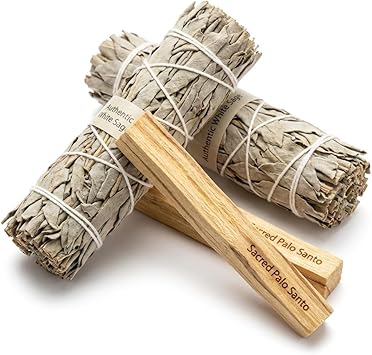
Clearing the energy of your practice space before beginning — whether through smoke, sound, or intention — is a way of marking the transition from ordinary time into intentional time. Palo santo is sweeter and generally better tolerated for respiratory sensitivity. White sage is more traditional. Either, used briefly and in a ventilated space, does the job. This is optional but consistently reported as meaningful by people who do it regularly.

A small, weighted eye pillow for resting meditations — blocking light, activating the parasympathetic nervous system through gentle pressure, and making lying-down practice feel deliberately restorative rather than just convenient. For chronic illness bodies that spend significant time horizontal, this turns rest into ritual. Use it across every post in this series for any lying-down meditation practice.
This series is about healing at every level — energetic, emotional, spiritual. And one of the most powerful things you can do for your healing is learn how to advocate for yourself in the medical spaces that shape your physical care. Say This: 30 Scripts for Chronic Pain Communication gives you the exact language for 30 real situations — the appointments, the dismissals, the hard conversations — so you can show up for yourself in every room, not just the sacred one. Get your copy of SAY THIS here
You are already the person this series is for
You don’t have to be spiritual. You don’t have to be certain. You don’t have to be well enough to sit up for a meditation or energized enough to build an elaborate ritual practice. You just have to be here, reading this, with some part of you that is still reaching toward healing even when healing has been slow and complicated and not what you expected.
That reaching is enough. It is more than enough. It is, honestly, one of the most remarkable things about people who live with chronic illness and pain — the persistence of that reaching, through fatigue and flares and disappointment and all the rest of it. The refusal to stop looking for what might help. The stubbornness of hope.
The chakra system is one framework among many. It won’t replace your medical care, your medications, or any other part of your treatment. What it might do is offer you something to work with at the level that medicine doesn’t always reach — the emotional layers, the spiritual weight, the energy that needs tending as much as the body does.
We begin at the foundation. The root chakra is the first energy center — the one that governs safety, stability, and the most fundamental question that chronic illness and pain ask of us: can I still trust the ground beneath my feet when my body has become uncertain territory? That’s where the work starts. At the base. At the beginning. At the place where healing has to be built from the inside out.
The ground is steadier than you think. Let’s find it together.
Next in the LOVEOWE Chakra Series: The Root Chakra — Safety, Grounding, and Coming Home to a Body That Hurts