
Managing Chronic Illness in the Summer Heat: What Actually Helps
The content on this site was created with the help of AI. LOVEOWE LLC participates in the Amazon Services LLC Associates Program and other affiliate programs. As an Amazon Associate, I earn from qualifying purchases. This means I may earn a small commission—at no extra cost to you—when you make a purchase through links on this site. All opinions are my own. Learn more click here. Thank you for your support!

Every summer I have a version of the same conversation with my body. It goes something like: okay, it’s warm now, we know this is harder, let’s figure out how to do this together. And every summer my body responds the way chronic illness bodies tend to — not always with cooperation, not always on my schedule, but with enough feedback that I’ve learned, over the years, what actually makes a difference.
Managing chronic illness in summer is genuinely harder than most general wellness content acknowledges. For many conditions — POTS, lupus, fibromyalgia, MS, ME/CFS, endometriosis, rheumatoid arthritis — heat is a genuine physiological challenge that affects how the nervous system functions, how the body regulates temperature, and how much energy basic daily tasks require. Summer with chronic illness requires real, specific strategies. Not just “stay hydrated” in a casual tone, but actual understanding of what’s happening and what tools address it.
This post is that. The physiology of why heat hits chronic illness bodies harder. The cooling strategies that actually work, with specificity about how to use them. Hydration for bodies that have a complicated relationship with fluid balance. Pacing through a season built for doing more. Medications and sun — a conversation most summer guides skip entirely. And the particular emotional weight of a season whose culture tends to assume you have energy you may not have.
You deserve to understand what’s happening and to have real tools for it. Let’s start there.
This post is for informational purposes only and is not intended as medical advice. Always consult your healthcare provider before making changes to how you manage your condition.
Why heat hits chronic illness bodies differently
Heat tolerance is not just a matter of preference. For many chronic illness conditions, heat exposure creates physiological changes that go beyond discomfort and into genuine symptom amplification — and understanding why helps you take the problem seriously rather than wondering if you’re being too sensitive about something most people handle easily.
Dysautonomia and temperature regulation. Conditions that affect the autonomic nervous system — POTS (postural orthostatic tachycardia syndrome), dysautonomia broadly, and conditions with dysautonomia as a component like EDS and ME/CFS — affect the body’s ability to regulate temperature precisely because the autonomic nervous system is what controls temperature regulation. When heat arrives, the autonomic nervous system is responsible for dilating blood vessels, directing blood to the skin for cooling, and managing sweat production. When that system doesn’t function reliably, the body’s cooling mechanisms can be inefficient or dysregulated — leading to both overheating and the cardiovascular symptoms that heat-exacerbated POTS is known for.
Uhthoff’s phenomenon in MS and heat-sensitive neurological conditions. MS patients experience what’s called Uhthoff’s phenomenon, where temperature increases as small as 0.2 to 0.5 degrees Celsius trigger neurological problems including increased pain, weakness, and vision changes. Up to 80 percent of people with MS experience this effect. The mechanism is that heat affects the conduction of nerve impulses along already-damaged myelin sheaths. Symptoms typically resolve when the body cools — but managing body temperature to prevent that threshold from being crossed in the first place is the work of a summer with MS.
Fibromyalgia and the narrowed comfort window. People with fibromyalgia feel heat pain at lower temperatures — research has found this threshold is approximately four degrees lower than average. The central sensitization that characterizes fibromyalgia means heat amplifies existing pain signals rather than simply adding new ones. A temperature that feels merely warm to someone else can feel genuinely overwhelming.
Lupus, photosensitivity, and summer flares. Lupus and heat sensitivity often go hand in hand. Many individuals with lupus experience heightened symptoms when exposed to sunlight or heat, including rashes, joint pain, and extreme fatigue. Importantly, UV exposure specifically — not just heat — can trigger immune activation in lupus that leads to flares. Air pollution, which is often higher in summer months, has also been associated with increases in lupus disease activity. Summer management for lupus requires addressing both heat and UV as separate variables.
Medications that complicate the picture. Some medications commonly used for chronic conditions affect the body’s ability to regulate temperature or increase sun sensitivity. Antidepressants, certain antibiotics, antihistamines, and diuretics can all affect temperature regulation or hydration status. People taking diuretics may notice an increase in symptoms in hot weather due to exacerbation of dehydration. Immunosuppressants and certain disease-modifying drugs used in autoimmune conditions increase sun sensitivity. This is the conversation worth having with your doctor before summer peaks — asking specifically whether any of your current medications have summer-specific considerations.
Understanding why summer is harder for your specific body is the first step toward managing it with strategy rather than just willpower.
Cooling strategies that actually work
The general advice to “stay cool” in summer is not wrong — it just doesn’t go far enough to be useful for a body with real heat intolerance. These are the cooling strategies with the most evidence and the most practical utility for chronic illness.
Pre-cooling before activity. The most effective use of cooling tools is proactive, not reactive. Pre-cooling before an outdoor activity or appointment extends the window of tolerance significantly. A cold shower before leaving, a cooling towel on the neck and wrists for fifteen minutes before going out, a cold beverage consumed in advance — these reduce the body’s starting temperature so heat exposure begins from a lower baseline.
Neck cooling as the highest-impact target. The neck is the most effective single site for body temperature reduction because the carotid arteries run close to the skin surface there — cooling that area cools the blood traveling to the brain more directly than cooling other body surfaces. Cooling towels applied to the back of the neck, cold packs wrapped in a cloth and draped around the shoulders, or cooling neck wraps designed specifically for this purpose consistently outperform general body cooling in terms of thermal relief per effort. For anyone with heat-exacerbated neurological symptoms specifically, neck and head cooling is the priority.
Wrist and pulse point cooling. The inner wrists, the temples, and the inside of the elbows are all pulse points where blood vessels run close to the skin — cooling these areas with a cold, damp cloth or ice pack provides faster systemic cooling than cooling covered body areas. Running cold water over the wrists for thirty to sixty seconds is one of the fastest accessible interventions available and can be done almost anywhere.
Cooling vests for longer exposures. For people who need to be outside for extended periods — medical appointments that involve walking, outdoor events, or any situation where managing heat over hours rather than minutes is required — a cooling vest provides sustained, hands-free body temperature management that no handheld tool can replicate. Phase-change cooling vests use materials that absorb heat as they melt (similar to ice packs but lasting longer); evaporative vests use water evaporation for cooling. The phase-change variety tends to be more effective in high-humidity environments where evaporation is impeded.
Timing and the peak heat window. Staying indoors during peak heat hours — typically 11 a.m. to 3 p.m. — is one of the most effective and most cost-free summer management strategies available. Activities scheduled in the early morning or after 4 p.m. are not just more comfortable but genuinely lower-risk for heat-related symptom exacerbation. This isn’t avoidance — it’s scheduling with physiology rather than against it.
Cooling tools worth having for chronic illness summer management

The baseline cooling tool. Keep one in every bag, one in the car, one in the freezer for home use and one as a backup. Activated with water and wrung out, they provide sustained evaporative cooling for up to two to three hours. Apply specifically to the back of the neck, inner wrists, and forehead for maximum systemic effect. The microfiber variety activates faster and stays cooler longer than the mesh type.

A dedicated neck wrap that stays in place without holding — allowing hands-free cooling while you move through an appointment, a store, or an outdoor event. Phase-change wraps that use cooling crystals provide more consistent temperature and work better in humid conditions than purely evaporative wraps.

The combination of moving air and fine water mist provides faster perceived cooling than either alone. USB-C rechargeable versions last through a full outing on a single charge. Foldable designs that fit into any bag are the most useful — if it’s not with you, it’s not available when you need it.
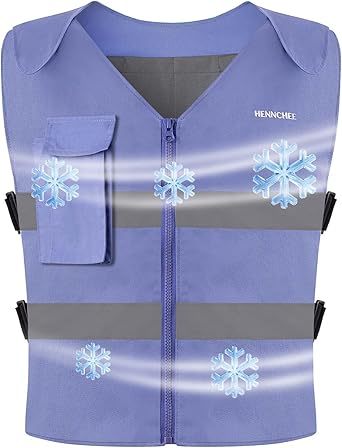
For longer heat exposures where handheld tools are insufficient, a phase-change cooling vest provides sustained, hands-free temperature management. Look for removable insert packs that can be chilled in the freezer or a cooler, a lightweight outer shell, and adjustable sizing that allows wearing over or under clothing depending on the situation.
Hydration for bodies with complicated relationships with fluid
The standard summer hydration advice — drink eight glasses of water a day — is incomplete for many chronic illness bodies, and for some conditions, following it without modification can actually worsen symptoms. Hydration for chronic illness in summer is a more nuanced conversation.
Electrolytes matter as much as volume for POTS and dysautonomia. For people with POTS or dysautonomia, fluid intake without adequate sodium and electrolyte replacement can dilute sodium levels and worsen orthostatic symptoms. The treatment protocol for POTS specifically often includes high sodium intake alongside high fluid intake — for some people, significantly higher sodium than standard dietary guidelines suggest. Electrolyte drinks or packets that include sodium, potassium, and magnesium are more useful than plain water for maintaining blood volume and reducing POTS symptoms in summer heat. This is a conversation worth having explicitly with your cardiologist or autonomic specialist before summer, because the right electrolyte approach is condition and treatment-plan specific.
Hydrating from food, not just drinks. Foods with high water content contribute meaningfully to daily hydration — watermelon (92 percent water), cucumber, tomatoes, strawberries, zucchini, and lettuce all provide hydration alongside their nutritional content. This matters particularly for anyone whose nausea, appetite suppression, or medication effects make reaching fluid volume goals difficult through drinks alone. Building hydrating foods into every summer meal addresses both hydration and anti-inflammatory nutrition simultaneously.
Cold water strategically, not exclusively. Cold water cools you more quickly from the inside than room-temperature water but can occasionally cause GI discomfort for people with sensitive systems. Room-temperature water with electrolytes may be better tolerated by some conditions. Know your body’s response and drink accordingly — the goal is to hydrate consistently, not to force any particular temperature that creates a new symptom.
Medication storage. High summer temperatures can compromise temperature-sensitive medications within minutes in a hot car. Use an insulated medication cooler bag whenever you’re traveling or away from home for any length of time. This is one of the most practically important and most easily addressed summer medication considerations.
This post contains affiliate links. I may earn a small commission at no extra cost to you.
Hydration tools for chronic illness summer management

Look for formulations that specify sodium content and include all three key electrolytes — sodium, potassium, and magnesium — rather than primarily sodium or primarily potassium. Low-sugar versions are better for daily use without the blood sugar fluctuation of high-sugar sports drinks. Keep a box at home and a handful of packets in every bag.

A large-capacity insulated bottle keeps water cold for 24 hours and reduces the frequency of refilling — relevant when getting up to refill costs more energy than it should. An easy-open lid (push-button or straw style) that can be operated one-handed and without looking is the design specification that makes consistent drinking significantly easier on hard days.

A small insulated cooler bag specifically for temperature-sensitive medications — keeping insulin, biologics, and refrigerated medications within their required temperature range during outings, appointments, and travel. Look for ones with a hard-sided cooler pack rather than just insulation, and check that it maintains temperature for the duration of your typical outing.

Unsweetened coconut water provides natural electrolytes including potassium and magnesium in a palatable format that some people find easier to consume consistently than plain electrolyte packets. Useful as a hydration supplement on high-heat days or as a post-activity recovery drink. Look for coconut water with no added sugar — the natural sugars in coconut water are sufficient.
Pacing through a season that doesn’t slow down
Summer’s cultural energy — the expectation of activity, socializing, productivity, presence at outdoor events, participation in the season — creates a specific kind of pressure for people with chronic illness. Everyone else seems to be doing more. The long light makes inactivity feel more pointed. And the real physical challenge of heat adds an extra variable to every decision about what to do and when.
Pacing in summer is about designing a season rather than just surviving one — making deliberate decisions about when, how, and how much, so that the energy available goes toward the things that matter most.
Activity in the thermal windows. The single most effective pacing strategy in summer is scheduling all higher-effort activity in the cooler parts of the day — early morning before 10 a.m. and evening after 4 or 5 p.m. — and treating the midday heat hours as a rest and recovery window rather than lost time. This is not limitation. It is working with your body’s actual thermal capacity rather than against it, which means you have more functional hours overall rather than fewer.
Planning activities during cooler parts of the day and building in breaks often, even during errands or time with friends. The cognitive load of summer social and logistical activity is easy to underestimate because the activities themselves often look low-intensity. But an afternoon of conversation in the heat, even in the shade, costs more than the same afternoon at room temperature — because your body is continuously working to manage its thermal state on top of everything else. Build in breaks deliberately, not reactively. Rest before you need it rather than after you’re depleted.
The cool-down plan. Have a specific plan for when you feel overheated — not just “I’ll find somewhere cool” but a specific sequence. Cool shower at home, specific fans already running, the specific position (lying down, feet elevated for POTS) that your body recovers fastest in, the specific drink you reach for. Having this decided in advance removes the decision-making burden from a moment when your cognitive capacity is already reduced by heat.
Protecting the summer non-negotiables. Identify what summer needs to contain to feel worth having — the specific experiences that make it feel like yours — and protect those first. Not the obligatory events or the activities that cost more than they return. Choosing where your limited summer capacity goes is the most honest form of self-care available.
Sun, medications, and the protection conversation most people skip
Sun protection in a chronic illness context is a different conversation than general sun safety. For people with photosensitive conditions — lupus primarily, but also dermatomyositis, certain porphyrias, and many conditions treated with medications that increase photosensitivity — UV exposure is not just a skin aging concern but a genuine disease trigger.
Photosensitizing medications are more common than most people know. Medications that increase sun sensitivity include certain antibiotics, some NSAIDs, hydrochlorothiazide, certain antidepressants, methotrexate, and hydroxychloroquine. If you’re on any of these, sunburns happen faster, photosensitive rashes are more likely, and the inflammatory response to sun exposure is amplified. Asking your prescribing doctor specifically about sun sensitivity is a worthwhile pre-summer appointment question.
Mineral sunscreen specifically. Mineral sunscreen — zinc oxide and titanium dioxide-based — is gentler on reactive or medication-sensitive skin than chemical sunscreen, and for conditions involving photosensitivity, broad-spectrum mineral SPF 50 or higher is the appropriate standard. Reapplication every two hours during sun exposure, or after sweating, is more critical for people with photosensitive conditions than for the general population. A tinted mineral sunscreen can also provide light coverage that reduces the visible redness or discoloration that some conditions cause at the skin surface.
UPF clothing as a reliable alternative to constant reapplication. UPF-rated clothing — rated UPF 50+ — blocks over 98 percent of UV radiation in the fabric itself, providing consistent protection that doesn’t wash off with sweat or require remembering to reapply. For people with lupus or other photosensitive conditions who are spending extended time outside, UPF clothing on covered areas is more reliable than sunscreen alone. Long-sleeve UPF shirts, UPF swim rash guards, and UPF-rated wide-brim hats have all become considerably more fashionable than they were even five years ago.
Sun protection essentials for heat-sensitive conditions

Zinc oxide or titanium dioxide-based sunscreen formulated for sensitive or reactive skin. Look for a formulation that doesn’t leave a white cast — many mineral sunscreens have improved on this significantly — and check the label for “broad-spectrum” specifically (covers both UVA and UVB). Tinted options provide an additional light-coverage benefit for skin that shows redness or discoloration.

A hat rated UPF 50+ with at least a four-inch brim provides shade for the face, neck, and décolletage — the areas most consistently sun-exposed in daily life. Look for a deep crown that fits securely without constant readjustment, and a packable design if you don’t always have it on your head when leaving home.
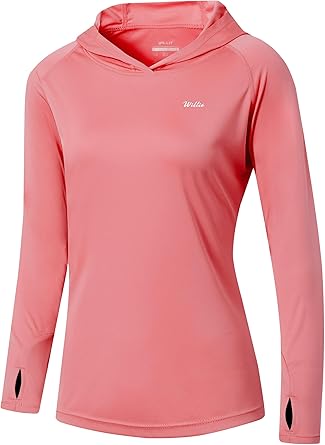
A lightweight UPF-rated long-sleeve shirt for extended outdoor exposure provides consistent, reapplication-free protection for the arms and torso. Look for a fabric that breathes rather than trapping heat — the goal is sun protection without adding thermal burden. Many UPF shirts now come in beautiful colors and prints that read as a style choice rather than a medical accommodation.
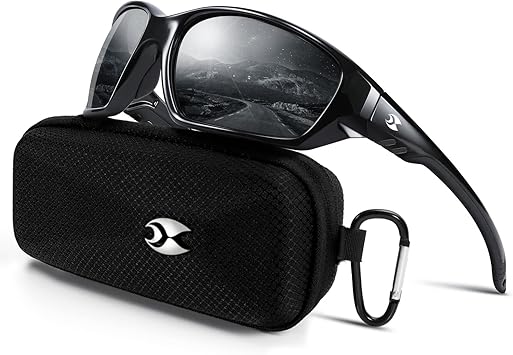
Eye protection rated UV400 (100 percent UV protection) matters for everyone but is particularly relevant for conditions involving photosensitivity and for anyone on medications that affect UV response. Look specifically for the UV400 or “100% UV protection” label — dark lenses without a UV rating actually increase UV exposure by causing pupil dilation. Wraparound styles provide the most complete coverage.
The emotional weight of summer with chronic illness
Managing chronic illness in summer is not only a physical project. It is an emotional one — and that dimension deserves to be named without either minimizing it or making it the entire conversation.
Summer comes with a particular social pressure that amplifies the grief that chronic illness can carry year-round. The season is visually and culturally built around energy, spontaneity, and physical presence in the world in ways that chronic illness often limits. The Instagram summer and the chronic illness summer look nothing alike, and the gap between them is most visible in the season that makes it most apparent.
The grief of missing things is real. The frustration of managing a season everyone else seems to navigate without a strategy is real. None of these require solving — but they require acknowledgment, because pretending they don’t exist doesn’t reduce them.
What chronic illness summer management at its best looks like is holding those feelings alongside the genuine pleasures that are available. The slow morning with the good light. The outdoor evening that worked because you pre-cooled and planned well. The version of this season that is yours rather than someone else’s — smaller perhaps, but genuinely chosen.
You don’t have to have a big summer to have a good one. You just have to have yours.
Managing your condition through summer often means more medical conversations — about medication adjustments, about heat sensitivity, about what your body needs that you haven’t been getting. Say This: 30 Scripts for Chronic Pain Communication gives you the exact language for those appointments — the ones where you need to advocate clearly for yourself and know you’ve been heard. Get your copy of SAY THIS here
For managing the full summer toolkit
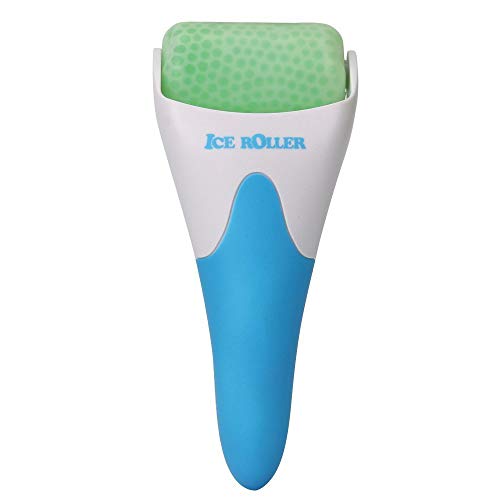
A frozen silicone ice roller applied to the face, neck, and wrists provides fast, targeted cooling and reduces facial flushing and inflammation on contact. Two to three minutes of rolling immediately after heat exposure can meaningfully reduce recovery time. Keep in the freezer specifically so it’s always ready.

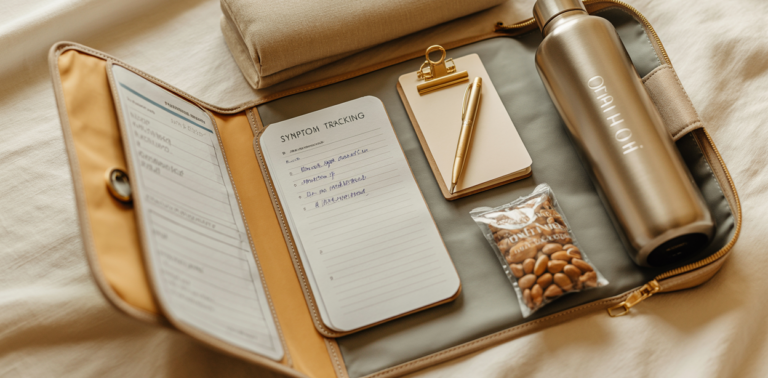
Tracking activity, heat exposure, symptoms, and energy levels across summer days reveals patterns that are impossible to identify in the moment — which activities consistently precede flares, which time windows work reliably, which recovery strategies work fastest for your specific body. This data belongs in your medical appointments as self-advocacy material.
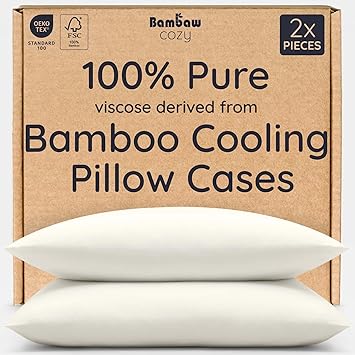
Night-time temperature management matters as much as daytime — disrupted sleep from heat is itself inflammatory and compounds the daily energy deficit that summer already creates. Bamboo pillowcases regulate temperature through the night rather than just feeling cool at initial contact, providing more consistent sleep quality than cotton alternatives.

A small clip-on fan that attaches to a stroller, desk, hospital bed, or chair arm and provides continuous personal airflow without needing to be held. Silent enough to use in medical waiting rooms. Battery or USB-C powered. For anyone who spends significant time waiting in warm environments — appointments, public transportation, any sitting situation without airflow — this is the friction-reduction tool that costs the least and earns consistently.
Strategy, not just survival
There’s a version of managing chronic illness in summer that is purely reactive — waiting for the heat to get you, then recovering, then doing it again. And there’s a version that’s proactive: pre-cooling before you leave, scheduling with the thermal windows, knowing your cool-down plan before you need it, having your electrolytes and your cooling towel already with you, having already talked to your doctor about your medications’ summer considerations.
The proactive version doesn’t prevent all hard days. Summer with chronic illness will still have hard days. But it changes the ratio, and it changes how much agency you have in those days — which is its own form of self-care, separate from and alongside all the physical tools.
You know your body better than any guide can. Use this post as a framework and then adapt it to what your specific body actually needs in summer — which you already know more about than you might give yourself credit for. The information here, combined with the knowledge you’ve accumulated about your own condition, is enough to build a summer management strategy that works.
That strategy is worth building. You are worth that level of preparation. And this summer — however it looks, whatever it contains — is worth showing up for.