How to Design a Home That Actively Supports Your Healing
The content on this site was created with the help of AI. LOVEOWE LLC participates in the Amazon Services LLC Associates Program and other affiliate programs. As an Amazon Associate, I earn from qualifying purchases. This means I may earn a small commission—at no extra cost to you—when you make a purchase through links on this site. All opinions are my own. Learn more click here. Thank you for your support!
I didn’t realize my apartment was making me worse until I started making it better.
This sounds like something that should have been obvious, but it wasn’t. When you’re managing chronic illness, the home becomes such a constant backdrop to your symptoms that it stops being something you see clearly. It’s just where you are. What landed it for me was a bad week where I couldn’t get comfortable anywhere in my own home. The lighting was too bright. The couch wasn’t supportive enough for the hours I was spending on it. There was nowhere that felt designed for rest — just spaces that happened to have furniture in them. I was navigating my illness in an environment that was entirely neutral to it at best, creating a layer of low-grade friction I’d been absorbing without naming.
Designing a home that actively supports your healing is not about aesthetics, though it can be beautiful. It’s not about expensive renovations or starting from scratch. It’s about making intentional choices — in lighting, in layout, in texture and air and sound and scent — that reduce the effort your environment asks of you, and increase the comfort, calm, and restoration it returns.
Your home is not just where you live. It’s where your healing happens. It deserves to be designed for that.
Lighting: the element that affects your nervous system most immediately
Lighting is where most homes fail the people who live in them — and where the gap between a space that drains you and one that restores you is often widest. The overhead light that came with your apartment, the fluorescent brightness of standard bulbs, the blue-white light that many people default to because it’s cheap and functional — these are not neutral choices for a body managing chronic illness. They are choices that ask something of your nervous system that it often doesn’t have to give.
Light affects cortisol, melatonin production, pain perception, and nervous system state. Blue-spectrum light — the kind that dominates most standard bulbs — signals alertness and suppresses melatonin. Warm amber light at 2700K or below signals rest, reduces cortisol, and creates the physiological conditions for actual recovery. This distinction is not subtle in a body that’s already managing a significant daily load.
Replace overhead lighting with layered lamps wherever possible. A single overhead light that floods the room is almost never the right light for someone spending significant time at home in a chronic illness context. Replace it — or supplement it — with lamps at multiple heights and multiple locations in the room. A floor lamp in one corner. A table lamp beside the couch. A smaller lamp on a shelf. Multiple softer sources at different heights creates warmth and dimension that a single overhead fixture cannot. Use warm white bulbs throughout — 2700K is the maximum for a healing-supportive environment; lower is better.
Install dimmer switches wherever you can. The ability to control light intensity throughout the day is one of the most impactful low-cost changes available to someone with chronic illness. Pain levels fluctuate. Migraine thresholds fluctuate. Sensory tolerance fluctuates. A dimmer switch that costs under twenty dollars allows you to match the light in your environment to what your body actually needs in any given hour, rather than living at a fixed brightness that may be too much on bad days.
Invest in blackout curtains or blinds for your rest spaces. Sleep quality is directly connected to inflammation levels — poor sleep is pro-inflammatory in ways that compound over time. Light that enters through windows during sleep or daytime rest disrupts melatonin production and compromises rest quality even when you’re not fully conscious of it. Blackout curtains in the bedroom are not a luxury in a healing home. They are infrastructure.
Add a salt lamp or warm-glow nightlight for the nighttime hours. The transition from daylight to sleep becomes more physiologically supported when you can move through your home in the evening in warm amber light rather than bright overhead light. A Himalayan salt lamp produces a glow close to candlelight in quality — non-stimulating, warming, gentle on sensitive eyes. One on each nightstand and one in the bathroom replaces the overhead light for evening use and changes the quality of that transition entirely.
The light in your home is not just aesthetic. It’s a daily signal to your nervous system about whether it’s safe to rest — and for a body managing chronic illness, that signal matters more than most people realize.
Lighting that supports rest and recovery

The single most impactful and most affordable lighting change in a healing home. Replace every bulb in your primary living and resting spaces with warm white (2700K or lower) LEDs. The difference in how your nervous system responds to a room lit with warm amber versus cool white is immediate and significant — particularly in the evenings.

A plug-in lamp dimmer requires no electrical work — it goes between the lamp cord and the outlet and gives you full intensity control instantly. Get one for every lamp in your main rest spaces. Being able to dim your environment to match what your body needs on any given day or hour is worth more than almost any other single change in this list.

Quality blackout curtains that seal out light along the sides as well as across the face of the window are worth the investment for anyone whose rest quality is affected by light exposure. Thermal-lined options also regulate temperature — keeping the room cooler in summer and warmer in winter — which is an additional benefit for people who manage temperature sensitivity.

A salt lamp on each nightstand produces the warmest, most physiologically gentle evening light available at any price point — close to candlelight in quality, completely non-stimulating, and easy on sensitive eyes. The dimmer cord gives you intensity control without any additional hardware. Get one for the bedroom and one for the bathroom used most in the evening.
Creating a dedicated rest and sanctuary space
One of the most significant things a healing home can do is give you somewhere that exists specifically for restoration — not for working, not for scrolling, not for the management tasks that chronic illness generates, but for actual, intentional rest and recovery. This doesn’t require a spare room or significant space. It requires one area in your home that holds the signal: this is where I come to restore.
The psychological dimension of this matters as much as the physical. Environments become associated with the activities that happen in them — a concept well-established in sleep science. When you work from your bed, the brain has more difficulty transitioning into genuine rest there. When you scroll in your sanctuary corner, that corner becomes associated with stimulation rather than rest. A space used consistently for healing builds a powerful environmental cue over time — your nervous system begins to respond to it as a signal for restoration, which is one of the quietest and most effective tools available for someone whose nervous system is already under significant load.
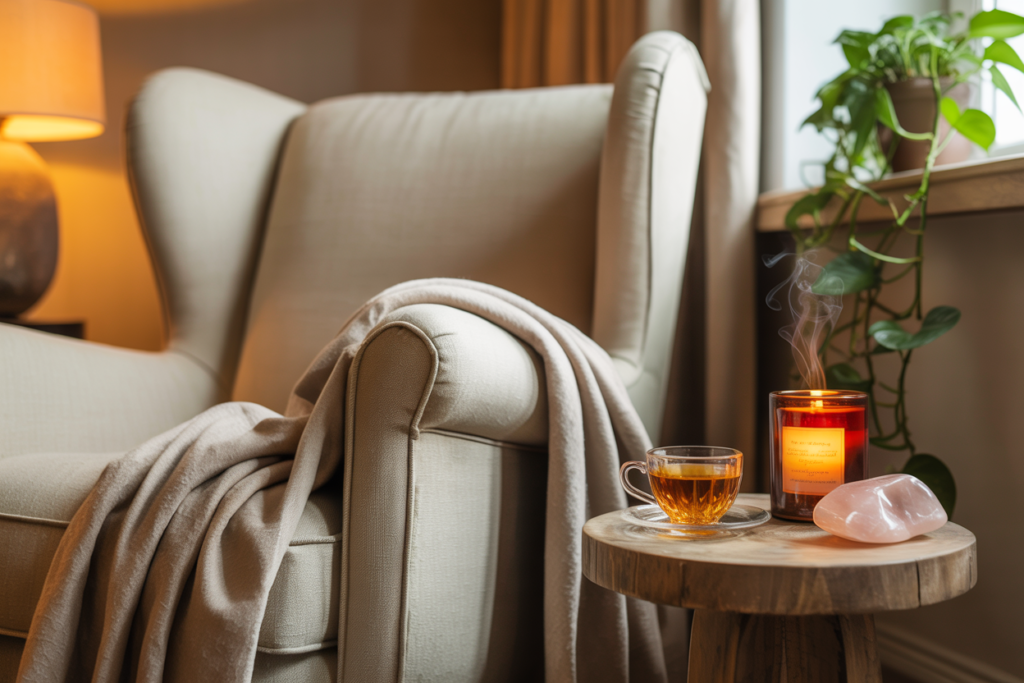
Choose your anchor piece for the space. This is whatever seating or surface invites the most genuine rest in your home — a deep armchair, a chaise, a low sofa, a floor cushion setup, a window seat. It should be comfortable enough to spend real time in, warm enough to feel enveloping rather than just functional, and positioned in a way that doesn’t require you to be actively engaged with the rest of the room. Facing a window, or toward a softer corner of the room rather than directly at the television or a busy wall, supports the inward quality that restoration requires.
Layer the softness. A throw blanket that stays in this space — not the one that migrates around the house, but the one that belongs here. A cushion specifically shaped for your body’s current needs (lumbar support if back pain is frequent; a body pillow if you often need to lie down in stages). Textures that feel safe and soft to your skin, particularly on the days when sensory sensitivity is heightened. The physical softness of a rest space communicates to the nervous system in ways that are not metaphorical — tactile comfort is a genuine physiological input.
Remove what doesn’t belong there. The most common mistake is adding without removing. A corner with a lamp, a soft chair, and a small table is genuinely restorative. The same corner plus laundry, cables, and papers is not. Visual clutter creates a low-grade cognitive load that prevents the nervous system from settling. Protect the space actively and consistently from accumulating what doesn’t serve it.
Anchor it with a small ritual object. A candle. A crystal. A plant. A small tray with the things you reach for here. One or two objects that signal this is your place. The objects matter less than what they represent — that this space exists for your restoration, and your restoration is worth having a space.
Sensory design: building an environment your body can actually be in
Chronic illness frequently involves heightened sensory sensitivity — fabrics that seem soft in a store can become unbearable after hours of contact, sounds other people filter out become impossible to ignore, scents that are pleasant in small quantities become triggers in enclosed spaces. Designing for this is not about creating a sterile environment. It is about reducing the invisible friction that a home creates for a nervous system already working harder than it should. Every element that irritates rather than soothes is a small tax on limited resources — and those taxes add up across a day, a week, a flare, a year.
Textures and fabrics throughout the home. The materials your skin is in contact with for long periods — sofa upholstery, bedding, clothing worn at home, throw blankets and cushion covers — should be chosen with sensory sensitivity explicitly in mind. Linen, cotton jersey, bamboo, and modal are consistently the most gentle options for people with heightened tactile sensitivity. Synthetic fabrics that feel fine briefly can become intolerable over time. Rough seams, scratchy tags, and abrasive surfaces are worth eliminating systematically — not as a luxury but as a practical reduction of daily sensory load.
Sound management. An environment that is persistently noisy — traffic, neighbors, appliances, the low-level ambient noise of urban or suburban living — asks something of the nervous system that chronic illness can make very hard to give. White noise machines, soft music, and noise-cancelling solutions (for both ears and windows) can meaningfully reduce the sensory demand of your home environment. Weighted blankets, thick rugs, and soft textiles also absorb sound in ways that are noticeable over the course of a day. Even reducing noise by a small amount consistently matters when your nervous system is managing more than its usual share.
Scent and air quality. Smell is the sense most directly connected to the emotional brain and one of the most powerful environmental levers for nervous system regulation. Lavender for calm and sleep support. Eucalyptus for clarity and breathing ease. Frankincense for grounding. These work through diffusers, linen sprays, or plants. Air quality matters equally — adequate ventilation, air-purifying plants or filters, and avoiding synthetic fragrances that can trigger sensitivities all contribute to the air being something your body receives rather than reacts to.
Temperature control. Temperature dysregulation is common in many chronic conditions. Layered textiles — throws, multiple bedding layers, a portable heated pad — provide more flexibility than a thermostat can. A small space heater positioned precisely, or a cooling fan for targeted relief, gives you localized control that the main HVAC system doesn’t. This flexibility matters more than a single comfortable ambient temperature.
Sensory-supportive additions for a healing home

Deep pressure stimulation — the mechanism behind weighted blankets — activates the parasympathetic nervous system, reducing cortisol and promoting the physiological state of rest. For people with heightened sensory sensitivity, anxiety, or pain-related sleep disruption, a weighted blanket is one of the most consistently reported improvements to daily functioning. Choose a weight approximately 10 percent of your body weight as a starting point.

A white noise machine reduces the sensory demand of ambient environmental noise by creating a consistent, non-stimulating auditory foreground that masks unpredictable sounds. Particularly useful for people with sound sensitivity, sleep disruption, and pain that is worsened by startle responses. Look for options with fan sounds, rain, and brown noise in addition to white noise — different people respond differently to different frequencies.

A diffuser with a timer allows you to run it for a set period without having to remember to turn it off — relevant when energy and focus are limited. Look for one that operates quietly and has an auto-shutoff. Lavender, frankincense, and bergamot are the most research-supported options for nervous system regulation; eucalyptus for respiratory ease. Start at a low intensity if you have chemical sensitivities.
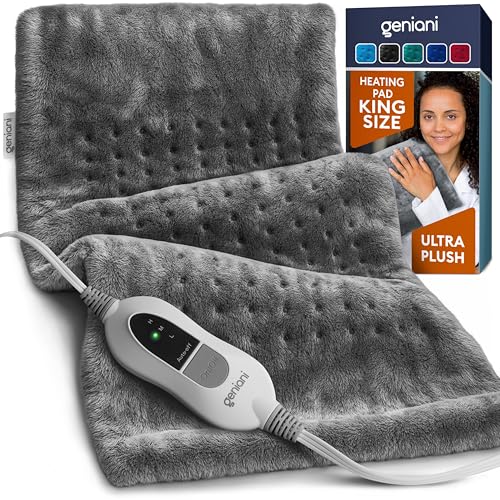
Localized warmth is one of the most effective and most immediate comfort tools available for chronic pain — and a portable heating pad or heated blanket that you can position precisely where you need it is significantly more useful than a thermostat adjustment. Look for one with multiple heat settings, an auto-shutoff, and a large enough coverage area for your most common pain sites.
Air, light, and nature: the healing elements money can’t fully replicate
There is a body of research — growing and increasingly respected — on the relationship between natural environments and healing. Time in nature reduces cortisol, lowers blood pressure, supports immune function, and produces measurable changes in inflammatory markers. For people with chronic illness who spend significant time indoors, bringing elements of the natural world into the home is not an aesthetic preference. It is a genuine health consideration.
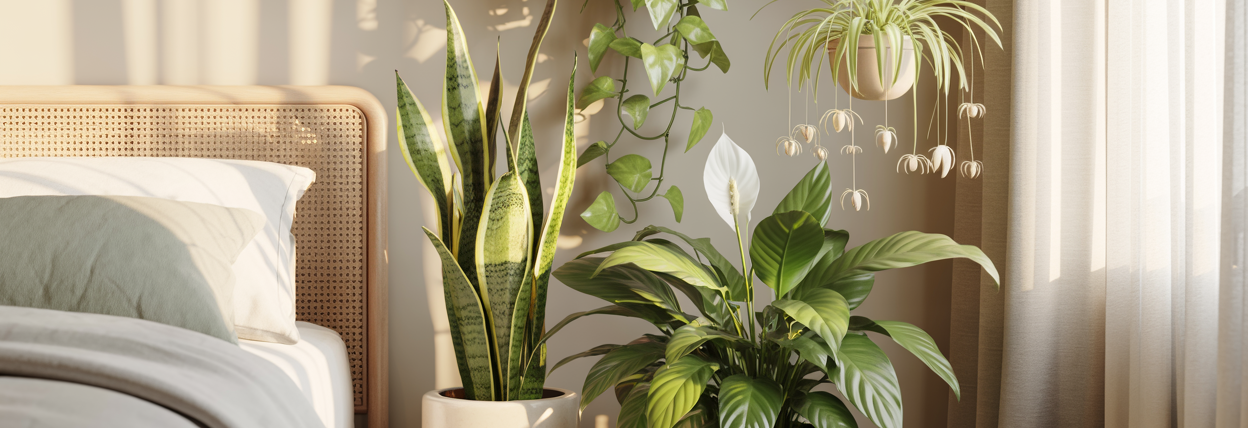
Plants as air quality and nervous system support. Air-purifying plants — snake plants, peace lilies, spider plants, pothos — remove pollutants and increase oxygen in the rooms they inhabit. Beyond air quality, simply being in visual contact with growing plants reduces stress and cortisol in ways that have been demonstrated across multiple studies. A large plant in the primary rest space or bedroom, a smaller one on the nightstand or windowsill, trailing pothos from a high shelf — these are not decoration in a healing home. They are active participants in the environment’s quality.
Natural light during waking hours. Morning light exposure — even fifteen to thirty minutes early in the day — anchors the circadian rhythm, supports cortisol in its natural morning peak, and improves sleep quality the following night. If mobility or energy limits time outdoors, positioning your primary daytime space near a window that receives morning light is a meaningful substitute.
Fresh air and ventilation. Indoor air quality is frequently worse than outdoor air in sealed modern homes. Opening windows for brief periods daily, using exhaust fans in kitchens and bathrooms, and choosing cleaning products with simpler ingredient lists reduces the invisible chemical load of your indoor environment — particularly important for anyone whose conditions involve chemical sensitivity or respiratory components.
Natural materials throughout the home. Wood, stone, linen, cotton, rattan — natural materials are more visually restful, more tactilely comfortable, and less likely to off-gas the volatile organic compounds that synthetic materials and certain paints release. Choosing natural materials where possible is a low-drama way to reduce the invisible sensory and chemical burden of your environment over time.
Bringing nature and clean air into your healing home

The most forgiving and most consistently recommended air-purifying plant for indoor healing spaces. Snake plants tolerate low light, irregular watering, and significant neglect without visible protest — which suits a bedroom whose owner’s energy is sometimes needed elsewhere. They release oxygen at night, making them particularly valuable for sleep environments, and their upright form reads as sculptural and calming rather than busy.

For people with chronic conditions that involve respiratory components, chemical sensitivities, or immune dysfunction, a quality HEPA air purifier removes particulates, allergens, and pollutants from the air in the space where you spend the most time. Look for one rated for the square footage of your room, with a true HEPA filter and a low-noise setting for use during sleep or rest.

A trailing pothos in a hanging planter cascades beautifully from a high shelf or window hook, adds living texture and air quality benefits, and requires very little maintenance. Pothos is one of the most forgiving plants available for low-light environments and irregular care schedules — and the visual movement of trailing leaves is specifically calming in a rest environment.

Beeswax and soy candles burn cleaner than paraffin — producing less soot and fewer of the VOCs that paraffin candles release. In a healing home where air quality matters, the candle material is not a trivial detail. Beeswax also naturally purifies air as it burns. Unscented or lightly scented with essential oils rather than synthetic fragrance keeps the air genuinely clean rather than just pleasant-smelling.
The rest station: designing for your worst days as well as your best
A healing home that works only on good days is not a healing home. The most important design consideration for someone living with chronic illness is this: how does this space function when I have the least to give? When a flare is bad enough that the couch or the bed is where you are — not for an hour but for a day, or several days — does your environment meet you there? Or does it create an additional layer of difficulty on top of an already difficult experience?
Designing for your worst days is an act of self-compassion that has practical consequences. It means the things you need are within reach without having to get up. It means the surface you’re resting on is actually comfortable for the extended periods you’re spending on it. It means the environment reduces friction rather than generating it at exactly the moment you have the least capacity to absorb it.
The bedside or couch-side setup. Treat your primary rest surface — bed, couch, specific chair — as a workstation for recovery. A small table within arm’s reach that holds water, medication, phone charger, lip balm, a book. Everything you might need without having to stand up. This is not laziness. It is designing your environment to support you at exactly the moment it matters most.
A quality lap tray. A lap tray with a cushioned base gives you a stable surface for eating, reading, writing, or using a device while lying or reclining — eliminating the need to sit up fully at a table on days when that requires more than you have. For anyone who spends significant recovery time horizontal or semi-reclined, a lap tray is one of the most practically valuable additions to a healing home.
Accessible storage for your most-used items. Baskets and bins at accessible heights — not in high cabinets, not requiring bending to floor level — for medications, heating pads, and comfort items. The goal is that retrieving these things costs you as little energy as possible on the days when energy is the resource you can least afford to spend on logistics.
A dedicated comfort kit within the rest space. A heating pad, a cooling pack, topical relief, a small speaker, your current book. These gathered in one place mean the hard moment doesn’t also require a search. The environment does that work for you in advance.
Designing for your worst days doesn’t mean giving up on your good ones — it means that when the bad days come, you are held by your environment rather than fighting it.
Designing your home to support your healing is one form of self-advocacy. Knowing how to communicate your needs in the medical spaces that shape your treatment is another. Say This: 30 Scripts for Chronic Pain Communication gives you the exact language for 30 real situations — so you can walk into every appointment as prepared and as supported as the healing home you’re building. Get your copy of SAY THIS here
Rest station essentials for the harder days

A quality lap desk with a firm, cushioned underside gives you a stable surface for eating, reading, writing, or using a laptop or tablet while lying or reclining. Look for one with a wrist rest and a non-slip surface — the stability matters as much as the cushioning when you’re using it during long rest periods. This is the single most practically useful item in a chronic illness rest station.

A bedside caddy that attaches to the bed frame or a small rolling nightstand keeps everything you need during rest periods within arm’s reach without requiring a table beside the bed. Medication, water bottle, phone, remote, comfort items — all accessible without sitting up. On bad days, this removes a layer of effort that costs more than it should.

Beautiful open-top baskets placed at accessible heights — on low shelves, on a coffee table, beside the couch — keep your most-used comfort and symptom management items organized and immediately accessible. A basket on the coffee table can hold your heating pad, a small blanket, your remote, and your medications. One in the bedroom holds your nighttime care items. No searching, no standing up, no door or drawer to manage.

Staying hydrated during rest periods matters more than it gets credit for — particularly for people with conditions that affect energy and pain levels, where dehydration compounds both. A large-capacity insulated bottle with a lid you can open and drink from one-handed, without sitting up or using both hands, means water is always accessible during even the most limited mobility periods.
Your home is already part of your treatment plan
Whether you’ve thought of it that way or not, your home is already affecting your health — through its light, its air, its sounds, its textures, the energy it costs you to navigate, and the quality of rest it does or does not support. The question isn’t whether your environment affects your healing. It’s whether you’re making intentional choices about how.
This doesn’t have to happen all at once. Start with the lighting — it costs the least and changes the most. Add one plant to your rest space. Create a bedside setup that holds what you need without requiring you to get up. Designate one corner as the place that exists specifically for your restoration, and protect it from everything that isn’t that.
Build it slowly, in the direction of a home that supports rather than depletes. A home that meets you on the bad days and holds something beautiful for the better ones. A home where your body can exhale — not just when you’re well enough to design things carefully, but on the ordinary days and the difficult days too.
You deserve a home that is on your side. With some intention and some patience, that home is entirely within reach.