Crossbody Bags for Chronic Pain: How the Right Strap Width Changes Everything About Your Day
The content on this site was created with the help of AI. LOVEOWE LLC participates in the Amazon Services LLC Associates Program and other affiliate programs. As an Amazon Associate, I earn from qualifying purchases. This means I may earn a small commission—at no extra cost to you—when you make a purchase through links on this site. All opinions are my own. Learn more click here. Thank you for your support!

The bag you carry should never be the reason you hurt more by 2 p.m.
My favorite bag for about three years was a small structured leather crossbody with a thin gold chain strap. It was beautiful — genuinely, objectively beautiful, the kind of bag that people commented on in the way that bags rarely get commented on. I loved it the way you love something before you understand what it is costing you. What it was costing me, I eventually figured out, was approximately two hours of functional afternoon every time I wore it for more than an hour. The chain strap — less than half an inch wide — transmitted the full weight of everything I was carrying as a concentrated line of pressure directly into my trapezius. The pain followed a predictable path: trapezius first, then up through the levator scapulae, then into the base of the skull, then the headache that was usually established by the time I got wherever I was going and would remain until the following morning.
I did not connect the bag to the headache for an embarrassingly long time. I connected the headache to my chronic illness, which was accurate in the sense that my chronic illness had made my trapezius reactive in a way it had not been before — but was incomplete in the sense that I was choosing to put a thin strap on that reactive trapezius every time I left the house. When I finally made the connection and switched to a bag with a wide padded strap, the afternoon headaches that I had been managing with medication and rest three or four days a week became occasional. The difference was a strap width. That’s it. That’s the whole story.
This post exists because that story is not unique. Thin bag straps are one of the most consistent and most underreported contributors to chronic pain symptom worsening — because the connection between a bag you put on in the morning and a headache you have by the afternoon is not obvious until someone points it out, and mainstream bag advice never points it out because mainstream bag advice is not written for bodies like ours.
What follows is the bag guide that should exist for chronic illness and chronic pain — organized by strap type, bag weight, and organizational features, with the specific details that distinguish a bag that supports your day from one that quietly undermines it called out for every recommendation. Beautiful bags, all of them. That part was non-negotiable. But functional first, in the specific way that chronic pain bodies require functionality.
The strap width education: why this number matters more than any other specification
Strap width is the single most important specification in a bag for chronic pain — more important than the bag’s weight, its size, its organizational features, or any other variable. This is because strap width determines how the bag’s weight is distributed across your body, and distribution is the entire game when the body receiving that weight is already managing pain.
A thin strap — anything under an inch — concentrates the full weight of the bag as a narrow line of pressure. On a healthy trapezius, this creates minor discomfort over time. On a trapezius sensitized by fibromyalgia, cervical spine involvement, myofascial pain syndrome, or any of the other chronic pain presentations that affect the upper back and neck, this narrow line of pressure triggers a pain response that compounds with every hour the strap is in place. The weight of the bag is not the primary variable. The distribution of that weight is.
A wide strap — one and a half inches and above — begins to distribute the same weight across a surface area large enough that no single point in the trapezius bears the full load. A padded strap of two inches or more does this significantly better. At this width, the pressure becomes ambient rather than concentrated — present but not focal, tolerable rather than triggering. For many chronic pain bodies, the difference between a one-inch strap and a two-inch padded strap is the difference between being functional at 4 p.m. and not being functional at 4 p.m.
When shopping for bags using the recommendations in this post, verify the strap width in the product specifications rather than estimating from photos, which distort proportions reliably. A strap that looks wide in a product photo may measure less than an inch in practice. The number matters. Look for it explicitly, and treat anything under one and a half inches as a bag that does not meet the chronic pain standard regardless of how beautiful it is.
Wide-strap crossbody bags for chronic pain
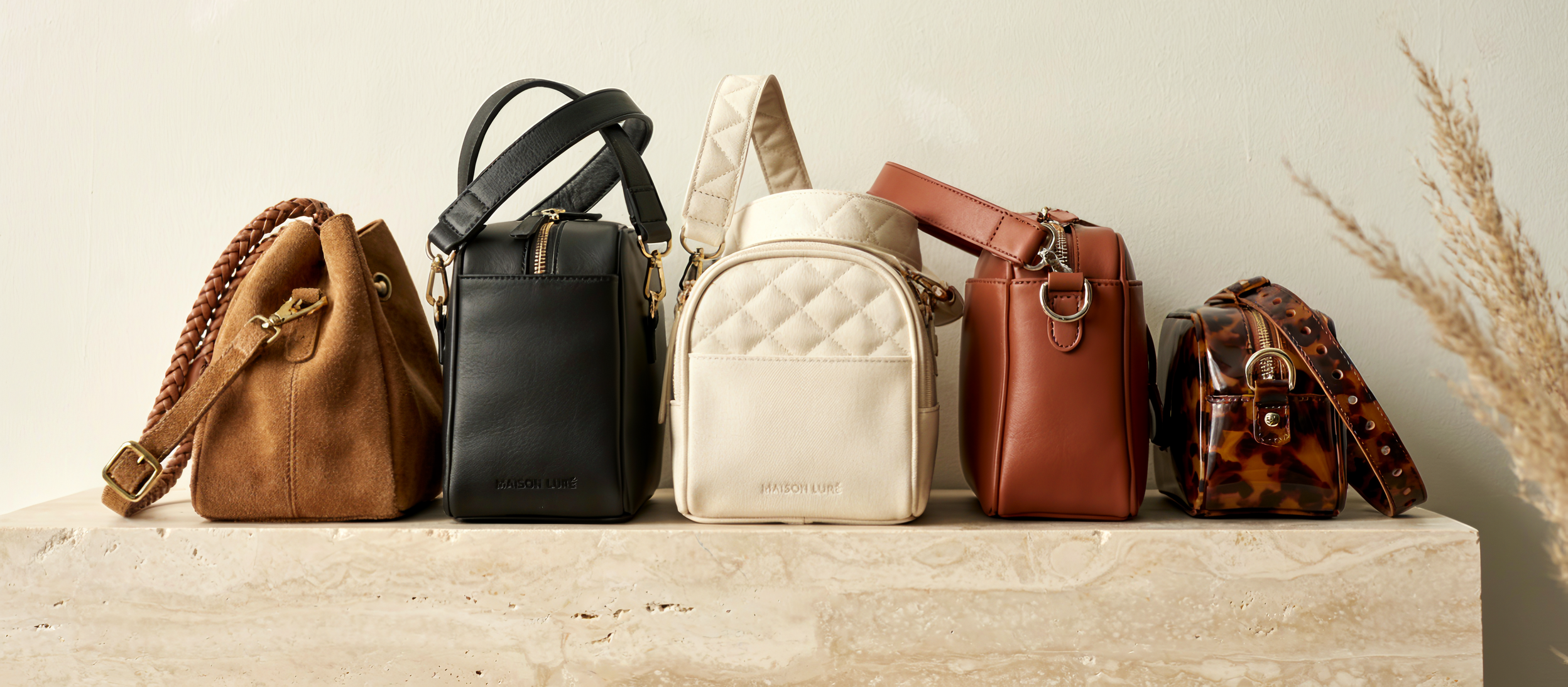
A vegan leather crossbody with a two-inch padded strap is the foundational recommendation in this section — the strap width is wide enough to distribute weight meaningfully, the padding adds a layer of cushion between the strap and the trapezius that further reduces focal pressure, and the vegan leather body is lighter than genuine leather while reading as equally intentional and polished. Look for a strap described as padded through its full length rather than padded only at the shoulder contact point, which provides consistent distribution rather than a single cushioned section surrounded by thin strap on either side.

A quilted crossbody bag combines visual structure with genuine lightness — the quilting adds a layer of padding to the bag body that reduces the impact of the bag against the hip when walking, which matters for anyone managing hip or lower back pain on the side where the bag sits. The wide strap on quilted bags tends to be well-constructed because quilted bag manufacturers understand the market they are serving — look for a strap width of at least one and a half inches and a clip attachment at the bag that allows strap removal and replacement if you want to swap straps over time.

A canvas crossbody with a wide adjustable strap gives you control over both the strap width and the hanging position of the bag — which matters because the optimal crossbody length for chronic pain is one that positions the bag at the hip without pulling the strap tight across the body. A strap that is too short pulls the bag upward and creates a different set of tension patterns in the neck and shoulder than a strap at the correct length. Look for a strap with at least twelve inches of length adjustment range, which gives you enough room to find the position that works for your specific body proportions.

A woven or fabric crossbody strap — as opposed to a leather or faux leather strap — has a softness against the shoulder and neck that harder materials do not replicate. For skin that is sensitized by chronic illness, a fabric strap that moves slightly with the body rather than holding rigidly in place creates less friction and less focal pressure over the course of a full day. Woven straps in fall tones — rust, olive, chocolate, cream — read as deliberately styled rather than practical, which is the combination this wardrobe is always looking for.
Lightweight bag bodies: what the bag weighs before you put anything in it
The weight of an empty bag is a specification that mainstream bag reviews almost never mention and chronic pain shoppers should always check. A structured leather bag can weigh six hundred grams or more before a single item is added to it — which means that before your phone, your wallet, your medication, your keys, and your water bottle are in the bag, you are already carrying more than half a kilogram on one shoulder. By the time you have added your daily carry, you may be managing a total bag weight of one and a half to two kilograms on a trapezius that was already sensitized before you left the house.
The solution is to start from the lightest possible bag body and build up from there. Nylon, canvas, and lightweight vegan leather are the materials that provide the lowest baseline weight — nylon specifically can weigh as little as one hundred and fifty grams for a small crossbody, which is less than a third of what a structured leather bag of the same size would weigh. The visual sacrifice, in well-designed nylon and canvas bags, is minimal — particularly in darker tones and structured silhouettes that read as intentional rather than purely functional.
The target for a chronic pain crossbody bag is a total loaded weight — bag plus everything you need to carry daily — that sits comfortably within your carrying tolerance. For most chronic pain bodies, this means starting with an empty bag that weighs under three hundred grams and being deliberate about what goes into it. The bag recommendations in this section are all under that threshold, which gives you room to load them with what you need without the bag itself consuming a significant portion of your carrying capacity before you have added a single item.
Lightweight crossbody bags for chronic pain daily carry
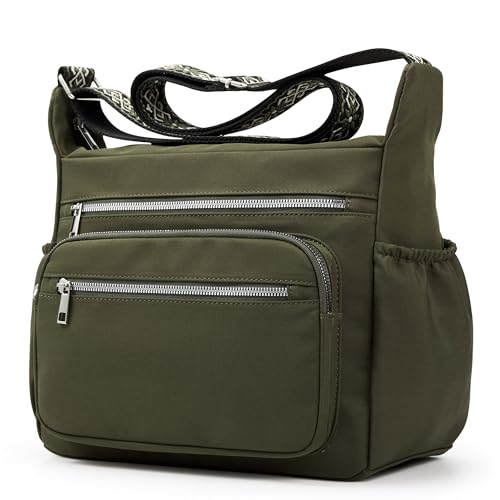
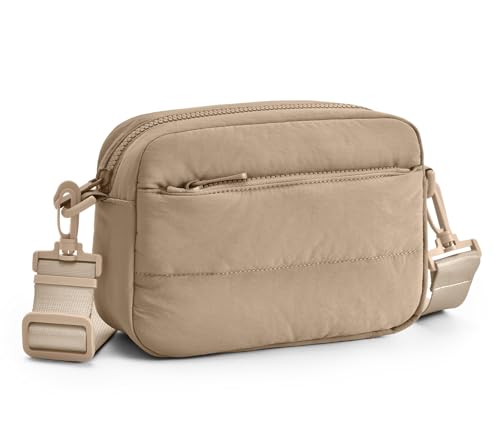
A nylon crossbody bag designed for lightweight carry — look for one where the product description specifically notes the weight, or where customer reviews confirm lightness — is the lowest-baseline-weight option in this section. Nylon at its lightest is almost imperceptible as a bag material, which means the strap weight and contents weight are the primary loads rather than the bag structure itself. In deep fall tones with a wide padded strap, a quality nylon crossbody reads as intentional everyday carry rather than purely utilitarian. Look for reinforced zipper pulls that open smoothly with one hand and a wide adjustable strap.

An unstructured vegan leather crossbody — where the bag body has no internal frame or rigid base — weighs significantly less than a structured vegan leather bag of the same size. The trade-off is that unstructured bags take the shape of their contents rather than holding a fixed form, which is not a trade-off at all for chronic pain dressing where the priority is weight reduction rather than bag architecture. Look for a soft, pebbled vegan leather that collapses when empty and holds its shape when loaded — this is the construction that achieves both lightness and functionality without sacrificing the polished look that vegan leather provides.
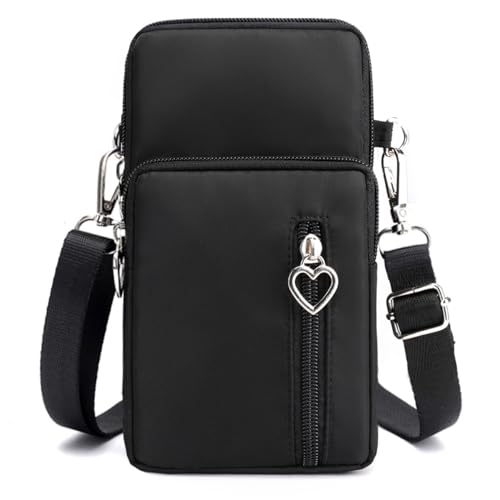
A mini crossbody bag solves the weight problem by limiting volume — a bag small enough to hold only what you genuinely need on any given outing weighs less both empty and loaded than a larger bag that accumulates contents by virtue of having space for them. For chronic pain daily carry, a mini crossbody with room for phone, cards, medication, lip balm, and keys is often the most functional size — it contains everything essential without inviting the gradual addition of non-essential weight that larger bags encourage. Look for a wide strap regardless of the bag’s small size — small bags with thin straps are still thin strap bags.

A convertible clutch-to-crossbody bag that attaches and detaches its strap gives you the option of a no-carry option when you arrive at a destination and no longer need the strap — which matters for long seated events, appointments, or situations where leaving the bag on the strap for the duration would be unnecessary additional load. The clutch format is also useful for brief in-and-out situations where the crossbody strap is more effort to put on and take off than the outing justifies. Look for a strap attachment that clips securely and releases easily without requiring significant grip strength.
Your bag gets you to your appointments. What’s inside your bag — your medication, your records, your notes — helps you survive them. And Say This: 30 Scripts for Chronic Pain Communication helps you make the most of them. Thirty ready-to-use scripts for the medical conversations that matter: how to describe your pain accurately, how to ask for what you need, and how to advocate for yourself when the system makes that harder than it should be. Get your copy here →
Organization for chronic pain daily carry: the interior features that reduce effort
The interior of a bag for chronic pain is not a neutral consideration. A bag with no organization — one large main compartment where everything sits together — requires you to search for items every time you need them, which means repeated hand-into-bag retrieval movements that add up across a full day of carrying. For anyone managing hand pain, grip weakness, or the fine motor fatigue that chronic illness creates, each retrieval is a small expenditure of hand function that is not free. A well-organized bag reduces the number of retrievals required and makes each one easier by keeping items in predictable, accessible positions.
The organizational features that matter most for chronic pain carry are a dedicated medication pocket — easily accessible from the exterior or top of the bag without opening the main compartment — a phone pocket that holds the phone upright and retrievable with one hand, and a main compartment that opens wide enough to see and access all contents without digging. A bag that requires two hands to open, a bag where the main compartment opening is too narrow to retrieve items easily, or a bag where medication is buried under everything else are all bags that add effort to a daily carry situation that already has more effort in it than it should.
Exterior pockets deserve specific mention. An exterior zip pocket — accessible without opening the main bag — is where your most-reached-for items belong: transit card, lip balm, the medication you take on a schedule rather than as needed. Accessing these items from an exterior pocket requires one motion rather than three, which is a meaningful difference on the days when every motion costs something.
Well-organized crossbody bags for chronic pain daily carry

A crossbody bag with multiple dedicated interior pockets and at least one exterior zip pocket is the organizational baseline for chronic pain daily carry. Look for a layout where the product description or photos show distinct compartments for phone, cards, and a main zippered section — bags described as “multi-pocket” without specifics often have one large compartment with a single interior slip pocket, which is not sufficient organization for chronic pain needs. The exterior zip pocket should be large enough to hold a phone or a flat medication case without forcing it in.
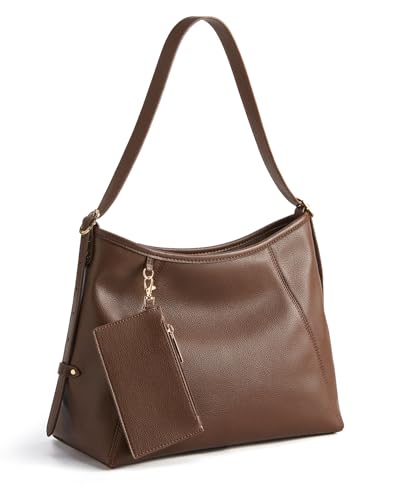
A crossbody bag with a wide top opening — where the main compartment opens across the full width of the bag rather than through a narrow zippered slot — allows you to see and access all contents with one motion and without digging. This construction is more common in tote bags than crossbodies, which makes it worth specifically seeking when you find it in a crossbody format. For anyone managing hand weakness or grip fatigue, retrieving items from a wide-open bag versus a narrow-opening bag reduces the number of times per day you have to reach, search, and withdraw from an enclosed space.
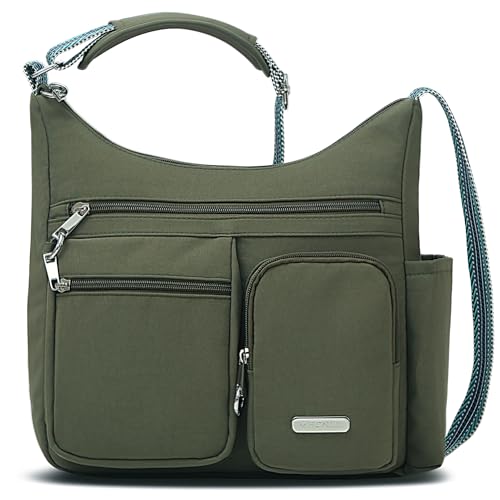
A crossbody bag with a dedicated small zippered pocket sized for a pill case or medication card is a feature the chronic illness market has been asking for and the mainstream bag market has been slow to provide. When you find it, it is worth noting and worth prioritizing — a medication pocket accessible from the exterior or top of the bag without opening the main compartment means your medication is reachable in any situation, including the ones where opening the full bag is not convenient or private. Look for a pocket large enough for a weekly pill organizer or a small prescription bottle.

A saddle or half-moon crossbody bag with a single main zip compartment that curves across the full top of the bag is one of the easiest bag formats to access with limited hand dexterity — the curved zip runs across a generous opening, the bag sits stable against the hip, and the one-zip format means there is only one closure to manage. The saddle silhouette is also currently one of the most aesthetically on-trend crossbody shapes, which means a bag that is functionally optimal for chronic pain also reads as deliberately styled for the fall soft girl wardrobe.
Convertible and adaptive bags: options for the full range of chronic pain days
A single bag format does not work equally well across the full range of days that chronic pain creates. On a moderate symptom day when you can carry comfortably for several hours, a standard crossbody on a wide padded strap is the right choice. On a high-symptom day when carrying any bag at all is a challenge, a smaller format or a hands-free option is the right choice. On a day when you need to move between multiple contexts — an appointment, then shopping, then a social obligation — a convertible bag that adapts to each context is the right choice.
Building a small bag wardrobe that includes options across these scenarios is the most complete solution to the chronic pain bag problem — but it requires an investment of time and money that is not always available. The next best option is a convertible bag: one that can function as a crossbody, a belt bag, a backpack, or a wristlet depending on how symptoms are presenting that day. These bags exist across a range of price points and quality levels, and the best of them are genuinely versatile in a way that makes the single-bag investment worthwhile.
Belt bags and fanny packs deserve specific rehabilitation in the context of chronic pain — they distribute weight across the hips rather than the shoulder, which is a genuinely different load-bearing approach that works better for some chronic pain presentations than others. For anyone whose shoulder and neck pain makes crossbody carrying difficult even with a wide strap, a belt bag worn across the body or at the hip is a legitimate and increasingly stylish alternative that the current fashion moment has made easier to wear without explanation.
Convertible and adaptive bag options for chronic pain

A bag that converts between crossbody and belt bag wear by adjusting its strap gives you both shoulder and hip carrying options in a single purchase. The crossbody position works on moderate symptom days when shoulder carrying is tolerable; the belt bag position shifts load to the hips on days when the shoulder and neck cannot absorb it. Look for a conversion mechanism that is simple — a strap that removes and reattaches without tools or complex adjustment — and a bag body sized appropriately for belt bag wear, which means small enough to sit comfortably at the hip without bulk.

A belt bag or fanny pack worn across the body as a crossbody — the strap long enough to drape from shoulder to opposite hip — distributes weight along the full diagonal of the torso rather than concentrating it at the shoulder. This carrying position shares the load across a wider surface area than any shoulder crossbody can, and for chronic pain bodies where the trapezius is the primary pain site, removing the shoulder from the equation entirely is worth the slight adjustment in how the bag sits on the body. In a fall neutral — camel, chocolate, black — a well-designed belt bag reads as current and intentional.

A mini backpack that converts to a single-strap crossbody gives you the option of bilateral shoulder carry — the most symmetrical weight distribution available in a carried bag — on days when you can manage it, and crossbody carry on days when one-shouldered is more manageable. Bilateral carrying distributes the load equally across both sides of the upper back, which is a genuinely different experience for chronic pain bodies than unilateral shoulder carry. Look for a mini backpack with padded straps on both the backpack and crossbody configurations, and a size small enough to work as a daily carry rather than an overnight bag.

A wide padded replacement strap that attaches to any bag via clip or swivel hook is the option for every bag in your existing collection that you love but that has a strap too thin to carry comfortably. Most crossbody bag straps are removable and replaceable — the attachment hardware is standard across brands — which means you can apply the wide strap solution to bags you already own without replacing them. Look for a replacement strap at least two inches wide with full-length padding and swivel clasps at both ends that open easily. This is, dollar for dollar, the most efficient chronic pain upgrade in this entire post.
The bag was always supposed to help you carry things — not add to what you’re carrying
A crossbody bag with a thin strap is a pain amplifier disguised as an accessory. A crossbody bag with a wide padded strap and a lightweight body is a tool that helps you move through the world with less friction than you would have otherwise. The difference between these two objects is largely invisible to someone who does not live with chronic pain. To someone who does, the difference shows up in the afternoon — in whether you arrive home from an outing with the same pain level you left with or with a new layer added by something that should have been neutral.
Your bag is in contact with your trapezius for however many hours you are out of the house. It is transmitting its weight to your cervical spine every time you move. It is asking your hand to open and close and retrieve and search every time you need something from it. None of these are small requests to make of a body that is already managing a significant load. The least your bag can do — the very least — is not make any of it worse.
The bags in this post were chosen because they meet that standard. They carry your things. They do not add to yours. That is the only bar that matters, and every recommendation here clears it — beautifully, because that part was always part of the requirement too.
You have learned to carry the right bag. You have learned which strap, which weight, which organization works for your body. The next layer of that same work is knowing how to communicate what your body needs — in the appointments your bag carries you to, in the workplaces that don’t yet understand your limitations, and in the relationships where your pain is still not fully seen. Say This: 30 Scripts for Chronic Pain Communication gives you the language for all of it. Thirty scripts for the conversations chronic pain creates. Get your copy here →