

Sunday Reset Routine for Chronic Illness: A Low-Energy Weekly Ritual That Prepares Your Body and Space for the Week Ahead
The content on this site was created with the help of AI. LOVEOWE LLC participates in the Amazon Services LLC Associates Program and other affiliate programs. As an Amazon Associate, I earn from qualifying purchases. This means I may earn a small commission—at no extra cost to you—when you make a purchase through links on this site. All opinions are my own. Learn more click here. Thank you for your support!

The Sunday reset content that fills Pinterest and YouTube was not built for you. It was built for someone with a full tank — someone who can spend Sunday meal prepping for the entire week, deep cleaning the apartment, doing a full skincare routine, laying out five outfits, journaling for an hour, and going to bed early feeling accomplished and prepared. Someone for whom Sunday is a day with enough surplus energy to invest in the week ahead without withdrawing from what Monday will need.
If you have chronic illness, chronic pain, or any condition that makes energy a finite and unpredictable resource, that Sunday reset is not a template. It is a taunt. It describes a version of Sunday that requires more than the illness leaves available — and attempting it in full produces the specific result of arriving at Monday more depleted than you started, having spent Sunday’s energy on preparation instead of rest, which was what Sunday’s energy was needed for.
I know this because I tried it. Multiple times, across multiple iterations of the viral Sunday reset formula, each time convinced that if I just organized it correctly or started earlier or broke it into smaller pieces I could access the version of Sunday that the content promised. What I got instead was a Sunday evening that felt like failure on top of fatigue — the tasks half-finished, the body spent, the week ahead no more prepared for than if I had simply rested, and a Monday that started in deficit.
What I eventually built instead was a Sunday reset designed around the body I actually have — not the one the content assumed. Smaller. Slower. Built around a different definition of prepared: not the week perfectly arranged, but the body genuinely rested and the space minimally functional, which is all that chronic illness actually requires from a Sunday to make Monday possible. The ritual that costs less than it gives. The reset that resets.
This post is that reset. A Sunday ritual built specifically for chronic illness — every element calibrated to the energy available, every product chosen to reduce effort while preserving the feeling of intention and care that makes a Sunday ritual worth having in the first place. We are going to cover the body preparation layer, the space preparation layer, the nourishment layer, and the mindset and planning layer — four sections, sixteen products, and a complete Sunday ritual that works on your hardest weeks, not just your best ones.
Redefining What Reset Actually Means for a Chronically Ill Body
Before the ritual itself, the definition needs resetting. In conventional Sunday reset content, reset means optimization — the week arranged for maximum productivity, the body prepared for maximum output, the space cleaned and ordered and aesthetically pleasing in ways that signal readiness. It is a high-energy investment made in anticipation of a high-energy return.
For chronic illness, reset means something more modest and more essential: arriving at Monday with the body in its best available state, the immediate environment functional enough not to add friction to an already demanding week, and the mind oriented toward the week without being overwhelmed by it. That is all. Not optimization — adequacy. Not maximum output — sustainability. Not the perfectly prepared week — the minimally prepared one that does not make the unpredictable harder than it already is.
This redefinition changes everything about what the Sunday ritual contains. Meal prep becomes: one or two things batch-prepared, not five. Cleaning becomes: the surfaces that will actually affect daily functioning, not the full apartment. Skincare becomes: the steps that will make Monday morning faster, not the full ten-step routine that is its own event. Planning becomes: three to five anchoring tasks for the week, not a fully time-blocked calendar that the illness will rearrange by Tuesday regardless.
Small. Functional. Intentional. Gentle enough to leave something for Monday. That is the chronic illness Sunday reset — and it is more valuable than the elaborate version that costs more than it returns, because it actually works. Every week. On the good ones and the hard ones and the ones that fall somewhere in the middle, which is most of them.
The Structure of the Chronic Illness Sunday Reset
The reset is organized into four layers, each taking no more than twenty to thirty minutes, with rest built in between rather than appended as an afterthought. Total active time: sixty to ninety minutes across the full day. Total rest time: the remainder of Sunday, which is where the actual resetting happens — in the hours of genuine low-demand rest that the small investments of the active time make possible by reducing the cognitive load of an un-reset week.
The four layers are: body, space, nourishment, and mind. Each addresses one dimension of what Monday needs from Sunday without requiring more than the illness can reasonably spare. They can be done consecutively if the day allows or distributed across the day with rest between each one — the structure is flexible in its timing because chronic illness is flexible in its demands and the ritual needs to survive the weeks when everything takes longer than planned.
The ritual has one non-negotiable rule: it ends when the body says it ends. Not when the list is finished. Not when everything is done the way the Pinterest version would have it. When the body has given what it has available and genuinely needs to rest, the ritual is over and whatever remains undone is either carried to Monday’s low-energy task list or released entirely. A Sunday reset that depletes the body is not a reset. It is just another demand. The ritual serves the week. It does not serve the idea of the ritual.
The Body Reset Edit: Low-Effort Physical Preparation That Carries Into the Week
The body layer of the Sunday reset is not a workout, not a deep stretch routine, not anything that requires the body to perform. It is the small physical investments that make the body feel tended rather than managed — the difference between arriving at Monday feeling cared for and arriving at Monday feeling like the weekend was simply more of the illness without the work.

The Sunday bath or foot soak is the body reset’s most effective and most accessible element — magnesium absorption through the skin from an Epsom salt soak has documented muscle relaxation and nervous system calming effects that are specifically valuable at the end of a week of chronic illness management and the beginning of a new one. A full bath requires more energy than a foot soak on a hard Sunday, but both deliver the magnesium and the warmth that signal to the body that the week’s demands have paused and something different is happening now. Dr. Teal’s lavender formulation adds the nervous system calming of lavender essential oil to the physical benefits of the magnesium soak — two interventions in one product, requiring nothing more than filling a tub or a basin and getting in.

Five minutes of percussive therapy on the areas that carried the most tension through the week — the trapezius muscles, the lower back, the forearms — reduces the accumulated muscle tension that, left unaddressed, becomes the baseline the new week starts from. The Theragun Mini is small enough to reach most accessible areas without assistance, quiet enough to use while watching something or listening to a podcast, and requires no sustained effort from the hand or arm operating it beyond holding it in place. The Sunday body reset is not the time for a full-body protocol — it is five targeted minutes on the areas most likely to affect how Monday morning feels.

Changing the pillowcase as part of the Sunday reset is the smallest possible physical investment with one of the most consistent sensory returns — fresh silk against the face and neck for the first sleep of the new week, with the low-friction, temperature-regulating, skin-preserving properties of mulberry silk that make the difference between waking up with face creases and tension marks and waking up as close to rested as the illness allows. The act of changing the pillowcase is also a signal — to the body, to the mind — that something is being renewed. That the week that just ended is behind you and the surface you sleep on has been refreshed for what comes next. Small ritual. Real effect.

The Sunday skincare reset for chronic illness is not the ten-step routine — it is the one or two steps that make Monday morning faster and the face feel more tended than it did at the end of the week. A generous application of the Laneige lip sleeping mask applied Sunday evening stays on overnight, addresses the lip dryness that accumulates across a week of chronic illness management, and means Monday morning begins with lips that are already dealt with — one fewer step, one fewer small discomfort. The spatula applicator requires no finger contact on days when touching anything with fingertips is its own source of pain. A small Sunday investment that pays out across the entire week in the specific way that small, consistent physical care does.
Layer Two: The Space Reset — Minimum Viable Environment for a Functional Week
The space layer of the Sunday reset operates on a single principle: identify the surfaces and spaces whose state will most directly affect daily functioning during the coming week, and address only those. Not the entire apartment. Not every room. The specific areas whose disorder will add friction, cost decision-making energy, or create the low-grade stress of an environment that is working against you — those areas, and nothing else that the energy does not genuinely support addressing.
For most chronically ill people working or resting at home, those areas are: the bedroom surface that is first seen upon waking, the kitchen counter that food preparation happens on, the desk or workspace that work happens at, and the nightstand that the hardest moments of the day are managed from. Four surfaces. No full rooms. The state of these four surfaces on Monday morning determines whether the environment is a source of additional cognitive load or a neutral backdrop — and the Sunday reset addresses them specifically rather than attempting the full clean that the Pinterest version requires and the illness does not support.
The space reset also includes one organizational act — the single weekly task that, if done Sunday, prevents a specific recurring problem during the week. For different people this is a different task: the pill organizer filled so medication management requires no daily decision. The work bag packed so Monday morning does not require assembly under pressure. The nightstand restocked so Tuesday at 3am does not find it empty. One task. The one that, when it doesn’t happen on Sunday, costs the most during the week. Identify it. Do only that.
The Space Reset Edit: Low-Effort Tools That Make a Functional Environment Possible Without a Full Clean
These four make the space layer of the Sunday reset achievable on the weeks when energy is lowest — reducing the physical effort required to maintain a functional environment to something the chronic illness body can actually sustain.

The robot vacuum is the single highest-return investment in a chronic illness home — it performs the floor cleaning that is among the most physically demanding of routine household tasks with zero physical involvement from the person who lives there. Scheduled to run Sunday while you are doing the body reset or resting between layers, the Roomba addresses the floor without requiring you to address the floor — which means clean floors on Monday without clean floors having cost anything from the Sunday energy budget. The WiFi connection allows scheduling from a phone without approaching the vacuum. The self-charging base means it returns and refuels without management. It is the space reset tool that works while you rest, which is the only kind of space reset tool that genuinely serves chronic illness.

The surface spray for the four key surfaces — bedroom, kitchen counter, desk, nightstand — that requires nothing more than spraying and wiping with a cloth or paper towel. Method’s plant-based formula is specifically relevant for chronic illness because it contains no synthetic fragrances, bleach, or harsh chemical compounds that trigger sensitivity responses in people with chemical reactivity, mast cell activation, or respiratory involvement. The lavender scent is derived from essential oil rather than synthetic fragrance, light enough to be non-triggering for most sensitivities, and functional enough to handle the surface-level cleaning that the four key surfaces require without a separate heavy-duty product. One bottle covers the entire space reset.

The Sunday space reset for the bathroom and nightstand skincare — consolidating the products used most frequently into a rotating organizer that brings everything forward without searching, reaching to the back, or moving items out of the way to find what is behind them. A rotating acrylic organizer on the nightstand or bathroom counter means the Sunday reset restores organizational order to the products that accumulate into disorder throughout the week with a single motion — one rotation to confirm everything is in its place — rather than the active reorganization that a drawer or cabinet requires. Monday morning skincare and nightstand access is one rotation away from everything it needs.

The Sunday medication organizational act — filling the weekly pill organizer — is the single highest-return organizational task in a chronic illness week because it eliminates daily medication management decisions across seven consecutive mornings and evenings. A large-capacity organizer with easy-open lids requires no grip strength or fine motor precision, accommodates multiple medications per dose without requiring multiple bottles on the nightstand surface, and makes medication compliance on the hardest days of the week require nothing more than opening the correct compartment. Fill it Sunday. Every week. No exceptions. It is the organizational equivalent of the robot vacuum — one investment that works all week while requiring nothing further from the body that made it.
Layer Three: The Nourishment Reset — One or Two Things That Feed the Week
The nourishment layer of the Sunday reset is the one most likely to be either overcomplicated or abandoned entirely — because the conventional Sunday meal prep that the reset content describes requires hours of standing, cooking, and kitchen management that the chronic illness body frequently does not have available, and the gap between that standard and what is actually possible often produces the all-or-nothing thinking that results in no nourishment prep at all.
The chronic illness Sunday nourishment reset has a different standard: one or two things batch-prepared that will meaningfully improve the quality and ease of eating during the most demanding days of the week. Not five containers of perfectly portioned meals. One pot of something that becomes three or four dinners or lunches with minimal additional effort. One batch of overnight oats that provides four mornings of anti-inflammatory breakfast without any morning effort. One blender-full of frozen smoothie packs portioned and ready in the freezer for the mornings when the blender is too much to assemble and operate from scratch.
The nourishment reset also includes the pantry check — the five-minute assessment of what is in stock, what needs replenishing, and what easy-access nourishment is available for the week’s hard days without requiring a trip to the store in the middle of a flare. The pantry check is not grocery shopping — it is the information that makes a simple grocery order or a quick pickup possible before the week begins rather than in the middle of the week when both the need and the capacity to address it have arrived simultaneously.
The Sunday reset prepares the week. The ebook prepares you for the conversations the week will require.
If part of what makes weeks hard is the conversations you are not prepared for — the medical appointment where you need to advocate clearly, the family member who doesn’t understand what this week cost you, the employer who needs to hear what support looks like — Say This: 30 Scripts for Chronic Pain Communication is the Sunday reset for your communication toolkit. Thirty ready-to-use scripts for thirty hard conversations, prepared in advance so you are not writing them in the moment. Add it to your Sunday reset. Read one script. Go into the week ready for what it brings.
The Nourishment Reset Edit: Tools That Make One or Two Batch Preparations Feed the Entire Week
These four make the nourishment layer of the Sunday reset achievable — reducing the physical and cognitive effort of batch preparation to something the chronic illness body can sustain in under thirty minutes of active kitchen time.
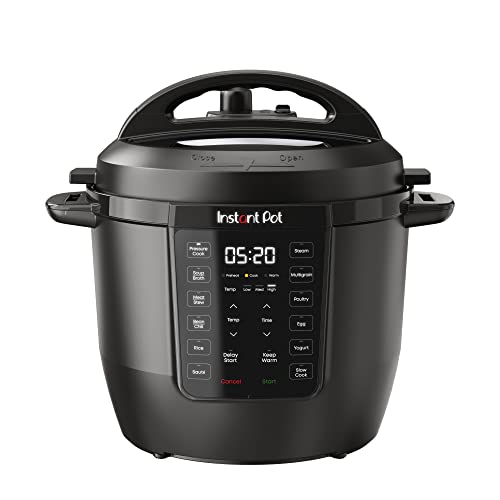
The Sunday batch cook for chronic illness begins and ends with the Instant Pot — the appliance that converts five to ten minutes of seated, unhurried ingredient assembly into a complete batch of soup, stew, bone broth, grains, or legumes in sixty to ninety minutes of completely unattended cooking. Load it before the body reset layer of the Sunday ritual. Start it. Walk away. Return to a full batch of food that requires no further standing, monitoring, or active cooking. Portion it into glass containers. The week has four to six servings of nourishment prepared with a total of ten minutes of active kitchen time and thirty seconds of button-pressing. That is the chronic illness Sunday batch cook — not the two-hour production, the ten-minute setup followed by the machine doing the work.

The batch cooking infrastructure that makes the Instant Pot’s output useful across a full week rather than just the first two days. Souper Cubes are silicone trays with one-cup compartments that freeze soups, stews, broths, and sauces in individual portions — popped out of the tray once frozen, stored in a freezer bag, and reheated one portion at a time throughout the week. The Sunday batch cook becomes not just this week’s lunches but a freezer supply that survives the weeks when even ten minutes of Sunday kitchen time is not available. Build the supply on the good Sundays. Draw from it on the hard ones. The nourishment reset works across multiple weeks, not just the one it was prepared in.

The portioning infrastructure for the batch cook — glass rather than plastic because glass containers can go from freezer to oven to table without transferring, because they do not leach compounds into food when heated, and because they stack cleanly in a refrigerator organized for the week ahead in a way that makes Tuesday’s lunch visible and accessible rather than buried. A set of ten means the full batch cook can be portioned at once without running out of containers mid-task, which matters when the energy to complete the portioning is finite and stopping to wash containers mid-process is the kind of friction that ends the task before it is finished.

For the smoothie pack preparation that is the nourishment reset’s lowest-effort batch option — portioning smoothie ingredients into zip-lock bags or silicone freezer bags on Sunday so that each morning’s smoothie requires nothing more than emptying one bag into the blender and adding liquid. A smoothie boost pack of chia, hemp, and maca adds protein, omega-3s, and adaptogenic support to every smoothie in the week without requiring separate measuring and adding of each ingredient — the boost pack goes into each Sunday smoothie bag as one scoop rather than three separate additions. Five smoothie bags prepared Sunday morning. Five mornings of anti-inflammatory breakfast that require thirty seconds of active preparation each. The nourishment reset does not have to be more complicated than this.
Layer Four: The Mind Reset — Orienting Without Overwhelming
The mind layer of the Sunday reset is the one most likely to be done wrong — not because the concept is complicated but because the conventional version of Sunday planning assumes that a fully structured week is a helpful week, when for chronic illness a fully structured week is an anxiety-producing fiction that the illness will dismantle by Wednesday regardless of how carefully it was built.
The chronic illness Sunday mind reset does one thing: identifies three to five anchoring tasks for the week — the non-negotiables, the things that if they happen, the week will have accomplished what it needed to regardless of what else does or does not occur. Not a full task list. Not a time-blocked calendar. Three to five tasks that represent the week’s actual minimum viable success, written down so they are out of the mind and into a system that holds them without the ongoing cognitive effort of remembering.
The mind reset also includes one act of intentional looking forward — not planning, looking forward. A single thing in the coming week that is anticipated rather than merely scheduled. Something small enough to be realistic and specific enough to be genuinely anticipated: a specific podcast episode saved for a hard afternoon, a food ordered from a favorite place, a call with a person whose company is genuinely restorative. One thing that the week contains that is for you rather than demanded of you. It sounds small. On the weeks when everything is hard, it is what makes the week bearable — the specific thing you are moving toward rather than just through.
The Mind Reset Edit: Planning Tools That Orient the Week Without Overwhelming the Brain That Has to Live It
These four address the mind layer of the Sunday reset — the tools that make weekly orientation possible without the cognitive overhead of a full planning system that the illness will disrupt before it is fully implemented.

The planning surface for a chronic illness week needs to be minimal enough not to demand more structure than the week can sustain and visible enough to hold the anchoring tasks without requiring active memory to access them. A desk pad with an undated weekly layout — large enough to write the three to five anchoring tasks across the week, small enough not to imply that every hour needs accounting for — sits on the desk surface as a visible orientation tool rather than a hidden planner that requires opening and consulting. The undated format means a week that goes sideways does not leave a filled planner behind as evidence of what didn’t happen — it is simply a desk pad whose Sunday entries carry to Monday or release entirely as the week dictates.

The Sunday mind reset benefits from a sensory anchor — a scent that over time becomes associated with the ritual itself, signaling to the nervous system that the transition from the week that ended to the week ahead is happening in a deliberate, contained, intentional way rather than as an unmanaged blur from Saturday night to Monday morning. Lavender’s documented effect on the nervous system — activating parasympathetic response, reducing cortisol, supporting the transition toward rest — makes it specifically appropriate for the Sunday reset’s planning layer, where the goal is to orient toward the week from a calm state rather than an anxious one. Run the diffuser during the planning portion of the reset. Over weeks, the scent alone becomes the ritual’s beginning.

The Five Minute Journal’s Sunday entry takes exactly as long as its name suggests — a gratitude reflection on the week that ended and an intention setting for the week ahead, in a structured format that requires no blank-page decision-making about what to write or how to structure it. For chronic illness, the gratitude practice is specifically valuable because it redirects attention from what the week cost to what it also contained — the moments of genuine ease, connection, beauty, or progress that exist within even the hardest weeks and that the illness’s cognitive weight makes easy to overlook. The intention for the coming week goes in the same five minutes — not a task list, a single word or phrase that represents the quality you are bringing to the week rather than the quantity of what you intend to accomplish.

The closing ritual of the Sunday reset — the candle lit at the end of the planning layer that marks the transition from the reset’s active portion to the rest of Sunday, which belongs entirely to rest. A specific candle scent used only for Sunday evenings becomes a sensory ritual marker over time — the body learns that when this particular scent is in the air, the week’s preparation is done and what remains is permission to rest without guilt. Homesick’s Sunday Morning scent — warm, soft, slightly sweet — is the olfactory equivalent of an exhale. Soy blend burns clean without synthetic fragrance compounds. Light it at the end of the reset. Let Sunday be Sunday for the hours that remain.
The Full Ritual: What the Chronic Illness Sunday Reset Actually Looks Like
Let’s make it concrete. A Sunday that works for a chronically ill body might look something like this — and might look different every week depending on what the week before it cost and what the body has available.
Morning: wake up without an alarm if possible. The Instant Pot goes on with whatever has been decided for the batch cook — ten minutes of seated kitchen time, then it runs unattended. The robot vacuum is scheduled or started. The body layer begins: the Epsom salt foot soak while the Instant Pot runs, the Theragun mini on the trapezius while listening to something that requires nothing. The pillowcase is changed. The lip mask goes on the nightstand for evening.
Midday: rest. Genuine rest. Not rest as a scheduled break between tasks but rest as the thing that Sunday is primarily for. The Instant Pot finishes and portions into glass containers — ten minutes of kitchen time, then back to rest. The four key surfaces are sprayed and wiped — five minutes. The pill organizer is filled — three minutes. The space reset is done.
Afternoon: the mind reset. The diffuser on with lavender. The desk pad open. Three to five anchoring tasks written for the week — the non-negotiables, the minimum viable success. One thing looked forward to, written down. The Five Minute Journal entry — five minutes of gratitude for the week that ended, one intention for the week ahead. The Sunday candle lit. The reset is complete.
What remains of Sunday belongs to rest, to pleasure, to whatever the body wants that does not cost it anything it needs for Monday. A book. Something to watch. A slow walk if the body supports it. The bath with the remaining Epsom salts if it didn’t happen in the morning. Whatever Sunday wants to be when it is not performing preparation.
The total active time across the full ritual: sixty to ninety minutes, distributed across the day with rest between each layer. The return on that investment: a body that is genuinely more rested than it would have been without the ritual, a space that is minimally functional rather than chaotically unmanageable, a week’s nourishment partially addressed, and a mind that knows what the week’s three most important things are without having to hold them in memory alongside everything else chronic illness asks the mind to hold.
That is enough. That is more than enough. That is, for a chronically ill body, everything the Sunday reset needs to be — and it was built to survive the hardest Sunday, not just the easiest one. Build it once. Adjust it to fit your body and your week. Return to it every Sunday, at whatever scale that Sunday allows. Let it be the ritual that holds the week rather than the one that costs it.
The week is prepared. The conversations it will require deserve the same preparation.
Add Say This: 30 Scripts for Chronic Pain Communication to your Sunday reset as the final layer — the one that prepares not just your body and your space and your nourishment and your plan, but your voice. Thirty scripts for thirty conversations that chronic illness produces in the weeks that follow — the medical appointments, the family moments, the workplace interactions where advocating clearly for yourself is what the week requires and the words feel impossible to find in the moment. Find them on Sunday. Walk into the week prepared. That is the complete reset — body, space, nourishment, mind, and voice.