Anti-Inflammatory Breakfast for Chronic Illness: Morning Nourishment That Supports Your Body Before the Day Has a Chance to Take From It
The content on this site was created with the help of AI. LOVEOWE LLC participates in the Amazon Services LLC Associates Program and other affiliate programs. As an Amazon Associate, I earn from qualifying purchases. This means I may earn a small commission—at no extra cost to you—when you make a purchase through links on this site. All opinions are my own. Learn more click here. Thank you for your support!
There is a window in the morning. Not a long one — maybe an hour, sometimes less — where the body is still relatively quiet. Before the inflammation has fully registered the day. Before the pain has found its footing. Before the fatigue from simply being awake has begun to accumulate into the weight it will become by afternoon. That window is small and it is real and for a long time I wasted it completely.
I wasted it on coffee and nothing else, because mornings were hard and thinking about food was one more thing to manage. I wasted it on whatever was fastest — a piece of toast, a granola bar from the cabinet — because the calculus of getting through the morning routine left nothing for the question of what I was actually putting into my body at the most important metabolic moment of the day. I wasted it, honestly, because nobody had ever explained to me that breakfast was not just a meal. That for a body managing chronic inflammation, the first thing you eat in the morning is either working for you or against you before 9am, and that the difference between those two things would shape the entire arc of the day that followed.
Once someone did explain it — once I understood the relationship between what I ate in that first hour and what my body had available for everything the next twelve hours would ask of it — I stopped wasting the window. And the mornings changed. Not dramatically, not overnight, and not in a way that resolved anything the illness was doing. But in the specific, measurable way that matters in chronic illness: the afternoon wall arrived later. The inflammation that spiked predictably at certain hours was less sharp. The cognitive fog that had been an early morning fixture started lifting sooner. Small things. Real things.
This post is what I learned about breakfast and chronic illness — the why behind it, the what, and the how to make it actually happen on the mornings when the window is small and the energy to use it is smaller. We are going to cover the science of anti-inflammatory eating in the morning, the specific foods and ingredients that do the most meaningful work for a chronically inflamed body, and sixteen products that make a functional breakfast possible even on the days when possible feels like a stretch.
Why Breakfast Matters More for Chronic Illness Than for Anybody Else
The standard nutritional argument for breakfast — that it breaks the overnight fast, stabilizes blood sugar, and provides fuel for the morning — applies to everyone. The chronic illness argument for breakfast is both more specific and more consequential.
Cortisol, the body’s primary stress hormone, peaks naturally in the first hour after waking — a phenomenon called the cortisol awakening response. In a healthy body, this cortisol peak does useful work: it mobilizes energy, activates the immune system, and prepares the body for the demands of the day. In a body with chronic inflammation, dysregulated cortisol, or HPA axis dysfunction — all of which are common across conditions including fibromyalgia, lupus, chronic fatigue syndrome, and rheumatoid arthritis — this morning cortisol peak is frequently either blunted, dysregulated, or experienced as a direct amplifier of pain and inflammation rather than as an energizing signal.
What you eat in the morning directly affects how this cortisol peak lands. A breakfast high in refined carbohydrates and sugar — toast, sweetened cereal, flavored yogurt, most commercial granola bars — spikes blood sugar rapidly, triggering an insulin response that interacts with the cortisol peak in ways that drive inflammation rather than moderating it. The post-spike blood sugar drop that follows compounds the fatigue and brain fog that many people with chronic illness already experience in the morning, often producing the specific phenomenon of feeling worse at 10am than you did when you woke up.
An anti-inflammatory breakfast — one built around protein, healthy fat, fiber, and specific anti-inflammatory compounds — moderates the blood sugar response, provides sustained energy without a crash, and delivers the specific nutrients most likely to support immune regulation and inflammation reduction during the part of the day when the body’s inflammatory activity is most responsive to dietary input. It does not cure anything. It does not replace medication or medical care. But it works with the body’s own morning physiology rather than against it, and for people with chronic illness, that alignment between what you eat and what your body is actually doing creates a meaningfully different day.
The Four Pillars of an Anti-Inflammatory Breakfast for Chronic Illness
Before we get to specific foods and products, the framework matters — because understanding the principles allows you to build a breakfast that works for your specific condition, your specific sensitivities, and the specific version of your morning that actually exists, not the idealized one.
Protein first. Protein at breakfast stabilizes blood sugar more effectively than any other macronutrient, moderates the cortisol response, and provides the amino acid building blocks that the body uses for tissue repair, neurotransmitter production, and immune function — all of which are processes that chronic illness either disrupts or demands more of than average. The goal is at least twenty to thirty grams of protein at breakfast, from sources that are easy to digest and low in inflammatory potential: eggs, wild-caught fish, high-quality protein powder, Greek yogurt with live cultures, or legume-based options for plant-based eaters.
Healthy fat alongside it. Dietary fat slows the absorption of everything else you eat, which further moderates the blood sugar response and extends the satiety and energy stability that protein begins. More specifically, omega-3 fatty acids — found in fatty fish, flaxseed, chia seeds, walnuts, and high-quality fish oil — have direct anti-inflammatory effects that make them functionally therapeutic rather than simply nutritionally adequate. Including a source of healthy fat at breakfast is not optional for an anti-inflammatory morning — it is structural.
Fiber from whole food sources. Dietary fiber feeds the beneficial gut bacteria that regulate immune function and inflammation, slows glucose absorption, and supports the digestive regularity that chronic illness frequently disrupts. At breakfast, this looks like berries, ground flaxseed, chia seeds, oats, or vegetables incorporated into eggs or a smoothie. The goal is not a specific gram count but a meaningful fiber presence — something that ensures the breakfast is doing gut-supportive work alongside everything else.
Specific anti-inflammatory compounds. Beyond macronutrients, certain foods contain compounds with documented anti-inflammatory activity that make them worth incorporating into a chronic illness breakfast specifically: turmeric with black pepper for its curcumin content, ginger for its gingerol compounds, tart cherry for its anthocyanin and melatonin content, and green tea or matcha for their EGCG content. These are not miracle ingredients — they are meaningful additions to a breakfast that is already well-structured, and their cumulative daily effect on the inflammatory load is real.
Always consult your healthcare provider before making significant dietary changes, particularly if you are managing a chronic condition or taking medications.
The Protein Foundation: High-Quality Morning Protein for a Body That Needs More Than Fuel
Protein is the structural foundation of an anti-inflammatory breakfast — and the quality of the protein source matters as much as the quantity. These four deliver meaningful protein at breakfast in forms that are easy to prepare, easy to digest, and appropriate for a chronically inflamed system.

Collagen peptides dissolve completely in hot or cold liquid with no texture change — stir them into coffee, tea, a smoothie, or overnight oats and they disappear without altering taste or consistency. The protein they deliver is specifically rich in glycine and proline, the amino acids most directly involved in gut lining repair, joint tissue maintenance, and connective tissue support — the structures most frequently compromised by chronic inflammatory conditions. On the mornings when preparing a full protein source is not possible, a scoop of collagen in whatever you are already drinking is a meaningful contribution to the day’s protein and anti-inflammatory work.
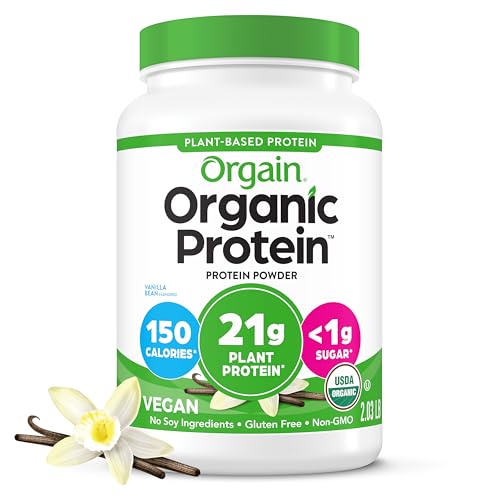
For smoothie-based breakfasts — which are often the most accessible format on low-energy mornings — a high-quality plant-based protein powder provides twenty-one grams of protein per serving from a combination of pea, brown rice, and chia protein. Orgain’s vanilla bean flavor is mild enough to pair with any smoothie combination without dominating it, the organic certification means no synthetic pesticide residues that can aggravate sensitive immune systems, and the powder dissolves smoothly in both dairy and non-dairy liquids. One of the most consistently well-tolerated protein powders for people with gut sensitivity and chemical reactivity.

A dairy-free yogurt with live probiotic cultures and a meaningful protein content — relevant for chronic illness breakfasts because it delivers protein, probiotic bacteria for gut health, and a creamy base for bowls and parfaits simultaneously. Kite Hill’s plain unsweetened version avoids the added sugars in most flavored non-dairy yogurts that would counteract the anti-inflammatory breakfast framework. Top it with berries, ground flaxseed, and a drizzle of manuka honey for a breakfast that requires no cooking and delivers protein, probiotics, fiber, and anti-inflammatory compounds in one bowl.

Tuna at breakfast sounds unconventional until you consider that it delivers twenty-five grams of complete protein and meaningful omega-3 fatty acids in a format that requires no cooking, no preparation, and no standing at a stove. On the mornings when eggs are too much effort and a smoothie is not enough substance, a can of wild-caught albacore tuna with avocado on grain-free crackers or eaten directly from the can with a fork is one of the highest anti-inflammatory protein breakfasts available. Wild Planet’s no-salt-added version is packed in water with nothing else — no inflammatory seed oils, no additives, no ingredients that require reading a label twice.
The Breakfast Formats That Work for Chronic Illness: Matching the Meal to the Morning
The best anti-inflammatory breakfast is the one that actually gets eaten — which means it needs to exist in multiple formats calibrated to the full range of mornings that chronic illness produces. Not just the good mornings when cooking is possible and appetite is present, but the hard ones where the window is barely open and getting anything into the body at all is the victory.
The five-minute smoothie is the highest-return breakfast format for chronic illness because it requires almost no physical effort, no cooking, no standing at a stove, and can incorporate more anti-inflammatory ingredients in one glass than most full meals deliver. A frozen fruit and vegetable base, a protein source, a fat source, an anti-inflammatory addition, and a liquid — blended for sixty seconds — is a complete anti-inflammatory breakfast that takes less time and physical involvement than making toast.
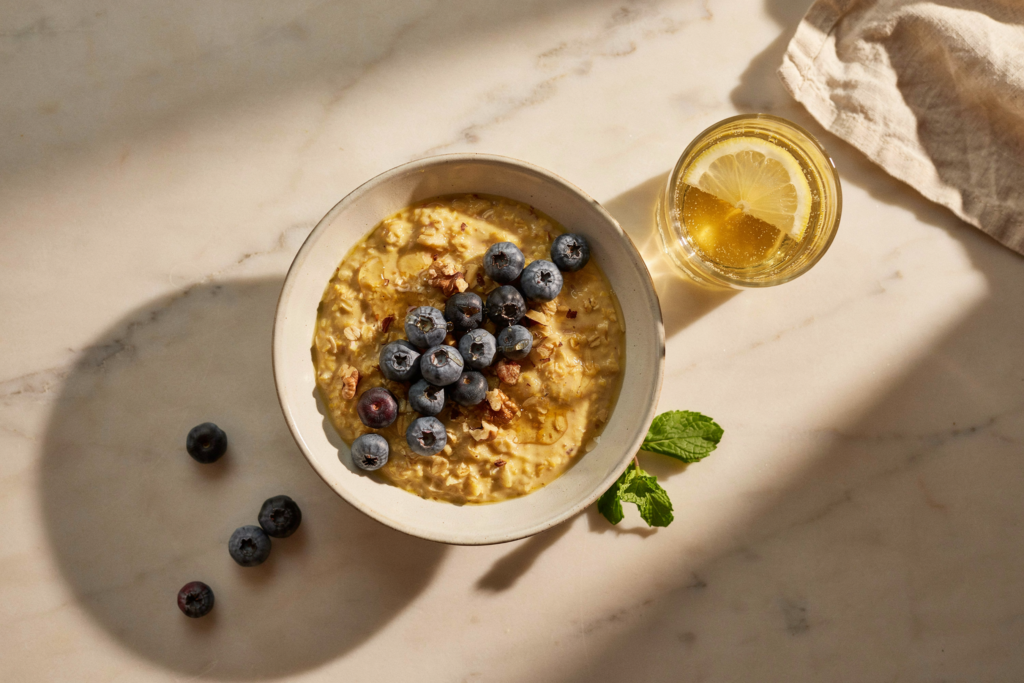
Overnight oats are the prepared-in-advance format — assembled the night before during whatever window of energy existed then, requiring nothing from the morning except opening the refrigerator. Oats provide prebiotic fiber and beta-glucan, which has documented immune-regulating and anti-inflammatory effects. Prepared with non-dairy milk, chia seeds, ground flaxseed, and topped with berries in the morning, they deliver fiber, omega-3s, protein, and antioxidants in a format that requires zero morning effort.
Eggs remain one of the most complete and accessible anti-inflammatory breakfast proteins available — a complete amino acid profile, choline for brain and liver health, and a format that can range from a two-minute scramble to a batch-prepared frittata that lasts several days in the refrigerator. For mornings when cooking is possible, two eggs prepared in any way with a side of avocado and a handful of berries is a complete anti-inflammatory breakfast that takes less than ten minutes and covers protein, fat, fiber, and antioxidants simultaneously.
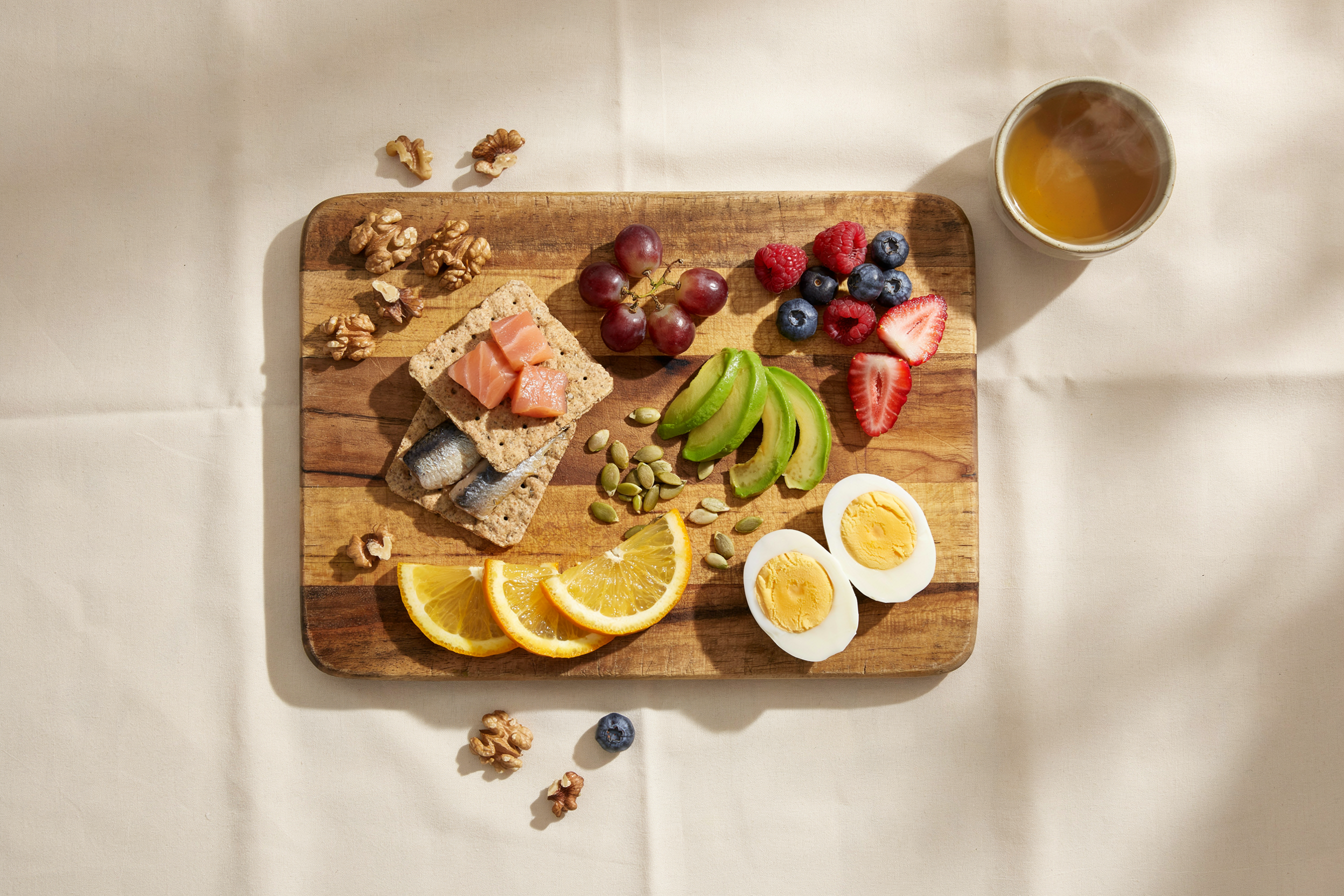
The no-cook assembly plate is the format for the mornings when even a blender is too much. A portion of smoked salmon or canned fish, a quarter of an avocado, a small handful of nuts, and whatever fruit is accessible — assembled without cooking, without equipment, and without standing — is still a meaningful anti-inflammatory breakfast. The bar is not perfection. The bar is doing something intentional with the morning window, at whatever scale the morning allows.
The Anti-Inflammatory Add-Ins: The Ingredients That Upgrade Every Breakfast Format
These four are the specific anti-inflammatory compounds worth incorporating into whichever breakfast format you are working with — the additions that move a nutritionally adequate morning meal into one that is actively working against the inflammatory processes chronic illness drives.

Two tablespoons of chia seeds added to overnight oats, a smoothie, or yogurt delivers four grams of omega-3 fatty acids, ten grams of fiber, and five grams of protein simultaneously — making them one of the most nutritionally dense small additions available for a chronic illness breakfast. The gel they form when hydrated also coats and soothes the gut lining during digestion, which is specifically valuable for people whose inflammatory conditions include gut involvement. Tasteless, require no preparation beyond measuring, and work in every breakfast format without altering flavor or texture significantly.

Curcumin, the active compound in turmeric, has more published research supporting its anti-inflammatory activity than almost any other food compound — but its bioavailability when consumed alone is low. Black pepper contains piperine, which increases curcumin absorption by up to two thousand percent. A blend of organic ground turmeric and black pepper added to a smoothie, stirred into scrambled eggs, or mixed into overnight oats delivers the anti-inflammatory compound in a bioavailable form that makes the daily addition functionally therapeutic rather than merely symbolic. Half a teaspoon is sufficient. The flavor is mild enough in most breakfast formats to be imperceptible.
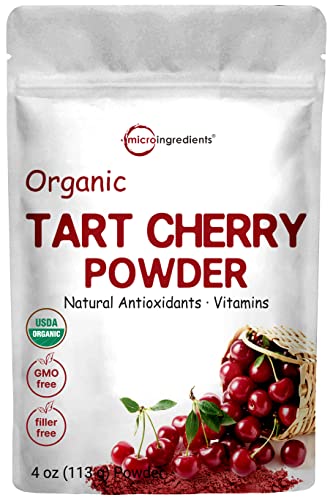
Tart cherry has some of the most specific and well-documented research of any food compound for chronic pain conditions — its anthocyanin content reduces the production of inflammatory enzymes through a mechanism similar to NSAIDs but without the gut lining damage. Its melatonin content supports sleep quality, which is both a driver and a consequence of chronic inflammation. Freeze-dried tart cherry powder added to a smoothie or stirred into yogurt delivers a concentrated dose of both compounds in a form that is shelf-stable, easy to measure, and flavorful enough to enhance rather than merely supplement whatever it is added to. One of the most condition-specific anti-inflammatory breakfast additions available.

Avocado oil is among the most stable cooking oils at higher temperatures — relevant for egg preparation, where olive oil’s lower smoke point can lead to oxidization that produces inflammatory compounds at cooking temperatures. Cold-pressed avocado oil has a neutral flavor, a high oleic acid content that supports the omega-3 to omega-6 ratio, and a smoke point high enough for any egg preparation method. Use it for scrambled eggs, frittatas, and any sautéed vegetable additions to a morning meal. The anti-inflammatory fat profile of avocado oil makes it the functionally superior choice for a breakfast that is trying to do specific work for a chronically inflamed body.
Building the Smoothie: The Anti-Inflammatory Chronic Illness Breakfast Blueprint
Because the smoothie is the most accessible high-value breakfast format for chronic illness — minimal effort, maximum anti-inflammatory density, fully adaptable to whatever the morning allows — it deserves its own section with a specific blueprint rather than a general suggestion.
The anti-inflammatory chronic illness smoothie has five components, each doing a specific job.
The frozen base: wild blueberries above all others. Wild blueberries contain twice the antioxidant concentration of cultivated blueberries and have specific research support for their effects on inflammation, cognitive function, and gut microbiome health. Frozen wild blueberries are available year-round, require no preparation, and form the flavor backbone of a smoothie that will taste like something worth drinking even on a morning when appetite is compromised.
The vegetable: a large handful of baby spinach or frozen cauliflower rice. Spinach adds iron, magnesium, and folate with no flavor impact when frozen fruit is present. Frozen cauliflower rice adds fiber and micronutrients while thickening the texture without altering the taste. Either one turns a fruit smoothie into a complete anti-inflammatory meal without tasting like it.
The protein: one scoop of collagen peptides, one scoop of plant-based protein powder, or two tablespoons of hemp seeds depending on what the morning’s digestive tolerance supports.
The fat: half an avocado, one tablespoon of almond butter, or one tablespoon of MCT oil. Fat slows the blood sugar response to the fruit and extends the energy stability the smoothie provides.
The anti-inflammatory addition: one of — tart cherry powder, ground turmeric with black pepper, fresh ginger, or a combination of these. Half a teaspoon of each is sufficient. The cumulative anti-inflammatory contribution of a daily smoothie with these additions, over weeks and months, is meaningful.
Blend it. Drink it. Use the morning window before it closes.
You are learning to nourish your body before the day takes from it. Now let’s make sure you can communicate what your body needs when the medical system asks.
If you have ever tried to discuss nutrition, gut health, or dietary approaches to inflammation with a doctor who dismissed the conversation before it began, Say This: 30 Scripts for Chronic Pain Communication gives you the language to have that conversation differently. Thirty ready-to-use scripts for thirty hard medical and personal moments — including the ones where you are asking to be treated as someone who knows her body and has done her research. Because you have. And you deserve a care team that takes that seriously.
The Equipment Edit: Tools That Make an Anti-Inflammatory Breakfast Actually Happen on Hard Mornings
The gap between knowing what an anti-inflammatory breakfast looks like and making it happen on a hard morning is almost always a practical gap rather than a knowledge one. These four close it — the tools that reduce the effort required to make a functional breakfast until the effort is small enough to happen even when the morning is not.
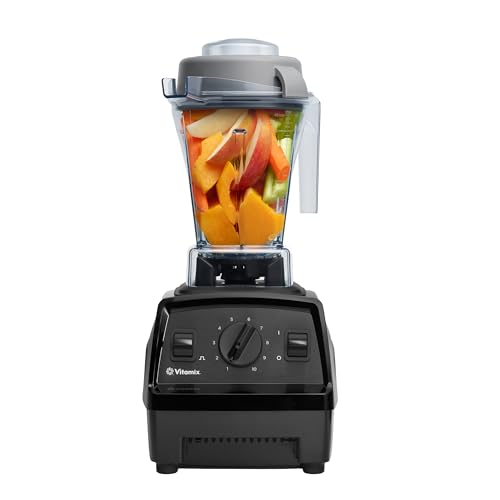
The smoothie that takes sixty seconds in a Vitamix takes four minutes in a lower-powered blender — and the difference between sixty seconds and four minutes is not small when morning energy is the resource being conserved. A Vitamix blends frozen fruit, leafy greens, seeds, and nut butters into a completely smooth texture in under a minute with no chunks, no separating, no re-blending. The self-cleaning function means cleanup is thirty seconds of warm water and a drop of dish soap on the highest setting. For a breakfast you are making every morning, the quality of the tool determines whether the habit survives the hard days. This one does.

For those for whom a full-size blender is too heavy to lift, too large to store accessibly, or too much to clean — the NutriBullet Pro is the single-serve alternative that removes every friction point from a morning smoothie. Blend directly in the drinking cup, twist on the drinking lid, and consume from the same vessel you blended in. One piece to clean. No pouring, no transferring, no second container. For people whose morning energy budget is tight enough that cleaning a blender is a deciding factor in whether the smoothie happens, this design is not a downgrade. It is the version that actually gets used.

For the overnight oats format — assembled the evening before and requiring nothing from the morning — a set of wide-mouth glass containers in the right size makes the preparation and the eating both easier. Wide mouth means a spoon reaches the bottom without scraping. Glass means the oats can be assembled, refrigerated, and eaten from the same container without transferring. A set of four means four mornings of breakfast prepared in one Sunday evening session, available in the refrigerator for the four mornings most likely to need the support. Prepare them when you have capacity. Eat them when you do not.

For mornings anchored by a hot drink — matcha, herbal tea, the warm broth that is sometimes all the stomach can manage early — a kettle with temperature control and a keep-warm function removes the waiting and the re-boiling that turn a simple morning drink into a multi-step process. Specific temperatures matter for specific drinks: matcha degrades at boiling temperature and is best prepared at 175 degrees, green tea at 180, herbal tea at a full boil. Setting the temperature once and having the water ready at the right heat when you arrive in the kitchen removes one more small decision from a morning that already has too many.
The Morning Drink as Anti-Inflammatory Medicine
The first thing that enters a chronically inflamed body in the morning sets a tone that food follows. Before the smoothie, before the eggs, before the overnight oats — there is the drink. And for chronic illness, the morning drink is an opportunity that most people are either using accidentally or not using at all.
Coffee is not the enemy — its antioxidant content is genuinely meaningful and its effect on energy and cognitive function is real. But coffee on an empty stomach, in large quantities, without food alongside it, spikes cortisol and drives the blood sugar instability that the anti-inflammatory breakfast is designed to prevent. If coffee is part of your morning, pair it with food within the first thirty minutes of waking and consider adding collagen peptides to the cup — they dissolve without altering the coffee and contribute protein and gut-supportive amino acids to an otherwise nutrient-free morning drink.
Matcha — powdered green tea — is the alternative worth considering for people whose conditions are worsened by coffee’s cortisol effect. Matcha delivers caffeine in a form modulated by L-theanine, an amino acid that smooths the energy response into a sustained, calm alertness without the cortisol spike that coffee produces. Its EGCG content is one of the most potent anti-inflammatory compounds available in a food form. Prepared with warm non-dairy milk and a small amount of raw honey, it is a morning drink that is also a functional anti-inflammatory intervention.
Warm bone broth is the third option — protein-rich, gut-supportive, warming in a way that blunts morning nausea for people who cannot tolerate solid food or cold liquids in the early morning. A mug of warm bone broth with a pinch of turmeric and black pepper before anything else is a morning ritual that costs almost nothing in terms of effort and delivers collagen, glycine, and anti-inflammatory compounds before the day has made its first demand.
The Morning Drink Edit: Anti-Inflammatory Beverages That Work Before the First Meal Begins
These four are the morning drinks worth building a chronic illness breakfast ritual around — each one doing specific anti-inflammatory work before food has even entered the conversation.

Ceremonial-grade matcha from a reputable Japanese source delivers the full EGCG content and L-theanine that make matcha meaningfully different from other caffeinated morning drinks. Ippodo is one of the oldest and most respected matcha producers in Japan — their Kan grade is the accessible entry point into genuinely high-quality matcha that delivers the therapeutic compounds rather than the flavor alone. Whisk one gram into warm non-dairy milk with a small amount of raw honey for a morning drink that manages energy, delivers anti-inflammatory compounds, and feels like a ritual rather than a supplement.

For coffee drinkers who want the morning coffee ritual without the full cortisol spike — Four Sigmatic’s mushroom coffee blends half the caffeine of standard coffee with lion’s mane for cognitive clarity and chaga for its beta-glucan content, which feeds beneficial gut bacteria and supports immune regulation. The taste is coffee — not mushroom, not supplement — which matters for the ritual adherence that makes a morning practice sustainable. One packet dissolves in hot water in thirty seconds. No brewing equipment required.

The morning bone broth ritual requires nothing more than heating a single-serve carton and drinking it from a mug — a format so low in effort that it is possible on mornings when nothing else is. Bare Bone’s beef bone broth is among the most consistently high-quality commercially available options — genuinely gels when refrigerated, indicating real collagen content, and delivers glycine, proline, and the gut-supportive compounds that make bone broth specifically valuable for the chronically inflamed body. Warm it with a pinch of turmeric, ginger, and black pepper for a morning tonic that tastes like care and functions like medicine.

For the morning when you want something that tastes like a coffee shop drink and functions like an anti-inflammatory protocol. Golde’s matcha latte blend combines ceremonial matcha with coconut milk powder, turmeric, and adaptogens in a blend that stirs into hot water or milk in thirty seconds and requires no additional ingredients to be complete. The flavor is warm, slightly sweet, and rich enough to feel like a treat rather than a supplement. For people who struggle with the austerity of a plain matcha or whose mornings do not have space for assembling multiple ingredients, this blend compresses the anti-inflammatory morning drink into one scoop and thirty seconds of stirring.
When Breakfast Is Not Happening: The Minimum Viable Anti-Inflammatory Morning
Every framework needs its floor — the version that survives the days when the framework itself is too much. For the anti-inflammatory chronic illness breakfast, that floor looks like this: warm bone broth or matcha in a mug, one scoop of collagen stirred in, consumed from wherever you are. That is it. That is breakfast on the very hardest mornings — protein, anti-inflammatory compounds, gut-supportive amino acids, delivered in a liquid warm enough to be soothing and simple enough to require almost nothing from a body that has almost nothing to give.
It is not the smoothie. It is not the overnight oats. It is not the eggs with avocado and berries. But it is something. It is intentional. It is choosing the morning window even when the window is barely cracked — and that choice, made consistently across the full range of your mornings rather than only the good ones, is what makes the anti-inflammatory breakfast a practice rather than an aspiration.
The mornings will vary. The illness will vary. What you have available will vary. The framework accommodates that variation — because it was built for the actual range of chronic illness mornings, not for the ones that look like wellness content. It meets you at the smoothie when the smoothie is possible. It meets you at the bone broth when that is all there is. It asks only that you use the window — whatever size it opens to today — to give your body something that works for it before the day begins its work of taking from it.
That is the practice. That is what changes the mornings. Not perfection — presence, in the first hour, with whatever you have. Your body is listening. It responds to what you give it. Give it something good.
You have learned to nourish your body before the day begins. Now let’s make sure you can ask for the support your body needs when it matters most.
Managing chronic illness through food is one layer of a comprehensive approach to your health — and it deserves to be taken seriously by the people in your care team, not dismissed as lifestyle advice when it is genuinely therapeutic. Say This: 30 Scripts for Chronic Pain Communication gives you the exact language for those conversations — thirty scripts for the moments when you need to advocate for integrative care, nutritional support, and the kind of comprehensive treatment your body actually requires. Because eating well is self-advocacy. And you deserve a care team that meets that effort with the same seriousness you bring to it.