
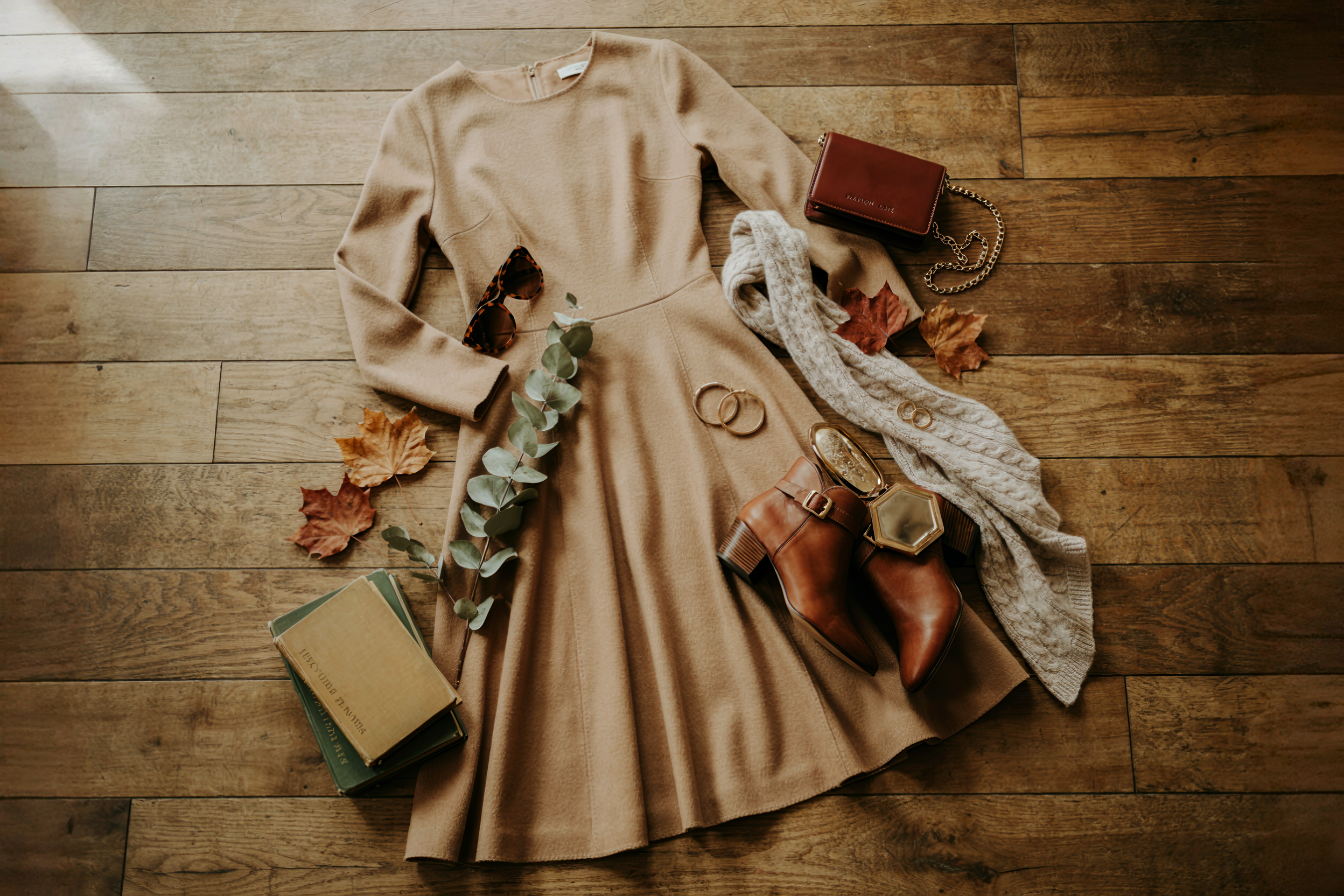
The Most Comfortable Fall Dresses for Chronic Illness: Midi and Maxi Styles That Feel as Good as They Look
The content on this site was created with the help of AI. LOVEOWE LLC participates in the Amazon Services LLC Associates Program and other affiliate programs. As an Amazon Associate, I earn from qualifying purchases. This means I may earn a small commission—at no extra cost to you—when you make a purchase through links on this site. All opinions are my own. Learn more click here. Thank you for your support!
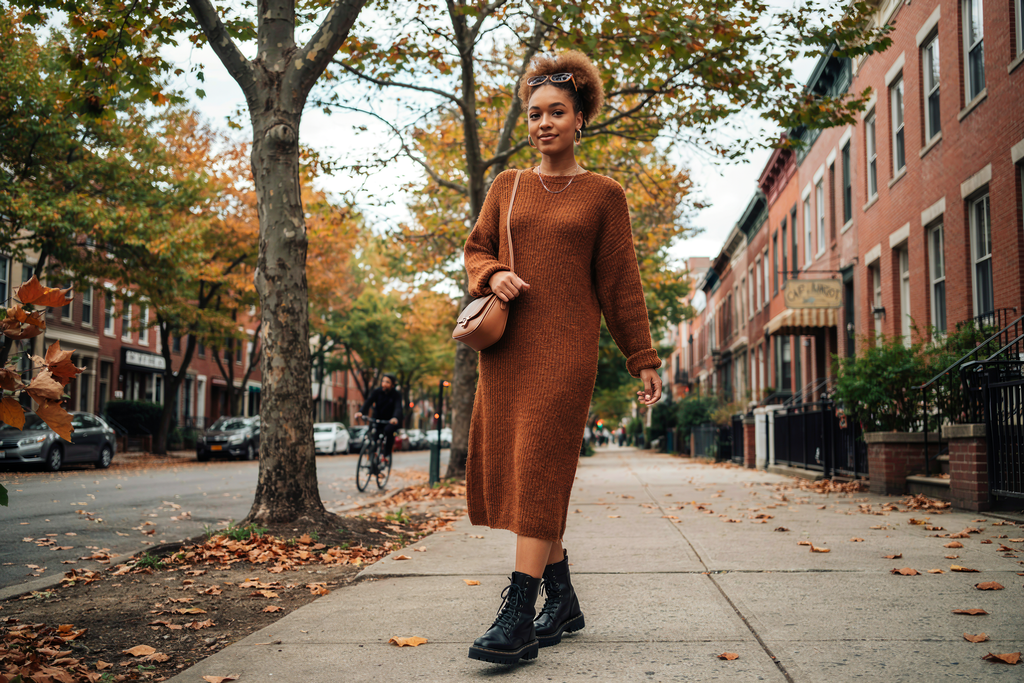
One piece, one decision, and a body that gets to just exist in something beautiful
Somewhere in my second year of living with chronic illness, I stopped wearing pants on hard days. Not because I made a decision about it — it happened gradually, the way most adaptations do, one morning at a time. A waistband that was fine yesterday became intolerable today. The process of getting into trousers — the button, the zip, the pulling and adjusting — cost more than I had to spend before 9 a.m. Leggings helped, but leggings required a top, and tops required decisions, and decisions required energy I was already rationing. A dress, I discovered almost by accident, solved most of this at once.
A dress is one piece. One decision. No waistband negotiation, no separate top and bottom to coordinate, no second thought about whether anything matches. You put it on — or in the best versions of this, you pull it over your head or step into it — and you are dressed. That efficiency sounds small until the morning you understand exactly what it costs to get dressed when your body is working against you, and then it sounds like everything.
What I had to learn, though, was that not all dresses are the same in this respect. The wrong fabric creates its own problem. The wrong construction — a back zipper, a fitted bodice, a neckline that requires contortion — turns a one-step process back into a multi-step one. Finding the dresses that were actually easy, actually soft, actually wearable on the full range of days a chronic illness body presents, took longer than it should have. This post is the research I wish I’d had earlier.
Everything here is fall-appropriate, midi or maxi length, and chosen with the specific requirements of chronic illness dressing in mind — fabric that doesn’t irritate sensitized skin, construction that accommodates swelling and fluctuation, silhouettes that require nothing from your body to wear beyond stepping in or pulling on. Beautiful, all of them. Effortless, as much as anything can be. Chosen for the days that are hard and the days that aren’t, because the dress should work on both.
Soft knit midi dresses: the everyday fall dress that does everything
A knit midi dress is the workhorse of chronic illness fall dressing. The knit construction gives it stretch — it accommodates whatever your body is doing that day without pulling, gaping, or creating the kind of fit anxiety that adds mental load to an already-taxing morning. The midi length provides coverage without requiring hem management. And the single-piece format means you are dressed, completely, with one garment and no coordination required.
What distinguishes a knit midi dress that works for chronic illness from one that doesn’t is mostly fabric weight and neckline. A lightweight knit in a loose weave can be clingy in ways that are uncomfortable and unflattering simultaneously — it moves with every movement in a way that draws attention to itself. A medium-weight knit with more body drapes rather than clings, holds its shape through a full day of wear, and doesn’t require constant readjusting. This is the weight you are looking for.
Neckline matters for dexterity and comfort in equal measure. A wide crew neck or scoop neck that the dress can be stepped into rather than pulled over the head is the most accessible construction. If the neckline is narrow enough to require overhead pulling, check whether the fabric has enough stretch to make that process painless — a tight neckline in a low-stretch knit is a barrier every single morning. V-necks and wrap necklines are always the safest choice because they open enough to eliminate the question entirely.
Color and print are worth thinking about in the context of fall specifically. Solid deep tones — burgundy, forest green, rust, chocolate, navy — read as intentionally seasonal and pair with anything you might layer over them without requiring any styling thought. Print dresses in autumn florals or abstract earth tones do the visual work of looking styled without requiring accessories to complete them. Either is a legitimate strategy depending on how much energy you have available for getting dressed on any given morning.
Soft knit midi dresses for fall

A long-sleeve ribbed knit midi dress is the fall dress that requires nothing additional — no cardigan, no layer, no accessory needed to make it work for the season. The ribbed texture has enough structure to look intentional rather than relaxed, and the long sleeve eliminates the arm coverage question entirely. Look for a dress where the sleeve cuff has enough stretch to pull over the hand easily, a neckline that is wide enough to step into, and a hem that hits below the knee. This is the dress you reach for first on hard days because it always works.

A wrap-style knit midi dress has an adjustable front closure that ties at the waist — which means the fit is customizable to wherever your body is comfortable on any given day, accommodating the bloating, swelling, and day-to-day variation that makes fixed-size dressing unreliable for chronic illness bodies. The v-neckline that comes standard with a wrap style is wide enough that overhead pulling is never an issue. Look for a tie that fastens at the side rather than the back, which is significantly easier to manage without assistance.

A sweater dress that hits at midi length occupies the space between a dress and a knit top in the most useful possible way — it is warm enough for fall without layering, substantial enough to read as an outfit rather than loungewear, and constructed from the same material as your most comfortable sweaters. Look for a style with a relaxed fit through the body rather than a fitted silhouette, a neckline that does not require fine motor management, and a hem with enough weight to hang straight rather than riding up. Camel, oatmeal, and chocolate are the neutral tones that work hardest in this category.

A mock neck knit dress with a fitted top and flared or A-line hem gives you warmth at the neck and collar without the full restriction of a turtleneck, and the A-line or flared hem provides movement at the lower body that a straight-cut knit doesn’t offer. This silhouette works particularly well for anyone managing hip or lower body pain — the full hem means no fabric resistance when walking, sitting, or shifting positions throughout the day. Mock neck eliminates any neckline management and provides coverage that works without a scarf.
Maxi dresses for fall: full coverage, full ease, full presence
A maxi dress does something a midi cannot, and it is worth naming directly: it covers everything. From the collarbone to the floor or close to it, a well-chosen maxi dress provides complete coverage of the lower body in a way that eliminates an entire category of daily decision-making. You do not have to think about your legs. You do not have to think about compression socks showing, or swelling being visible, or the particular way your body looks on a difficult day. The dress takes care of all of it, and takes care of it beautifully.
For chronic illness bodies specifically, the full-length coverage of a maxi is not just aesthetic — it is functional. Maxi dresses work as a single layer when your body runs warm, as the outer layer when you need to add warmth underneath, and as coverage for medical devices, compression garments, or anything else you might be managing below the knee that you prefer not to have visible in a social or professional context. This kind of versatility, built into a single garment, is worth a great deal.
Fall maxi dresses require some consideration of fabric weight. A lightweight summer maxi in thin jersey will be too cold for fall unless you layer significantly underneath, which adds back the getting-dressed complexity you are trying to avoid. Fall maxis work best in heavier jersey, soft knit, or fabric that has enough weight to provide some warmth of its own — not enough to replace a coat, but enough to make the dress seasonally appropriate on its own terms. A thermal long sleeve underneath a medium-weight maxi extends the season further and is still fewer pieces than most fall outfits require.
Maxi dresses for fall chronic illness dressing

A long-sleeve jersey maxi dress in a deep fall color — burgundy, forest green, navy, plum — is the most complete single-garment fall outfit available. The long sleeve provides warmth through the arm, the maxi hem provides coverage through the leg, and the jersey construction provides the stretch and softness that makes the whole thing wearable on the full spectrum of chronic illness days. Look for a style with a wide scoop or v-neck that can be stepped into, and a fabric weight heavy enough to feel substantial rather than thin against the skin.

A tiered maxi dress in a soft woven fabric — rayon, viscose, or a soft cotton blend — is the layerable option in this section: it works over a long sleeve thermal or fitted knit top underneath, which extends its wearable season significantly. The tiered construction means the hem has volume and movement that a straight-cut maxi does not, which reads as more formal and intentional. Look for a style with an elastic or smocked bodice rather than a fitted structured top — smocked bodices stretch to accommodate variation and require no closure management.

A knit turtleneck maxi dress is the fall and winter dress option that requires no additional pieces at all — the turtleneck provides neck warmth, the knit construction provides body warmth, and the maxi hem provides lower body coverage. All in one piece. For anyone managing neck or throat sensitivity who typically avoids turtlenecks, look specifically for a style described as a “mock neck” or “funnel neck” which provides coverage without the full restriction of a fitted turtleneck collar. The distinction between these is significant for chronic illness comfort.

A maxi-length sweater dress in soft flannel or brushed cotton is the fall option that reads as casually put-together from any angle — it has the collar and button placket of a shirt dress but the coverage and ease of a maxi. Look for styles with snaps rather than buttons, or with enough stretch in the fabric that the buttons do not need to be managed beyond the top two. The flannel or brushed cotton fabric has natural warmth and a soft hand that makes it one of the most comfortable woven fabrics for sensitive skin. Plaid and gingham prints in autumn tones are the most seasonally appropriate choices in this style.
Getting dressed is only one part of showing up with chronic illness. The other part is knowing what to say when someone asks how you are, how to explain why today looks different from yesterday, and how to advocate for what you need in the spaces you are moving through. Say This: 30 Scripts for Chronic Pain Communication was written for exactly those moments — thirty ready-to-use scripts for the conversations that chronic illness creates and nobody teaches you to have. Get your copy here →
Shirt dresses and flannel styles: the casual fall dress that looks like you planned it
The shirt dress is one of the most underestimated options in fall chronic illness dressing. It has a collar, which makes it look like you dressed intentionally. It has a button placket, which reads as structured from a distance. And the best versions of it — in soft flannel, brushed cotton, or a stretchy woven — are, up close, as comfortable as anything in your wardrobe. This gap between how it looks and how it feels is precisely what makes it so useful.
A shirt dress in a soft fall fabric is the dress you wear when you need to look like you have your life together and your body is making that claim difficult to support. It reads as casual-intentional, which is a useful aesthetic category — it is not so dressy that it requires the energy of being dressed up, and it is not so casual that it requires justification. It is simply a considered outfit, in one piece, that your body has very little complaint about.
The practical considerations for shirt dress selection with chronic illness: length should hit at midi or below, because a shorter shirt dress requires leggings underneath which adds back the getting-dressed steps you are eliminating. Fabric should be soft enough to wear against sensitized skin without irritation — flannel and brushed cotton are generally the best options in this category, and both are seasonally appropriate for fall. Button selection matters — smaller buttons are more difficult to manage; snaps, magnetic closures, or large buttons in a stretchy fabric are all more accessible options.
Shirt dresses and casual fall styles

A soft flannel maxi shirt dress is the quintessential fall piece that requires almost nothing from you to wear. Flannel is naturally warm, brushed on both sides for softness, and generally cut with enough ease that it moves freely without clinging. Look for a style where the buttons are large enough to manage with limited hand dexterity, or better yet, a style with a partial button placket that allows you to pull the dress over your head with the top buttons already fastened — this is the most accessible construction in the shirt dress category. A belt at the waist is an optional finishing detail, not a required one.

A soft-wash denim shirt dress in an oversized cut is the dress that looks like you tried while requiring almost nothing. Soft-wash or acid-wash denim has been processed to remove the stiffness of raw denim, and in an oversized cut it drapes rather than constricts — which is the version your chronic illness body can wear comfortably. Look for a midi length that hits below the knee, a wash that is light enough to feel broken-in from the first wear, and a cut through the body that is relaxed rather than fitted at the waist.

A waffle knit midi dress with a henley neckline — the partially buttoned placket at the collar — gives you the visual structure of a shirt dress with the full comfort of a knit construction. The waffle texture reads as intentionally casual in the best way, the henley neckline provides a finished, styled look without requiring all the buttons to be managed, and the knit fabric means the dress has the stretch and softness that woven shirt dresses often lack. This is the dress for the fall days that require looking put-together without the energy to actually be put-together.

Hacci is a brushed knit fabric with a soft, slightly fuzzy surface that sits at the intersection of sweater and jersey — it has the warmth of a light sweater and the drape and stretch of a jersey knit. A midi dress in brushed hacci is warm enough for fall without layering, soft enough for sensitized skin, and loose enough in its typical construction to accommodate whatever your body is doing. Look for a style with a relaxed silhouette through the body, a neckline wide enough to step into, and a hem with enough weight to hang straight through the day without riding up.
Slip dresses layered for fall: one piece doing two jobs
A slip dress worn over a long sleeve is one of the most versatile and lowest-effort fall dressing strategies available — and one of the most underused in the context of chronic illness. The slip dress itself is typically satin or silky in construction — the most skin-friendly fabric category for sensitive nervous systems — and the long sleeve underneath adds warmth and coverage without requiring any additional thought about whether the pieces go together. They always go together, because the slip dress is the outer piece and the long sleeve is simply a layer inside it.
The practical genius of this combination for chronic illness dressing is that it separates the warmth question from the dressing question. The long sleeve handles warmth and arm coverage. The slip dress handles the outfit. Neither piece needs to do both jobs, which means both pieces can be chosen for what they do best rather than what they can compromise on. A satin slip dress in a fall tone over a fitted ribbed long sleeve is, by most accounts, a considered and beautiful fall outfit. It is also, functionally, two comfortable pieces layered in a way that requires almost nothing.
Slip dresses for fall should be chosen in fabrics heavy enough to have drape without being sheer — charmeuse satin, crepe-back satin, and heavier polyester satin all work well. Length at midi or maxi provides coverage and seasonal appropriateness simultaneously. And the long sleeve underneath should be fitted enough not to bunch under the slip dress but not so fitted that it restricts movement or is difficult to pull on.
Slip dresses and layering styles for fall

A bias-cut satin midi slip dress in a fall tone — champagne, dusty rose, chocolate, deep green, rust — is the outer piece in the slip-over-long-sleeve combination. Bias cut means the fabric is cut on the diagonal grain of the fabric rather than straight, which gives it a characteristic drape and movement that straight-cut satin does not have. It also accommodates body variation more forgivingly than straight-cut styles, which makes it the better choice for chronic illness bodies managing day-to-day fluctuation. Look for a fabric weight that has body without being stiff, and a hem that hits below the knee.

The long sleeve under the slip dress needs to be fitted enough not to create bulk under the outer layer, soft enough to wear against the skin without friction, and easy enough to pull on without a difficult neckline or sleeve cuff. A fitted ribbed long sleeve in a neutral — white, cream, black, or a tone that matches the slip dress — is the most versatile layering piece in this combination. Look for a fabric that has enough stretch to go on easily and enough recovery to stay smooth under the slip dress through a full day of wear.

A satin maxi slip dress with adjustable straps provides full-length coverage in the outer layer — which means the long sleeve underneath is the only warmth decision required, and the entire lower body is covered without any additional consideration. Adjustable straps allow the fit at the shoulder to be customized, which matters for anyone managing shoulder pain or asymmetry. Look for a style where the straps adjust easily — a sliding adjuster rather than a small buckle — and where the fabric has enough weight to drape without requiring a structured undergarment beneath it.

A velvet midi slip dress worn over a long sleeve is the dressy version of this layering strategy — the velvet reads as formal and seasonal in a way that satin alone sometimes does not in fall contexts, and the slip-dress silhouette keeps the construction accessible despite the elevated fabric. Look for a stretch velvet rather than traditional woven velvet, which will have the give needed to accommodate daily variation without requiring precise sizing. Over a fitted mock neck or simple crewneck long sleeve, this combination reads as an intentional, considered fall outfit that required, in reality, two easy-on pieces and no decisions.
The dress is not the compromise. It is the strategy.
Somewhere in the chronic illness community there is a persistent, quiet narrative that dressing comfortably is a form of giving up — that if you have arrived at elastic waistbands and soft fabrics and one-piece dressing, you have conceded something to your illness that you would take back if you could. This post is a direct argument against that narrative.
The dresses in this guide are not consolation prizes for bodies that cannot manage real clothing. They are the result of understanding what your body actually needs from clothing and choosing accordingly — which is a more sophisticated relationship with dressing, not a lesser one. A bias-cut satin midi slip dress over a fitted ribbed long sleeve is not a compromise outfit. It is a beautiful outfit chosen by someone who understands exactly what she is doing and why.
Chronic illness changes your relationship with your body in ways that are frequently painful and occasionally clarifying. One of the clarifying ones, for many people, is the relationship with clothing. You stop dressing for other people’s comfort and start dressing for your own. You stop choosing pieces that look right from the outside and ignore what they feel like from the inside. You start understanding fabric and construction and silhouette in terms of what they do to and for your body rather than what they signal to the room.
That understanding is not a loss. It is, in its own way, a form of self-knowledge that takes most people much longer to arrive at. The dress you choose from that place — soft, easy, comfortable, and entirely beautiful — is one of the things you get to keep.
If chronic illness has changed how you show up — in what you wear, in what you can commit to, in how you explain yourself to the people in your life — Say This: 30 Scripts for Chronic Pain Communication was written for you. Thirty scripts for the conversations that living with chronic pain creates: with your care team, with your family, with your employer, and with yourself. Because showing up beautifully is easier when you also know what to say. Get your copy here →