Oversized Sweaters for Fibromyalgia and Chronic Illness: Fall Knits That Feel as Soft as They Look
The content on this site was created with the help of AI. LOVEOWE LLC participates in the Amazon Services LLC Associates Program and other affiliate programs. As an Amazon Associate, I earn from qualifying purchases. This means I may earn a small commission—at no extra cost to you—when you make a purchase through links on this site. All opinions are my own. Learn more click here. Thank you for your support!
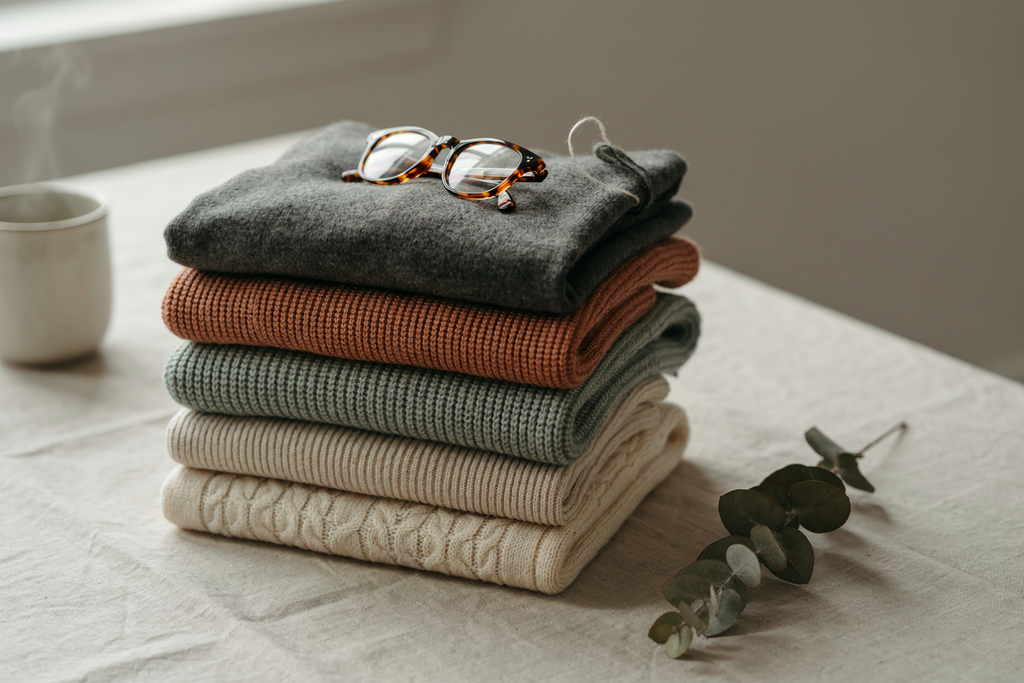
Because your nervous system deserves to forget what you’re wearing within five minutes of putting it on
Wool found me out the year my nervous system stopped tolerating things it used to tolerate without comment. A sweater I had owned for years — a beautiful cream cable-knit that I had worn through three previous falls without a second thought — became unwearable in the space of a single season. Not dramatically unwearable. Not hives or a visible reaction. Just the particular low-grade, constant, impossible-to-ignore itch that sits at the surface of sensitized skin and does not resolve while the offending fabric remains in contact with it. I wore it for forty minutes at a dinner party and spent the rest of the evening thinking about nothing else.
This is the fibromyalgia and chronic illness sweater problem, and it is both more common and more specific than the general conversation about sensitive skin acknowledges. Fibromyalgia in particular involves a phenomenon called central sensitization — the nervous system’s pain-processing mechanisms become amplified, which means stimuli that would be minor or neutral for most people register as significantly more intense. A slightly scratchy fiber becomes an unbearable one. A seam that sits against the wrong spot becomes a focal point that commands attention for as long as it is there. A sweater that fits too closely across the shoulders creates a pressure awareness that builds over hours into something that needs to be named as pain.
The sweater that works for a chronic illness body — and for a fibromyalgia body specifically — has to disappear. Not in terms of aesthetics, where it should be doing full work and looking entirely considered. But in terms of sensation. It should go on and cease to register within minutes. The fabric should create no friction, no itch, no pressure awareness. The fit should be loose enough that no point of the body is in sustained, conscious contact with the garment. The seams, where they exist, should be flat enough or soft enough to fade from awareness. You should be able to forget, within a reasonable amount of time, that you are wearing anything at all.
This post is the fall sweater guide built around that standard. Every recommendation here has been evaluated for fabric softness, fiber content, fit, and construction with the chronic illness nervous system as the primary criterion. Beautiful throughout, because that was always part of the requirement. But wearable first — genuinely, all-day, forget-you-put-it-on wearable — in the way that fall sweaters for chronic illness bodies need to be.
Cashmere and cashmere-blend pullovers: the softest entry point in fall knitwear
Cashmere is the fiber standard against which all other soft knits are measured, and for chronic illness bodies managing textile sensitivity it earns that status through a specific physical property: the fiber diameter. Cashmere fibers are significantly finer than wool fibers — fine enough that they do not activate the itch receptors in the skin the way that coarser fibers do. Where a wool fiber of standard diameter sits against the skin and creates the pricking, scratching sensation that sensitized nervous systems register as intolerable, a cashmere fiber of fourteen to sixteen microns essentially disappears against the skin surface. This is not a subjective luxury distinction. It is a measurable physical difference with direct relevance to chronic illness textile sensitivity.
Pure cashmere at a price accessible for everyday wear has become significantly more available in the past several years, with a range of Amazon and direct-to-consumer options that bring the fiber into the wardrobe without requiring a luxury price point. Cashmere blends — cashmere mixed with silk, modal, or a soft merino — extend the softness of the cashmere fiber while improving the durability and washability of the resulting fabric, both of which matter for chronic illness bodies who need their clothing to survive regular washing without becoming itchy as the fibers degrade.
Fit in cashmere pullovers matters for a different reason than fit in structured garments. An oversized cashmere pullover creates air circulation between the fabric and the skin that a fitted cashmere does not — which matters for temperature dysregulation, a common chronic illness symptom where the body struggles to regulate its own temperature and benefits from clothing that does not trap heat against the skin. The oversized fit is both an aesthetic choice and a physiological one, and the best cashmere pullovers for chronic illness are the ones where the two coincide.
Cashmere and cashmere-blend pullovers for fall
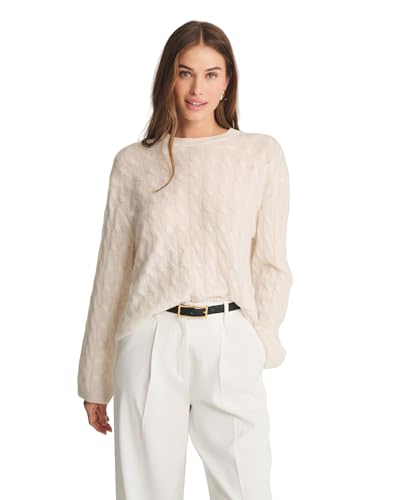
A pure cashmere oversized crewneck is the benchmark recommendation in this section — the fiber standard that everything else is measured against. Look for a grade-A cashmere description in the product listing, which indicates finer fiber diameter and softer hand than grade-B cashmere used in lower-cost options. The crewneck construction should be wide enough to pull over the head without a tight neckline creating resistance, and the body should be cut long enough to cover the waistband of any bottom you pair it with — this eliminates the midsection gap that creates cold exposure and skin contact issues at the hem. In camel, cream, or soft grey for fall.

A cashmere turtleneck combines the softness of cashmere fiber with the smooth, non-friction surface of silk — which creates a fabric that is simultaneously the warmest and the most sensory-neutral option in the turtleneck category. A silk content adds a slight drape and sheen that pure cashmere does not have, and improves the washability of the garment significantly. For anyone who finds turtlenecks uncomfortable at the neck — a common chronic illness experience — look specifically for a relaxed or loose turtleneck construction that sits away from the throat rather than gripping it.

A cashmere-modal blend sweater is the most washable option in this section — modal is a semi-synthetic fiber derived from beech tree pulp that is machine washable, highly resistant to shrinking, and adds a softness and drape to the cashmere blend that improves with washing rather than degrading. The v-neck construction is the most accessible neckline for overhead pulling, providing the widest opening at the neck without requiring a wide crewneck that some find too casual. In a deep fall tone — burgundy, forest green, chocolate — this sweater in a relaxed oversized cut reads as entirely considered.
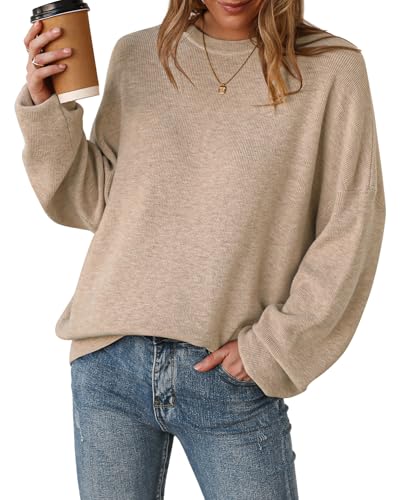
A high-quality acrylic sweater specifically finished and described as cashmere-like — look for this exact language in the product description — has undergone a finishing process that softens the fiber surface to a level that many chronic illness bodies find tolerable where standard acrylic is not. This is the accessible entry point for the softness standard of this section without the cashmere price point. Not every acrylic achieves this — the finishing process matters as much as the fiber — so look specifically for products where “ultra-soft,” “cloud-soft,” or “cashmere-like” appears in the title or description rather than assuming any acrylic will perform similarly.
Bamboo and modal blend sweaters: the skin-safe alternative to everything scratchy
Bamboo and modal fibers occupy a specific and important category in chronic illness textile dressing — they are the natural and semi-natural fiber alternatives that provide the softness of cashmere at a lower price point, the breathability that synthetic fibers cannot replicate, and a surface quality that is genuinely different in its interaction with sensitized skin. Both fibers are smooth at the cellular level in a way that wool and standard acrylic are not, which means they create no surface friction against skin that is already registering more sensory input than it should.
Bamboo fiber specifically has a round, smooth cross-section — unlike wool, which has microscopic scales along the fiber shaft that create the scratching and itching sensation on contact with skin. This structural difference is not marketing language. It is the physical reason why bamboo sweaters feel different from wool sweaters on sensitized skin, and why the chronic illness community has adopted bamboo as a textile standard at a rate that the mainstream fashion market has not yet fully recognized.
Modal, derived from beech wood pulp through a semi-synthetic process, achieves a similar smoothness through its manufacturing rather than its natural fiber structure. Modal sweaters have a particular quality of softness that is described consistently by chronic illness dressers as the closest thing to wearing nothing — the fabric weight is present but the sensory input is minimal. Modal also has excellent moisture-wicking properties, which matters for chronic illness bodies managing night sweats, temperature dysregulation, or the kind of low-grade perspiration that certain medications produce.
Bamboo and modal blend sweaters for sensitive skin

A bamboo-cotton blend oversized sweater is the most breathable option in this section — the bamboo fiber’s natural hollow structure allows air circulation that prevents the heat buildup that can trigger chronic illness symptom flares in temperature-sensitive bodies. Look for a blend that is at least fifty percent bamboo, which is the threshold at which the bamboo fiber properties dominate the hand feel of the fabric. In a relaxed, oversized silhouette with a drop shoulder — which eliminates any armhole pressure at the shoulder joint — this sweater is appropriate for the full range of fall temperatures and the full range of chronic illness days.

A modal blend oversized crewneck — modal mixed with a small percentage of spandex for recovery — has the drape and softness of a luxury knit at a price point accessible for building a wardrobe around rather than a single investment piece. The spandex content means the sweater recovers its shape after washing without the careful handling that pure modal sometimes requires, and the crewneck in an oversized cut sits away from the neck in a way that creates no contact at the collarbone or throat. Look for a fabric weight that is substantial enough for fall without being so heavy that it feels burdensome to wear.

A bamboo-modal blend turtleneck is the option that makes turtlenecks accessible for chronic illness bodies that have previously found them intolerable — because the fiber combination creates a turtleneck collar that is smooth and non-scratching against the most sensitive area of the neck and throat. The bamboo-modal blend also has enough stretch and recovery to allow a relaxed turtleneck construction that sits away from the throat rather than gripping it. For anyone managing lymph node sensitivity, thyroid involvement, or the general neck and throat sensitivity that chronic illness frequently creates, this is the turtleneck worth trying before giving up on the style entirely.

TENCEL — the brand name for lyocell fiber produced by Lenzing — is another semi-synthetic fiber with a smooth cross-section and excellent temperature-regulating properties that make it well-suited for chronic illness dressing. TENCEL fibers actively manage moisture by absorbing and releasing it in response to body temperature changes, which means the sweater responds to your body’s temperature fluctuation rather than trapping heat or creating cold. In a blended knit construction with cotton or modal, TENCEL creates a sweater that is smooth, soft, breathable, and genuinely responsive to the body wearing it.
Finding the right sweater is part of learning to advocate for your body’s needs. Knowing how to communicate those needs — to your doctors, your employer, the people in your life — is the other part. Say This: 30 Scripts for Chronic Pain Communication gives you thirty ready-to-use scripts for the conversations that chronic illness creates and nobody teaches you to have. Including how to explain sensory sensitivity to people who have never experienced it and genuinely cannot imagine why a sweater matters this much. Get your copy here →
Drop-shoulder and oversized knits for shoulder and arm pain
The shoulder seam is one of the most overlooked construction details in sweater design for chronic illness bodies — and one of the most consequential. A standard set-in sleeve sweater has its seam positioned directly at the shoulder joint, which is a pressure point for anyone managing shoulder pain, bursitis, rotator cuff involvement, or the kind of upper body tension that chronic illness creates in the muscles surrounding the shoulder girdle. The seam sits at the joint. The joint is already being monitored. The result is a sustained, low-grade pressure awareness that builds across a full day of wearing.
A drop-shoulder construction moves the sleeve seam several inches down the arm — typically to the mid-upper arm — which removes the seam from the shoulder joint entirely. The resulting garment has no contact with the shoulder joint at all beyond the fabric of the sweater body, which drapes over rather than sitting at the joint. For chronic illness bodies managing shoulder involvement of any kind, this construction difference is significant enough to be worth specifically seeking in any sweater purchase.
Oversized fit compounds the benefit of drop-shoulder construction by creating additional room through the body of the sweater that prevents any part of the garment from pressing against the ribs, chest, or back with enough sustained pressure to register. A well-fitted oversized sweater in a drop-shoulder cut creates a wearing experience where the garment is present but not physically apparent — which is exactly the standard chronic illness dressing is always reaching for and the reason oversized is not a trend for these bodies but a functional requirement.
Drop-shoulder and oversized knits for shoulder and arm pain

A drop-shoulder oversized crewneck in a soft acrylic — specifically one finished to ultra-soft standard — is the most accessible option in this section and the one worth buying in multiple colors if it performs well. The drop-shoulder construction removes the sleeve seam from the shoulder joint, the oversized body creates room through the torso without any point of sustained contact, and the crewneck sits wide enough to allow easy overhead entry without a tight neckline. Look for a hem length that covers the hip fully — this eliminates any gap between sweater and bottom that creates cold exposure at the midsection.

A longline oversized sweater that hits at the hip or upper thigh solves the midsection coverage problem that standard-length sweaters create when paired with skirts or high-waisted bottoms — there is no gap, no exposed waistband, no point where the sweater meets the bottom in a way that requires readjustment throughout the day. The drop-shoulder construction means the added length hangs freely rather than pulling at the shoulder, and the oversized cut through the body means the extra length reads as deliberate rather than as a sizing error.

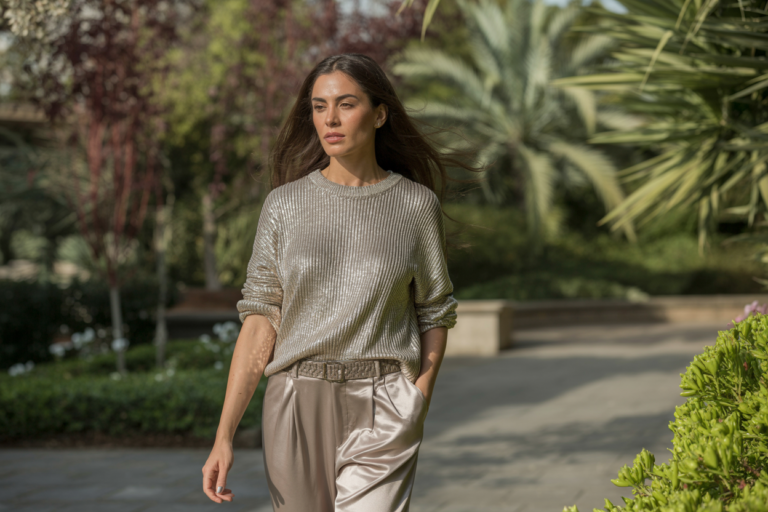
A chunky knit sweater with drop-shoulder construction reads as the most deliberately cozy and on-trend option in this section — the chunky texture signals autumn in a way that finer knits do not, and the drop shoulder means it wears as comfortably as it photographs. Look for a chunky knit where the yarn is described as soft or cloud-soft rather than simply bulky — the visual bulk of a chunky knit does not require a rough yarn, and in the chronic illness sweater category the yarn hand feel is always the specification that matters most regardless of the visual weight of the knit.

A blanket sweater or cocoon cardigan — an open-front cardigan cut so generously that it drapes like a blanket wrap — is the maximum coverage option in this section and the piece with the lowest sensory input of any garment in this post. The open front means it never closes against the body, never creates pressure at any point, and never requires overhead entry. It simply drapes. For chronic illness bodies on the highest-sensitivity days — the days when even a soft pullover feels like too much fabric commitment — a cocoon cardigan worn over a thin layer is the sweater that does all the visual work with the minimum possible physical demand.
Seam-free and flat-seam sweaters: the construction details that eliminate hidden pressure points
Seams are the construction detail that most sweater buyers never think about and most chronic illness bodies cannot stop thinking about once they become aware of them. A standard sweater seam is a ridge of folded and stitched fabric that sits against the skin at every point the seam runs — at the shoulder, at the armhole, along the sleeve, at the side body, at the hem. For a nervous system that is not amplifying sensory input, these seams are background noise. For a nervous system managing central sensitization, they are a constant, located, specific sensation that never fully resolves while the garment is being worn.
Flat seams — where the seam allowances are pressed open and stitched flat rather than folded and ridged — reduce the height of the seam significantly, which reduces the contact pressure against the skin. Not to zero, but to a level that many chronic illness bodies find the difference between a wearable and an unwearable garment. Seamless sweaters — knit in the round on circular machines that produce a tube of fabric requiring minimal seaming — reduce seam contact further still, to the points where seaming is absolutely unavoidable at the shoulder and neckline only.
These construction details are worth looking for specifically in product descriptions and reviews. Flat-seam construction is sometimes noted as a feature; seamless knitting is often described as “knit in the round” or “seamless construction.” Reviews from other buyers mentioning comfort and softness are a proxy for seam quality when the product description does not address it — a sweater that generates consistent comments about how comfortable it is to wear is a sweater where the seams are not creating problems for the people wearing it.
Flat-seam and low-irritation sweaters for chronic illness

A seamless or minimal-seam oversized sweater — look for “seamless” or “knit in the round” in the product description — eliminates the seam ridge at the side body and underarm entirely, leaving only the unavoidable shoulder and neckline seam points. For fibromyalgia bodies where side seams create a consistent lateral pressure awareness that builds across a day of wearing, the absence of that seam is a meaningful quality-of-life improvement in a single garment. In a soft acrylic or bamboo blend, this construction combined with a good fiber choice produces the most sensory-neutral sweater option available.

A ribbed oversized sweater with flat-seam construction combines the visual structure of ribbed knit — which reads as intentional and polished in a way that smooth jersey does not — with the reduced seam profile that chronic illness dressing requires. Ribbed knit also has inherent stretch in both directions, which means the sweater accommodates any body movement without pulling at seam points — a secondary benefit that matters for anyone whose pain is aggravated by resistance from clothing during movement. Look for a rib construction that is fine rather than chunky, which will lie flatter against the body and create less sensory input at the surface.

A fleece-lined knit sweater — where the interior surface of the knit is brushed or bonded with a thin fleece layer — creates a wearing surface that is significantly softer than the outer knit face alone. This construction is particularly useful when the outer knit fabric has a texture that reads well visually but is not the most sensory-neutral against skin — the fleece interior creates a buffer layer that separates the textured outer knit from direct skin contact. Fleece lining also adds warmth without adding weight, which is the thermal efficiency combination that chronic illness dressing consistently benefits from.

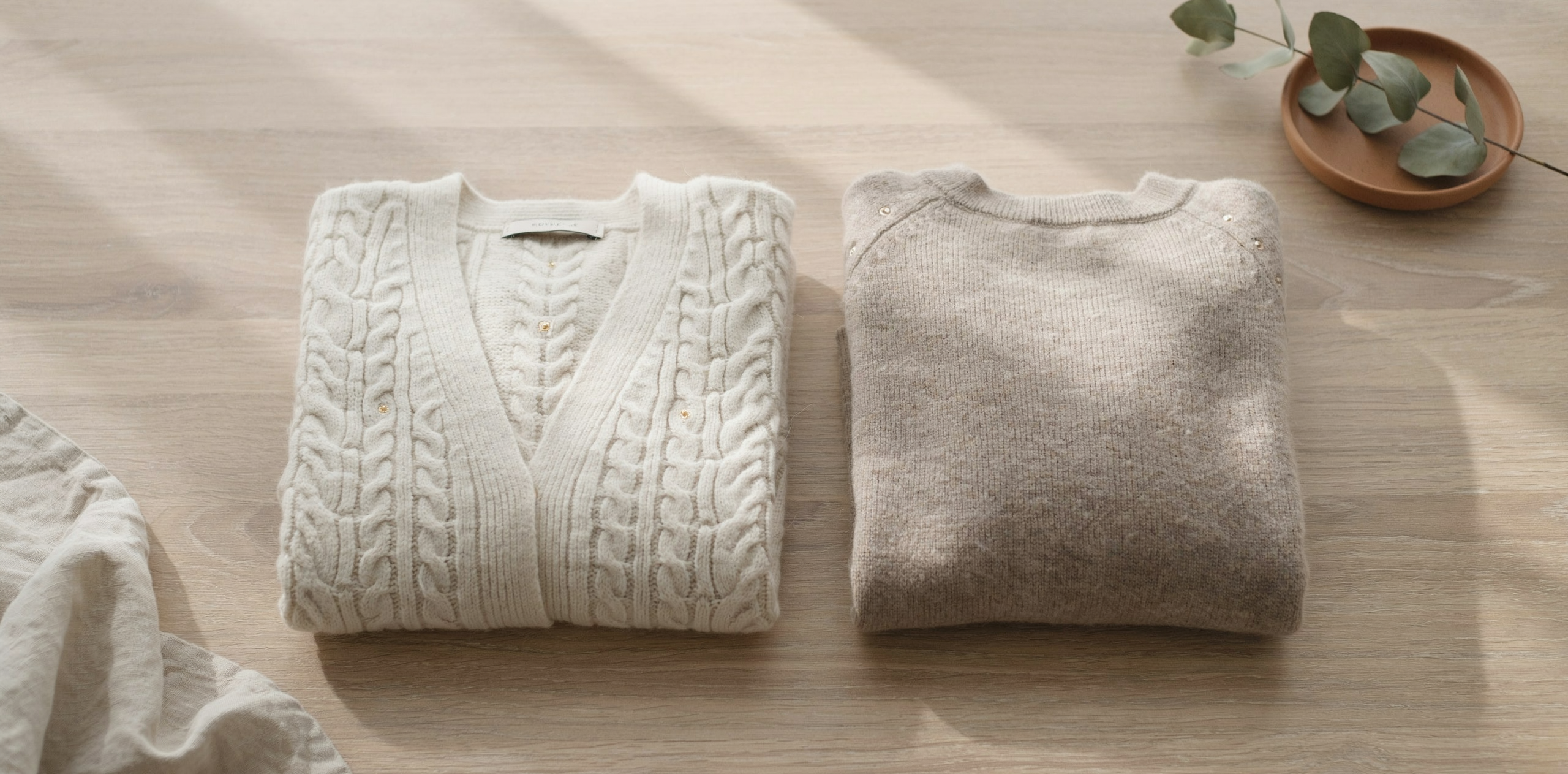
A brushed hacci or brushed knit sweater — where the surface of the knit has been mechanically brushed to raise a soft nap — creates the softest possible fabric surface from a knit construction. The brushing process lifts the fiber ends from the yarn surface and creates a fine, dense pile that sits against the skin with minimal friction and maximum softness. Brushed knit sweaters are among the most consistently recommended options in the chronic illness fashion community for exactly this reason — the process that makes them feel softest is the same process that makes them most tolerable for sensitized nervous systems. In a fall earth tone, this sweater is the one you reach for first on difficult days.
Your nervous system is not being dramatic. It is being accurate.
The itch that comes from a wool sweater on a fibromyalgia body is not an overreaction. It is the nervous system doing exactly what central sensitization causes it to do — registering a stimulus at a higher intensity than the stimulus would produce in a non-sensitized nervous system. The pressure awareness from a shoulder seam, the friction from a slightly rough fiber, the heat buildup from a too-close-fitting knit — none of these are in your head. They are in your nervous system, which has been changed by your illness in ways that are real and documented and entirely outside your control to simply decide not to notice.
What is within your control is what you wear against that nervous system. And a sweater chosen with the understanding of what your nervous system is actually experiencing — soft fiber, flat seams, drop shoulder, oversized fit, breathable construction — is a sweater that respects that reality rather than requiring you to push through it. You should not have to spend any portion of your attention managing your clothing. That attention belongs elsewhere, on the parts of your life that are worth paying attention to.
The sweaters in this post were chosen to give you that attention back. They go on in the morning and cease to register. They keep you warm without creating heat. They look, from any angle that matters, like exactly what you intended to put on. And they do all of this without asking your nervous system to simply ignore what it is correctly perceiving.
That is what a fall sweater for a chronic illness body should do. Every one of the options here does it. The rest is just choosing your color.
You have learned how to dress for your nervous system. You deserve the same quality of support when you have to explain it — to the people who ask why you dress the way you do, to the doctors who have not asked about your sensory symptoms, to the employers who do not yet understand what accommodation actually means. Say This: 30 Scripts for Chronic Pain Communication gives you thirty ready-to-use scripts for every one of those conversations. Because your experience deserves language as precise as the experience itself. Get your copy here →