Chronic Illness Car Essentials: How to Turn Your Vehicle Into a Healing Space Between Appointments
The content on this site was created with the help of AI. LOVEOWE LLC participates in the Amazon Services LLC Associates Program and other affiliate programs. As an Amazon Associate, I earn from qualifying purchases. This means I may earn a small commission—at no extra cost to you—when you make a purchase through links on this site. All opinions are my own. Learn more click here. Thank you for your support!

I have spent more time in my car than I care to calculate. Not commuting, not road-tripping, not running the kind of errands that feel like living — driving to appointments. The rheumatologist forty minutes away. The physical therapist across town. The specialist who finally had availability but whose office requires navigating a parking garage that costs more energy than the appointment itself. The lab, the pharmacy, the follow-up, the follow-up to the follow-up.
For a long time, the car was just transit. The necessary in-between — the thing you endured to get from here to there and back again. I sat in whatever position I defaulted to, listened to whatever was on the radio, ate whatever I’d grabbed on the way out the door, and arrived places already depleted before the appointment had even begun. The car was not part of my healing. It was not part of anything except the logistics of being chronically ill in a world that requires you to keep showing up.
Then I had a particularly brutal stretch — three appointments in one week, a long flare, a body that had very little margin for anything the world was asking of it — and I sat in my car in a parking lot after the second appointment and realized I had forty minutes before I needed to be anywhere. And I had nothing. Nothing to eat, nothing comfortable to lean against, nothing that made the car feel like anything other than a waiting room with wheels. I sat there in a hard seat with a seatbelt digging into an already painful shoulder and thought: this is a space I spend hours in every week and I have never once treated it like it matters.
It matters. The car matters. The time you spend in it matters — not just as transit, but as time. Time that can be restorative or depleting depending entirely on what you have set up inside that space. For people with chronic illness who spend significant time driving to and from medical appointments, the car is the third space: not home, not the medical system, but something in between that has the potential to be genuinely its own kind of sanctuary if you treat it that way.
This post is how you treat it that way. We are going to cover every dimension of a chronic illness car setup — comfort and body support, temperature and sensory management, nourishment and hydration, and the practical organizational tools that make the car work for you rather than against you — and sixteen products that turn a vehicle into a space your body can actually rest in between the demands of managing your health.
Why the Car Deserves the Same Attention as the Rest of Your Healing Environment
The home gets the attention. The bedroom, the living room, the kitchen — these are the spaces that wellness content addresses when it talks about designing environments for healing. The car gets nothing, despite the fact that for many chronically ill people it represents a significant and recurring portion of weekly time.
Consider what the car asks of a body with chronic pain or illness. Sustained sitting in a fixed position — often in a seat that was designed for an average body rather than yours specifically — for periods that can range from twenty minutes to several hours. Vibration transmitted through the seat and floor from road surface irregularities. Temperature that swings between extremes depending on season and time of day. The cognitive and physical load of driving itself — the visual attention, the reaction time, the neck and shoulder tension that accumulates during highway driving or difficult parking situations. The emotional weight of where you are going and what you are about to face when you get there.
This is not a neutral environment. It is an environment that is actively demanding things from a body that is already working at capacity. And unlike the doctor’s office, the waiting room, or the hospital — environments whose discomfort you cannot control — the car is entirely yours. You can change everything about it. You can make it soft, warm, nourishing, organized, and genuinely comfortable in ways that reduce what it costs you to be in it and increase what it gives you while you are.
That is the chronic illness car sanctuary. Not a vehicle modified with medical equipment. A vehicle set up with the same intentionality you bring to your healing space at home — because the time you spend in it is real time, and you deserve for it to feel that way.
The Body Support Principle: Your Car Seat Was Not Designed for Your Body
Factory car seats are designed to accommodate the broadest possible range of bodies at a price point that does not include genuine lumbar support, adequate cushioning, or consideration for people who sit in a fixed position for extended periods with a pain condition. The result, for most people with chronic illness, is a seat that gradually increases discomfort over the course of any drive longer than twenty minutes — loading the lumbar spine, compressing the hips, and allowing the pelvis to tilt posteriorly in ways that create back and hip pain that arrives at the destination and stays long after the drive is over.
The fix is layered rather than singular. A seat cushion addresses the surface your hips and thighs are in contact with. A lumbar support addresses the lower back specifically. A headrest pillow addresses the neck and upper back on longer drives. Together, these three additions create a seated position that supports the spine in its natural curves rather than flattening or exaggerating them — which is the difference between arriving at your appointment in the same state you left home and arriving having spent twenty additional minutes in a position that aggravated everything you were already managing.
The Body Support Edit: Cushions, Lumbar Supports, and the Infrastructure of a Pain-Aware Car Seat
These four address the physical relationship between your body and your car seat — the foundation of a chronic illness car setup, because everything else you add to the vehicle is undermined if the surface you are sitting on is actively contributing to your pain.

A memory foam seat cushion with a coccyx cutout relieves direct pressure on the tailbone and sitting bones — the pressure that, in a standard car seat, compresses through the entire drive and frequently results in hip and lower back pain that outlasts the journey. The coccyx cutout design suspends the most pressure-sensitive point of the pelvis slightly above the cushion surface, distributing weight across the broader hip area instead. Non-slip bottom keeps it positioned through turns and braking. Fits in any vehicle and moves between cars, which matters for anyone who rides in multiple vehicles regularly.

The lumbar spine loses its natural inward curve when seated without support — it flattens against the seat back, which increases compressive load on the lumbar discs and activates the paraspinal muscles to compensate, producing the lower back fatigue and pain that develops during longer drives. An adjustable lumbar support pillow positions a firm foam cushion at the curve of the lower back, restoring the natural lordotic curve and offloading the muscles that would otherwise be holding the spine upright through friction alone. The adjustable strap means it stays at the correct height regardless of seat position.
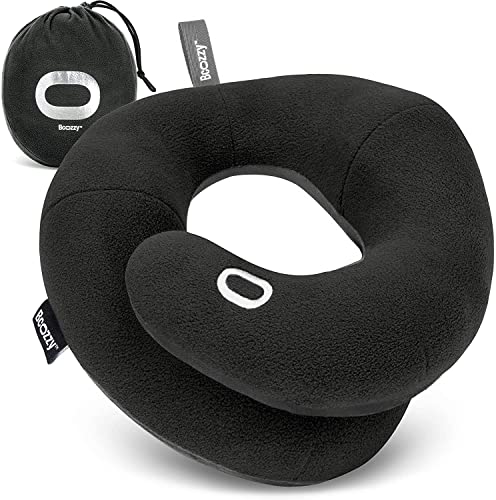
For neck and upper back pain, the standard U-shaped travel pillow does not provide adequate support because it positions the neck in slight flexion rather than neutral alignment. The BCOZZY wrap-around design supports the chin as well as the sides and back of the neck, which keeps the head in a more neutral position and reduces the neck and upper trapezius activation that produces the headache-and-shoulder-pain combination that arrives after highway driving. Useful in the passenger seat on longer trips and for resting in the car between appointments when lying back is the most recovery possible.

For people whose primary discomfort is heat accumulation in the seat — a significant issue for conditions involving temperature dysregulation, hyperhidrosis, or heat sensitivity — a gel-enhanced seat cushion manages temperature at the contact surface rather than simply providing foam cushioning. The gel layer draws heat away from the body rather than trapping it the way memory foam alone does, which makes extended sitting significantly more manageable for people who run hot or whose conditions worsen with heat exposure. Flat enough to layer under a lumbar support for a complete seated support system.
Temperature Management: The Car Climate Problem Nobody Talks About
Temperature in a vehicle is one of the most volatility-producing environmental variables for chronic illness — and one of the least controlled, despite the fact that it has one of the most direct effects on symptom experience. A car that has been sitting in the sun reaches interior temperatures that can exceed 130 degrees Fahrenheit within minutes. An air conditioning system that cycles between too cold and not cold enough creates a temperature instability that the nervous systems of people with dysautonomia, fibromyalgia, POTS, and multiple sclerosis are particularly poorly equipped to manage. A winter drive in a vehicle that takes twenty minutes to warm up is twenty minutes of cold exposure that a body managing inflammation does not have the margin for.
The chronic illness car addresses temperature proactively rather than reactively. It has a portable fan for heat before the air conditioning catches up. It has a blanket for cold that arrives before the heat does. It has a sun shade for the windshield that prevents the interior from reaching an unusable temperature on hot days. It has a heated seat cover for winter drives when the built-in heating system either doesn’t exist or doesn’t work quickly enough. These are not luxuries. They are climate management tools for a body whose ability to regulate its own temperature has been compromised by illness, and they belong in the car the way a pain medication belongs in a purse — as a matter of basic preparation.
The Climate Edit: Heating, Cooling, and Sensory Tools for the Car Environment
These four address the temperature and sensory environment of the car — the variables most likely to determine whether a drive depletes you or leaves you with something intact when you arrive.

A heated seat cushion that plugs into the car’s 12V outlet provides targeted heat to the lower back and hips throughout a drive — without requiring the car’s heating system to warm the entire cabin first, which takes time a painful body does not always have. The back massager function offers vibration that some people with chronic pain find genuinely relieving during longer drives. Heat settings are adjustable for people with temperature sensitivity who need warmth without overheat. One of the highest-return additions to a winter chronic illness car setup.

The car blanket is the simplest and most universally applicable item in a chronic illness car setup — and the one most people don’t have until the day they need it and don’t. Keep it folded on the back seat or in the trunk, always. Use it over the lap during cold drives before the heat reaches the footwell. Use it as a layer while waiting in a parking lot after an appointment when going inside feels impossible but sitting in a cold car without covering is not an option either. The compact storage bag means it stays in the car permanently without taking up the entire back seat.

A reflective windshield sun shade reduces interior car temperature by up to 40 degrees on hot days — the difference between a car that is usable when you return to it and one that requires ten minutes of open-door cooling before you can sit in it without your body responding as if it is in crisis. For people with heat sensitivity, POTS, or multiple sclerosis — conditions where heat exposure directly worsens symptoms — this is a functional requirement that costs less than a copay and lives folded behind the seat until it is needed. Put it up every time you park in sun. Without exception.

For the sensory environment of the car interior — the specific quality of air and scent that determines whether a drive feels like one more thing your nervous system is managing or a space your nervous system is actually resting in. A USB car diffuser runs from the car’s charging port and disperses a single essential oil at a low, consistent concentration throughout the drive. Lavender for anxiety before appointments. Peppermint for nausea and alertness on long drives. Eucalyptus for the post-appointment drive home when your head is full and your body is done. A small addition with a genuinely functional effect on how the car environment feels.
The Parking Lot as Recovery Room
This is the part of the chronic illness car experience that nobody writes about and nearly everyone has lived: the parking lot sit. The appointment that took more than you had. The drive home that does not feel possible yet. The ten or twenty or forty minutes spent in a parked car because going inside — wherever inside is — requires more than you currently have available and the car, for now, is enough.
The parking lot sit is not a failure. It is a form of pacing — the deliberate management of energy expenditure that is one of the most important skills chronic illness eventually teaches. It is choosing not to spend what you do not have. It is giving your nervous system a moment to register what just happened before asking it to navigate the next thing. It is, when the car is set up well, actually restorative in a way that pushing through never is.
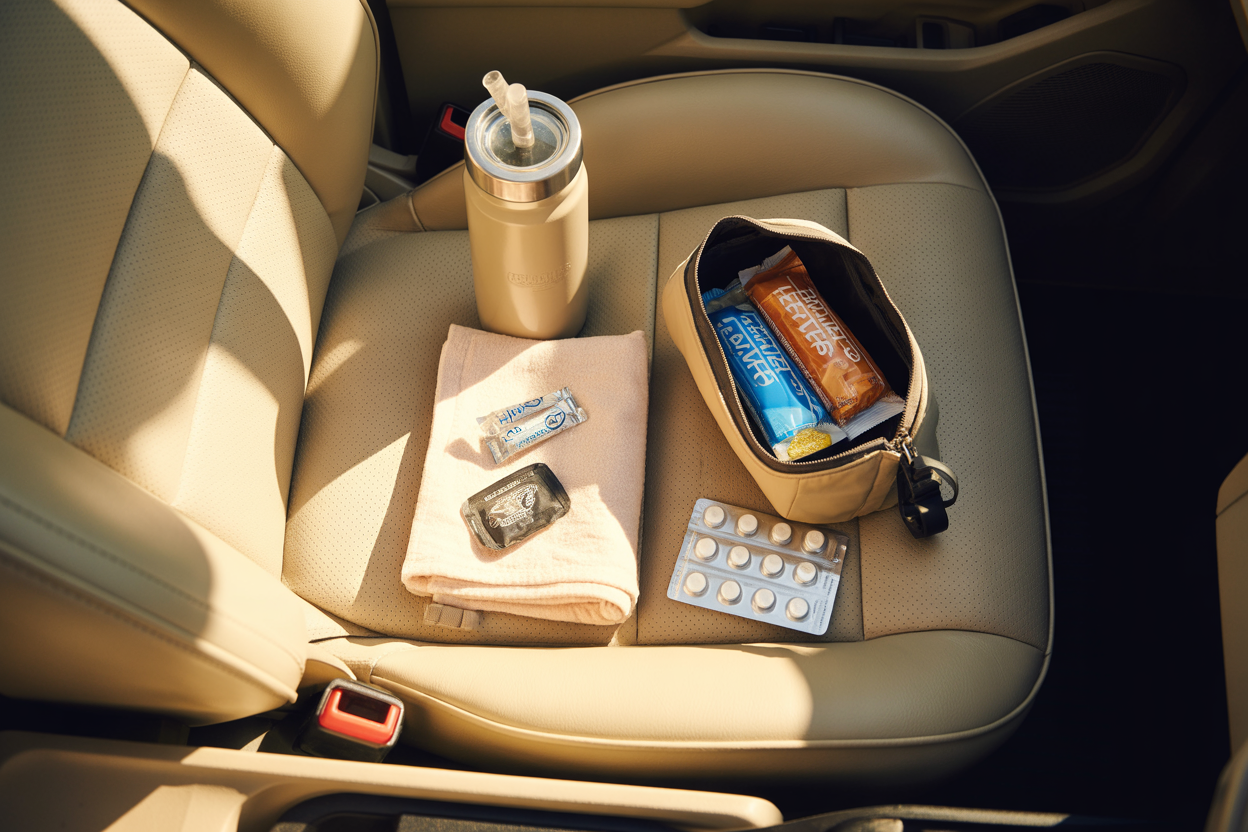
A car set up for the parking lot sit has a reclined seat and a neck pillow. It has a blanket within reach. It has water and something small to eat. It has a way to dim or block the light if sun is a factor. It has something to listen to — a playlist, a podcast, an audiobook — that asks nothing of the body and offers something to the mind. It is the recovery room you carry with you everywhere, available without a reservation, without a copay, without anyone’s permission except your own.
Set it up for that day. It will come, and when it does, you will want the car to be ready for it.
You’ve set up the car for the appointment. Now let’s talk about what happens inside it.
If you have ever sat in a parking lot before an appointment trying to find the words for what you need to say — rehearsing, second-guessing, arriving already defeated before the conversation has begun — Say This: 30 Scripts for Chronic Pain Communication was written for exactly that moment. Thirty ready-to-use scripts for the medical appointments, family conversations, and workplace discussions that require you to advocate clearly for yourself when clarity is the thing chronic illness most reliably takes from you. Keep it on your phone. Read it in the parking lot. Walk in prepared.
The Nourishment Edit: Eating and Drinking Well in a Vehicle You Live in Part-Time
The car nourishment problem for chronic illness is specific: you leave the house for an appointment that may run long, may be followed by a pharmacy stop, may be followed by needing to sit in a parking lot for forty minutes before you can drive home — and if you did not bring food and water with you, you are now managing blood sugar, dehydration, and medication timing on top of everything else the day is asking of you. These four make the car a place where nourishment is always available without requiring a detour, a decision, or energy you do not have.

Hydration is one of the most consistently under-managed variables in chronic illness, and it is particularly at risk on appointment days when the focus is entirely on getting to the appointment and getting through it. A 32-ounce insulated water bottle with a straw lid sits in the cupholder and requires nothing more than a sip to use — no unscrewing, no tipping, no two hands. The time marker on the side provides a gentle, non-demanding reminder of how much you have consumed without requiring active tracking. Fill it before you leave. Drink from it at every red light. Arrive hydrated instead of depleted.

The car snack for chronic illness needs to meet several specific requirements: shelf-stable at a range of temperatures, no artificial additives that aggravate sensitive systems, sufficient protein and fat to stabilize blood sugar between meals, and easy to eat in a moving vehicle without preparation or utensils. RXBARs meet all of these: made from egg whites, nuts, and dates with no artificial preservatives, they are stable across temperature ranges, provide genuine protein and fat content, and can be opened and eaten one-handed. Keep a variety pack in the glove compartment permanently. Replace it when it runs out. Do not wait until the day you need it to wish it was there.
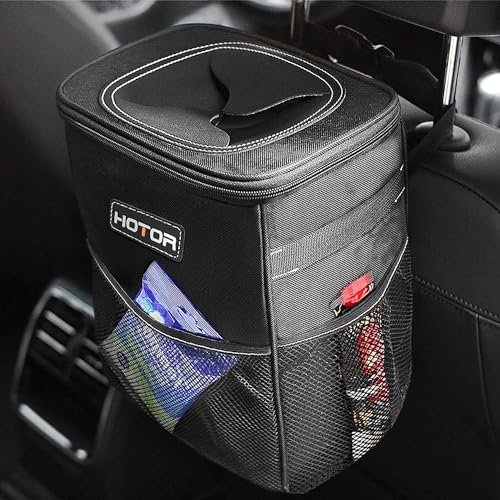
The practical piece that makes eating in the car sustainable rather than something you avoid because of the mess it leaves. A compact, lidded car trash can positioned in the back seat or on the console means that wrappers, used tissues, empty cups, and the general accumulation of appointment-day debris has somewhere to go that is not the floor or the door pocket or the passenger seat you will eventually have to clear before someone else can sit there. Leak-proof lining handles the things that leak. The lid contains the things that smell. The car stays manageable, which matters when the car is a space you spend real time in.

A back seat organizer with an insulated cooler pocket makes the car’s nourishment infrastructure permanent rather than assembled fresh each appointment day. The insulated pocket keeps temperature-sensitive items — yogurt, cut fruit, cold drinks, medication that requires refrigeration — at a safe temperature for several hours without an ice pack. Additional pockets hold snacks, wipes, a phone charger, and the other appointment-day items that currently live loose in the bottom of a bag and require excavation when you need them. Install it once. Stock it weekly. The car is now always ready for however long the day turns out to be.
The Medication and Practical Organization Layer
Appointment days have a particular logistical texture that healthy people do not have to manage and that chronic illness makes both more complex and more consequential. The medication that needs to be taken with food at a specific time, and the food that needs to exist in the car to make that possible. The insurance card that needs to be in the wallet that needs to be accessible without digging through a bag while sitting in a parking garage. The phone charger that needs to be available because your phone is both the map and the medical records app and the way someone knows where you are. The pen for the intake forms. The list of current medications because you have been asked for it eleven times this year and you have been unprepared for it nine of those times.
The chronic illness car is organized around these specifics — not generically, but for the actual texture of what appointment days require. Everything you need consistently is in the car permanently. Everything you need occasionally has a place to be that makes it findable without the cognitive overhead of remembering where you put it last time. The car is prepared before the day begins so the day itself does not require you to manage logistics on top of everything else.
The Organization Edit: The Practical Infrastructure of an Appointment-Ready Vehicle
These four address the practical organization layer of the chronic illness car — the tools that make the vehicle logistically ready for whatever the appointment day turns out to require.

The phone is the chronic illness car’s most critical tool — it is the navigation, the medical records, the insurance information, the way to reach someone if something goes wrong, and frequently the only entertainment available during a long parking lot sit. A dual-port fast charger that keeps the phone at full charge throughout the drive is not an accessory. It is infrastructure. The Anker 40W delivers genuinely fast charging rather than the trickle that standard car chargers provide — relevant on appointment days that start with a partially charged phone and do not allow time to charge before leaving.

The visor organizer is the chronic illness car’s answer to the fumble — the moment in a parking garage or at a reception desk where you need one specific thing immediately and cannot find it among everything else in your bag. Insurance cards, the parking ticket, the referral form, the list of current medications — all of them have a designated pocket in the visor organizer, visible when the visor is flipped down, accessible without opening a bag or excavating a glove compartment. Install it once, populate it once, and experience the specific relief of having the right thing immediately available on the days when having it takes one thing off the list.

A dedicated car pill organizer — separate from the one at home — means medication management on appointment days does not require remembering to transfer pills from home to bag to car and back. Stock it with the medications most likely to be needed during or after an appointment: pain medication, anti-nausea medication, the midday dose of whatever requires midday dosing, and anything that needs to be taken with food at a time that may coincide with being in the car. Small enough to fit in the console or the visor organizer. Accessible without opening anything larger than a pill lid.

For people whose chronic illness includes respiratory sensitivity, dry eye, sinus involvement, or any condition worsened by the dry air that car heating and air conditioning systems produce — a small USB-powered humidifier running from the car’s charging port adds moisture to the immediate environment throughout a drive. The Canopy design is filterless, which means no maintenance beyond refilling. It operates quietly enough not to add to sensory load. On long drives in winter, or in climates where dry air is a significant factor, the difference in how the body arrives at its destination — throat intact, eyes comfortable, sinuses not inflamed — is meaningful enough to justify the small footprint it takes up in the cupholder.
Making It Yours: The Car as an Extension of Your Healing Space
Everything in this post has a functional purpose. And all of it can sit inside a car that feels like yours — that has the warmth and the softness and the intentionality of every other space you have designed around your healing life. The chronic illness car does not have to look clinical. It does not have to announce its purpose to anyone who looks through the window. It can look like a car that belongs to someone who takes care of herself — a blanket folded on the back seat, a water bottle in the cupholder, a small diffuser sending something warm and grounding into the air, a seat that has been adjusted and cushioned and supported in ways that make an hour of sitting genuinely manageable.
That is the LOVEOWE car. Not a medical vehicle. A healing space that happens to have four wheels and gets you where you need to go — and does it in a way that leaves something intact when you arrive.
Start with the seat cushion and the lumbar support. They will change the immediate experience of every drive more than anything else in this post. Then add the blanket, because the parking lot sit will come and you will want it. Then the water bottle, the snacks, the charger — the practical layer that makes the car logistically ready for however long the day turns out to be.
Build it the way you have built everything else: slowly, intentionally, one addition at a time. Let the car become part of the infrastructure of your healing life rather than the gap in it. You spend real time in that vehicle. You deserve for it to feel like something — like a space that was set up with your body in mind, that holds you between the hard things, that gives you something back before it asks you to go inside and do it all again.
That car exists. You can build it this week. And the next time you sit in a parking lot after an appointment with forty minutes to spare and nowhere to be yet, it will be ready for you.
The car is ready. Now let’s make sure you are too.
If the drive to the appointment is the easy part and the conversation inside the office is where things fall apart — where you forget what you meant to say, where you leave without what you came for, where the appointment ends and you sit in the parking lot wondering if you advocated for yourself or just got through it — Say This: 30 Scripts for Chronic Pain Communication is what you read on the way there. Thirty scripts for thirty hard conversations, written for the person who knows what their body needs and needs help finding the words to ask for it. Keep it on your phone. It belongs in the car.