Boho Home Office Ideas: How to Design a Beautiful Workspace That Actually Supports Your Chronically Ill Body
The content on this site was created with the help of AI. LOVEOWE LLC participates in the Amazon Services LLC Associates Program and other affiliate programs. As an Amazon Associate, I earn from qualifying purchases. This means I may earn a small commission—at no extra cost to you—when you make a purchase through links on this site. All opinions are my own. Learn more click here. Thank you for your support!
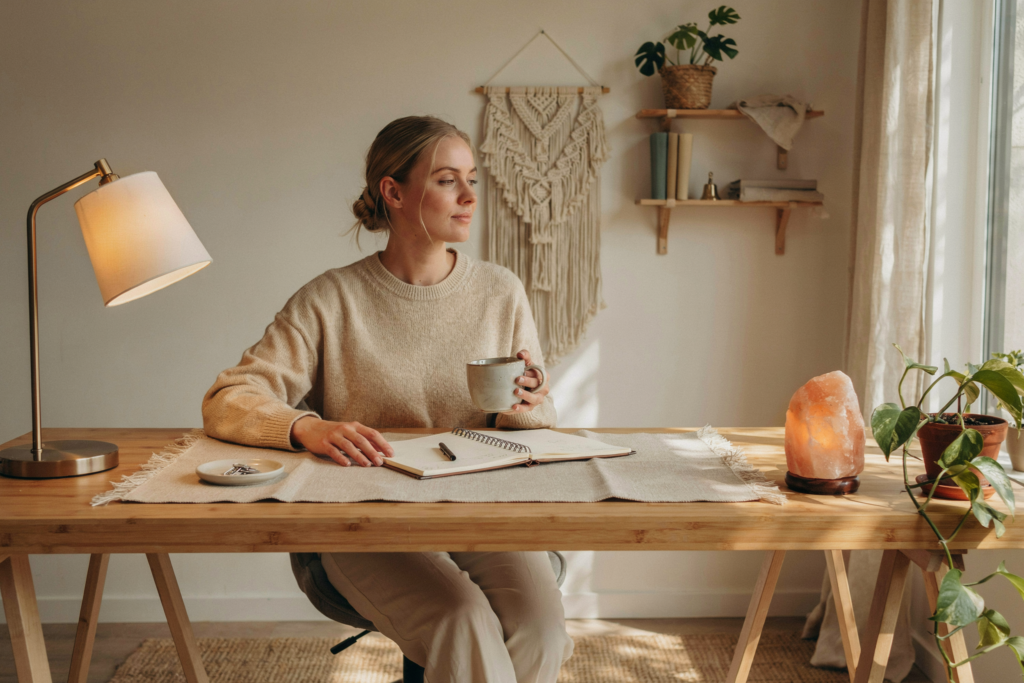
I built the wrong office first.
It was beautiful. Genuinely, photographably beautiful — the kind of workspace that shows up on Pinterest boards and in apartment tours and in the background of creative professionals’ Instagram posts. A white desk, a fiddle leaf fig in the corner, a gallery wall of prints I had spent weeks choosing, a rattan chair that looked exactly like the chair in every boho office I had ever saved. The afternoon light came through the window at an angle that made the whole room glow for about forty minutes around 3pm and I had arranged the desk specifically to catch it.
I worked in it for three weeks before my body told me, clearly and without room for negotiation, that the rattan chair was not a chair my hips could sustain for more than an hour. That the white desk reflected the afternoon light I had arranged myself to catch directly into my eyes in a way that triggered headaches by 2pm. That the gallery wall was at an angle that required turning my neck slightly to the left every time I looked up from my screen, and that my neck, which already had opinions about everything, had strong ones about this. That the fiddle leaf fig was fine. The fiddle leaf fig was not the problem.
The problem was that I had designed the office entirely around how it looked and not at all around the body that would be working in it. I had borrowed the aesthetic from people whose bodies were not part of the design brief and applied it to a life where the body is always part of the brief. Always. Every room, every chair, every surface, every source of light — all of it is a decision about what the body will be asked to manage in addition to the work itself.
The office I built after that is still beautiful. Boho in its bones — warm textures, natural materials, layered lighting, plants, the kind of collected-over-time aesthetic that makes a workspace feel like it belongs to someone who lives intentionally. But it was built from the inside out this time — starting with what the body needs and working outward to the aesthetic that expresses it. And the result is a workspace that I can actually be in, for actual work hours, on actual hard days, without the space itself being an additional source of management.
That is what this post is. The boho home office built for a chronically ill body — beautiful not despite its functionality but because of it. We are going to cover every dimension of the space: the furniture, the lighting, the surfaces and textures, and the finishing details that make a workspace feel genuinely yours — and sixteen products that sit at the intersection of the boho aesthetic you want and the physical support your body requires.
The Design Philosophy: Boho Meets Body-Aware
The boho aesthetic is, at its core, about warmth, naturalism, and the deliberate accumulation of things that feel meaningful. Organic textures — rattan, jute, linen, macramé, weathered wood. Warm, layered light from multiple sources rather than a single overhead fixture. Plants as structural elements rather than afterthoughts. Color drawn from earth and nature — terracotta, sage, warm white, camel, deep rust. A sense of collected intentionality rather than matching sets. It is an aesthetic that feels genuinely compatible with chronic illness values — the prioritization of comfort, warmth, and sensory softness over the cold precision of minimalism or the performance of maximalist productivity culture.
Where the standard boho office fails the chronically ill body is in the details. The rattan chair that looks perfect and offers no lumbar support. The jute rug that is beautiful and creates a textured, uneven surface that is difficult to roll a chair across. The macramé wall hanging that is stunning and positioned at the exact height that requires looking up at an angle the neck cannot sustain. The candles that set the atmosphere and trigger the chemical sensitivity. The open shelving that photographs well and requires reaching overhead to access what is stored on the upper levels.
The body-aware boho office addresses each of these specifically — keeping the aesthetic intact while substituting the elements that would cost the body for ones that serve it. Rattan as a decorative element on the wall rather than as the chair you sit in for six hours. Jute as an accent under a smoother low-pile rug that allows chair movement. Macramé at eye level rather than overhead. Natural beeswax rather than paraffin. Storage organized around the arm’s-reach zone rather than the full vertical range of the wall.
The result looks indistinguishable from a beautifully designed boho workspace — because it is one. It just happens to have been designed by someone who understood that the body doing the work deserves the same consideration as the aesthetic surrounding it.
The Furniture Foundation: What You Sit In and Work At Determines Everything Else
The desk and the chair are the load-bearing elements of any home office and the place where the boho office most frequently fails the chronically ill body — because the furniture choices that look most beautiful are rarely the ones that offer the most physical support, and vice versa. The body-aware boho office solves this by separating the aesthetic work from the support work: the chair does the physical support work and is chosen for that first, then styled into the boho aesthetic through cushions, throws, and placement. The desk provides the surface and the visual anchor, and its height and configuration are chosen for the body before its material and finish are chosen for the room.
The desk height conversation matters more than most people realize before they are managing pain at a desk. Standard desk heights — typically 29 to 30 inches — are calibrated for a standing person at average height whose forearms, when seated at the desk, will be at approximately a 90-degree angle to the upper arm. For people who are shorter or taller than average, who use a cushion that changes their seated height, or whose shoulder, elbow, or wrist conditions require a different forearm angle, the standard desk height is the wrong desk height. An adjustable-height desk — or a fixed desk at the correct height for your body specifically — is the single highest-return furniture decision in a chronic illness home office.
The chair question for a boho office is the most design-constrained of all the decisions because the chairs that look most boho — rattan, wicker, vintage wood, upholstered occasional chairs — are almost never the chairs that offer adequate lumbar support, seat depth, and armrest positioning for sustained work. The resolution is to choose the chair that supports the body and add the boho aesthetic through a sheepskin throw draped across the back, a linen cushion on the seat, a macramé accent hung beside it. The chair disappears into the room’s aesthetic. The back pain does not disappear if the chair is wrong.
The Furniture Edit: The Desk, the Chair, and the Pieces That Form the Physical Foundation of a Body-Aware Boho Office
These four address the furniture foundation — the pieces that hold the body during the workday and anchor the visual identity of the room simultaneously.

A bamboo-topped electric standing desk is the rare piece of furniture that is genuinely beautiful and genuinely functional simultaneously. The bamboo surface reads as natural, warm, and perfectly aligned with the boho aesthetic — it photographs as beautifully as a reclaimed wood surface and is more durable and more sustainable. The electric height adjustment allows the desk to move between seated and standing positions with a button press, accommodating the position changes that chronic illness requires throughout the workday. Anti-collision technology stops the desk if it encounters resistance during adjustment — relevant for people with items on the desk surface that cannot be cleared before repositioning. Available in natural bamboo, which requires no additional styling to look intentional.

The ergonomic chair that disappears into a boho office when styled correctly. Branch’s ergonomic chair has a mesh back in a warm grey or black that recedes visually against a wall, adjustable lumbar support that positions correctly for a range of torso lengths, seat depth adjustment for people whose thighs require more or less seat surface, and armrests that adjust in height, depth, and angle for conditions affecting the shoulders, elbows, and wrists. Add a natural linen seat cushion and a sheepskin throw over the back and it reads as a considered, textural seating choice rather than an office chair. The support does not disappear with the styling — it remains fully functional underneath it.

The styling piece that bridges the ergonomic chair and the boho aesthetic — draped across the chair back, it adds the organic texture and warmth that makes a functional office chair look like a deliberate design choice. Faux sheepskin reads identically to real sheepskin in photographs and in rooms, is machine washable, and adds a tactile softness to the chair back that is incidentally useful on days when resting the upper back against the chair is part of pain management. Available in natural white, cream, and warm grey — all of which work within a boho color palette and require no additional styling to integrate.
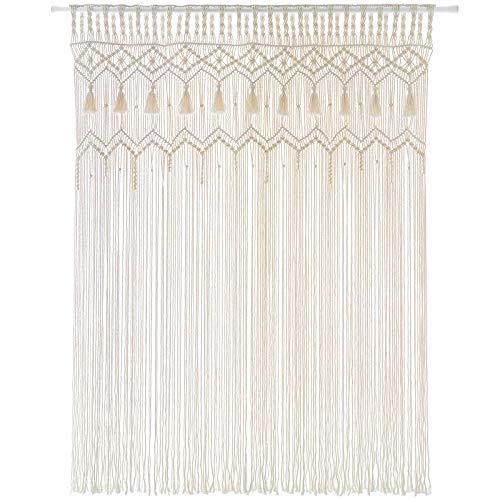
The visual anchor of the boho office wall — positioned at eye level behind the desk rather than overhead, so it is within the visual field without requiring the neck to look up to register it. A large macramé piece at desk-height creates the layered, textural wall treatment that is the most distinctive element of a boho workspace without placing anything above the monitor that would require looking upward. Natural cotton in an undyed or warm cream tone reads quietly against most wall colors and works with every boho color palette from neutral to warm earth tones. Hang it on a simple wooden dowel at monitor height for maximum visual impact with minimum neck involvement.
Lighting: The Element That Makes or Breaks Both the Aesthetic and the Body
Lighting is where the boho office and the body-aware office align most naturally — because the boho aesthetic already calls for warm, layered, multi-source light rather than the cool overhead fluorescents of conventional office design, and warm, layered light is precisely what the chronically ill nervous system needs from a workspace environment. The aesthetic preference and the physiological requirement are the same preference, which makes lighting the place where designing a boho office and designing a body-aware office require the least compromise.
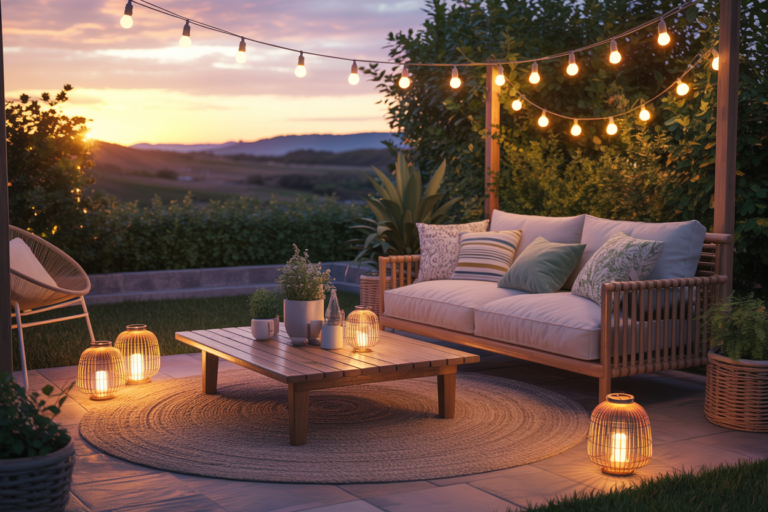
The principle is the same one that applies throughout the LOVEOWE approach to home lighting: move light down, warm it up, and layer it across multiple sources at different heights rather than relying on a single overhead fixture. In an office specifically, this means task lighting at desk level that illuminates the workspace without creating screen glare, ambient lighting at floor and table height that warms the room without adding overhead brightness, and accent lighting — a salt lamp, a candle warmer, a string of warm Edison bulbs — that creates the atmospheric depth that makes a boho workspace feel genuinely inhabitable rather than merely decorated.
For people with migraine, light sensitivity, or photophobia — common across fibromyalgia, lupus, and conditions involving neurological inflammation — the ability to dim every light source in the workspace independently is not an aesthetic preference. It is a functional requirement. Every light source in a chronic illness home office should be dimmable, and the dimming should require no more effort than a tap on a phone or a turn of a dial — because on the days when light sensitivity is present, the effort of managing multiple switches while already in discomfort is too much to add to an already demanding situation.
The Lighting Edit: Warm, Layered, and Fully Dimmable for a Nervous System That Sets the Terms
These four create the layered lighting environment that is simultaneously the most beautiful and the most body-supportive feature of a boho office.

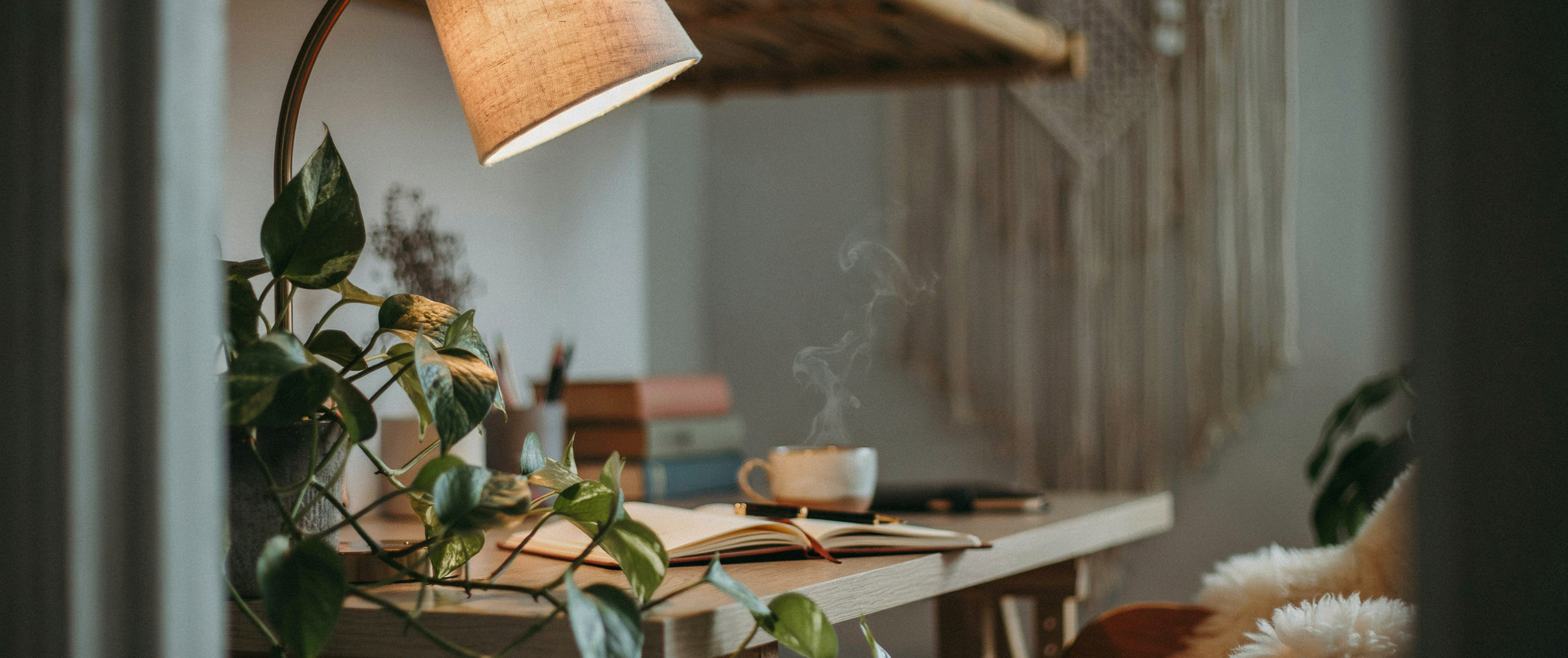
A warm-toned LED desk lamp with touch dimming is the primary task light of the boho chronic illness office — positioned to the left of the monitor for right-handed people, casting warm light across the desk surface without creating screen glare, adjustable in both brightness and color temperature for the full range of lighting conditions that different days require. The touch dimmer means adjustment requires no grip strength or precision — a flat touch on the base changes the light level. The USB charging port built into the base keeps one device charged without occupying an outlet. Choose a lamp in a matte black, brass, or warm wood finish that integrates into the boho desk aesthetic rather than reading as office equipment.

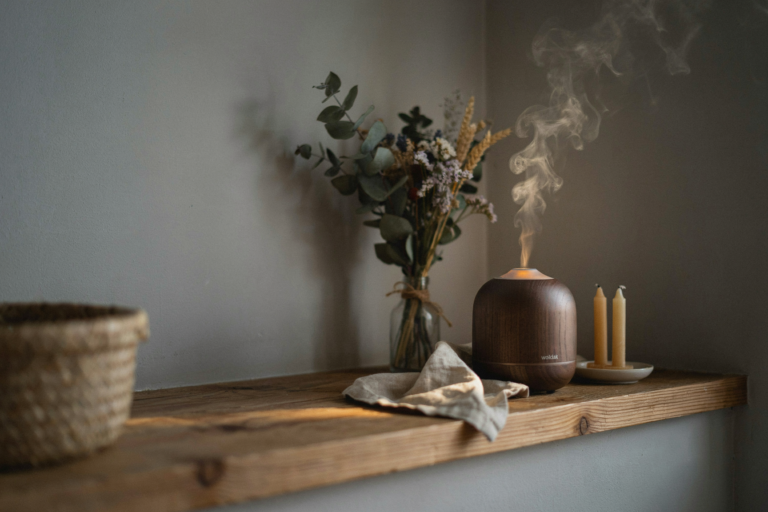
The boho office’s ambient light source and one of the most authentic elements of the aesthetic — a large salt lamp on the desk or a nearby surface emits the warmest, most organic light available from an electric source, at a color temperature so amber it registers as firelight rather than electricity. The dimmer cord allows the output to be reduced to almost nothing on high-sensitivity days while still providing the warm glow that makes the workspace feel inhabited rather than stark. Natural crystal variation means every salt lamp is unique — genuinely collected and natural in a way that synthetic decor cannot replicate. In a boho office, it reads as the anchor piece of the desk styling. In a chronic illness office, it reads as a functional light source calibrated to what the nervous system can receive.

String lights in a warm white tone draped across a window frame, along a bookshelf edge, or pinned across the wall behind the desk create the depth of ambient light that makes a boho workspace feel genuinely atmospheric rather than simply furnished. USB-powered string lights run from any charging port without occupying an outlet, and their warmth at a low setting contributes to the room’s light without adding measurable brightness — making them the ideal accent light for the hours when overhead and task lighting have been dimmed for sensitivity but the room still needs some light to function in. Available in several lengths — choose the longest option and use as much or as little as the space calls for.

For any overhead fixture or floor lamp in the office that cannot be removed — smart bulbs that adjust color temperature and brightness via app or voice command give complete control over every remaining light source in the room without requiring physical interaction with a switch or dimmer. On a high-sensitivity day, dimming the room to its warmest, lowest setting requires a voice command or a phone tap from wherever in the room you are — no getting up, no adjusting multiple switches, no additional physical demand from a body already managing more than enough. The warm white setting at its lowest is comparable to candlelight. Schedule it to dim automatically in the afternoon when light sensitivity typically increases.
Surfaces and Texture: Layering the Boho Aesthetic Without Layering the Sensory Load
The boho aesthetic lives in its surfaces — the layering of textures, materials, and organic elements that creates the sense of warmth and depth that distinguishes a boho space from a merely furnished one. In a home office, this texture layering has to be done with the same body-awareness applied to everything else: the textures on the floor need to allow a desk chair to move without resistance. The textures on the desk surface need to be smooth enough for a mouse to track and a wrist to rest against without friction. The textures on the walls need to be at the right height to be visually present without requiring physical interaction that aggravates the neck or shoulders.
The floor is where the boho-versus-body-aware tension is most acute. Jute rugs — the most quintessentially boho floor covering available — are rough in texture, irregular in surface, and nearly impossible to roll a desk chair across without significant resistance. The solution is layering: a low-pile rug in a neutral tone as the base, with a smaller jute or woven accent rug underneath the desk area where it will not be rolled across, or positioned at the room’s entry rather than under the chair. The layered rug look is a core boho design technique — it reads as intentional and collected rather than as a workaround, because in well-executed boho design, it is both.
The desk surface matters for wrist and forearm comfort in ways that most office design conversations ignore. A rough or heavily textured desk surface — reclaimed wood with significant grain variation, concrete, rough-hewn finishes — creates friction against the forearm during typing that is imperceptible in short sessions and significant across a full workday for people with forearm sensitivity, carpal tunnel, or conditions affecting the skin’s sensitivity to sustained friction. A smooth desk surface — bamboo, glass, a smooth wood finish — eliminates that friction while maintaining the natural material aesthetic that the boho office requires.
The Texture Edit: Rugs, Desk Surfaces, and Organic Materials That Layer the Boho Aesthetic Without Asking Anything of the Body
These four build the textural environment of the boho chronic illness office — the surfaces and soft elements that create visual warmth and depth while remaining physically navigable for a body managing chronic pain.

The jute rug placed as an accent at the room’s entry or beneath a non-rolling area of the office rather than under the desk chair — where it creates the quintessential boho floor texture without the chair-rolling resistance that makes jute impractical as a primary office floor covering. A 4×6 positioned at the office doorway or alongside the desk creates the layered rug look that is central to the boho aesthetic, allows the main desk area to have the smoother surface that chair movement requires, and stays flat enough that navigating across it in any footwear is safe and stable. Natural undyed jute reads as organic and authentic rather than manufactured.

A linen-surface desk mat covering the working area of the desk simultaneously solves the forearm friction problem, protects the desk surface, and adds a warm, natural textile element to the desk styling that integrates into the boho aesthetic rather than contradicting it. Linen is the right surface material specifically — it is smooth enough for a mouse to track accurately and a wrist to rest against without friction, warm in both color and texture, and natural enough in its fiber and weave to read as a deliberate boho styling choice. A large mat covering most of the desk surface unifies the desk visually and eliminates the need for a separate mouse pad that would interrupt the clean surface.

Storage in a boho office is a design opportunity rather than a problem to be hidden — the baskets, bins, and vessels that contain the desk’s organizational needs are part of the aesthetic rather than interruptions to it. Woven seagrass baskets in a nesting set provide three sizes of storage that address three different organizational needs: the large basket under the desk for items used less frequently, the medium basket on the desk surface for frequently accessed items, and the small basket for the small things — cables, pens, the items that otherwise accumulate into desk clutter. Seagrass reads as organic and intentional. Nesting means they store efficiently when not in use. Handles make them easy to reposition without gripping awkwardly.

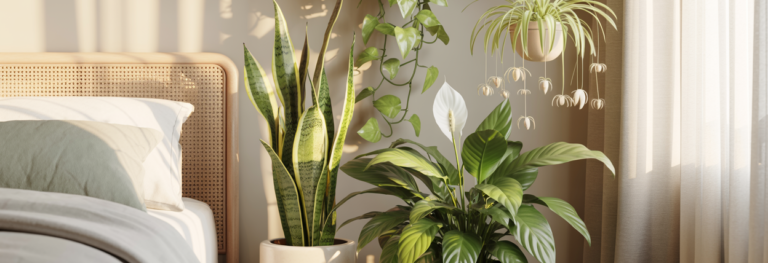
The trailing plant is the boho office’s most living design element — positioned on the desk corner, on a floating shelf beside the monitor, or in a hanging planter at eye level, a trailing pothos adds organic movement, natural color, and genuine life to the workspace in a way that no artificial plant replicates. Pothos is specifically the right chronic illness office plant because it survives irregular watering better than almost any other common houseplant — it will wilt slightly when it needs water and recover quickly once watered, without dying during the stretches when the illness prevents tending it. Trailing growth over the desk edge is the boho aesthetic detail that makes the workspace look genuinely inhabited by someone who tends beautiful things, even on the days when tending is not what is happening.
The Boho Office as a Healing Space: Where Aesthetics and Recovery Converge
The chronic illness home office is not just a workspace. It is the room where you spend a significant portion of your waking hours managing both the work and the body that does it — and that dual role means it needs to function as a healing space as much as a productive one. Not a medical space. Not a clinical space. A healing space — warm, intentional, sensory-friendly, and designed with the same care for the body’s needs that you bring to the bedroom and the living room.
The boho aesthetic is well-suited to this dual function because its values — warmth, naturalism, sensory softness, the presence of living things — are the same values that support nervous system regulation and psychological ease. A workspace built around these values is a workspace that the body does not have to brace against. It is a room that holds you rather than demands from you. It is the difference between spending the workday in an environment that is actively costing the nervous system and spending it in one that is — quietly, continuously, in the background — giving something back.
That giving back is not incidental to the work. It is what makes the work sustainable. The body that spends its day in a space that is warm and soft and calibrated to what it can manage arrives at the end of the day with more left than the body that spent the same hours in a space that was fine but not designed for it. The difference is cumulative and it is real and it is one of the most significant contributions a well-designed workspace makes to a chronically ill person’s capacity — not the dramatic contribution of a new treatment or a better medication, but the quiet, daily contribution of an environment that is simply on your side.
The Finishing Edit: The Details That Make a Workspace Feel Like It Belongs to Someone Who Values Herself
These four are the finishing details — the elements that make the boho chronic illness office feel complete rather than merely functional, and that express the LOVEOWE principle that a healing space can be beautiful and a beautiful space can heal.

A candle on the desk is the boho office’s most atmospheric finishing detail — but for chronic illness, the candle choice matters. Paraffin candles release petroleum-derived compounds during burning that can trigger sensitivity responses in people with chemical sensitivity, mast cell activation, or respiratory involvement in their condition. Soy candles with minimal, non-synthetic fragrance burn cleaner, release fewer airborne compounds, and are significantly better tolerated by sensitive systems. Paddywax’s Bamboo & Green Tea is light enough in its scent to be non-triggering for most sensitivities while still providing the olfactory warmth that makes a space feel inhabited. The ceramic vessel doubles as a desk object after the candle is finished.

Crystals on the desk are both a boho styling element and a tangible expression of the intention behind the workspace — the specific choice to surround the work with objects that represent calm, clarity, and self-worth rather than the performance of productivity. Amethyst for clarity and nervous system calm. Rose quartz for the self-compassion that chronic illness requires in abundance. Clear quartz as an amplifying neutral that works with whatever the day needs. Grouped on a small wooden or marble tray on the desk corner, they add organic color, texture, and a grounded warmth to the desk surface that no manufactured desk accessory replicates. They also serve as a visual reminder, every time the eyes rest on them, of what the workspace is actually in service of.

Floating shelves positioned beside or above the desk at eye level or below — not overhead — provide the display surface that the boho office requires for the books, plants, crystals, and small objects that make a workspace feel genuinely inhabited. The specific placement matters: shelves positioned at or below eye level allow items to be seen and reached without looking or stretching upward, which eliminates the neck and shoulder involvement that overhead storage creates. A walnut and white finish integrates into the boho aesthetic without requiring matching to other furniture pieces — the warm wood tone works with the bamboo desk, the natural fiber textiles, and the earth-toned accessories that surround it.

The throw blanket in the home office is both a styling element and a practical one — draped over the arm of the chair or folded in the seagrass basket beside the desk, it reads as a deliberate textural layer in the boho aesthetic and functions as an immediately available comfort tool for the temperature drops, the chills that accompany certain kinds of pain, and the moments when wrapping something warm around the shoulders is the difference between continuing to work and stopping. A chunky merino blend in a warm neutral — cream, camel, oatmeal, warm grey — photographs beautifully against the desk chair and the natural wood surfaces, and is soft enough against sensitive skin to wear while working without adding a sensory distraction. It is the piece that says: whoever set up this office knew that comfort and beauty are not different things.
Putting It Together: The Boho Chronic Illness Office in Practice
The room is warm before the workday begins. The salt lamp has been on since you woke up, the string lights across the window are on their lowest setting, and the desk lamp is warm and angled away from the monitor. The bamboo desk has the linen mat across its surface, the trailing pothos at the corner, the crystals on their small tray, and the candle unlit but present. The ergonomic chair has the sheepskin throw across its back and the linen cushion on its seat. The baskets are organized — the medium one on the desk holds the things used most often, the large one under the desk holds the things used sometimes, and the small one holds the things that would otherwise migrate into chaos.
The macramé is at eye level on the wall behind the desk, in the frame of every video call, making the background look like something from a home that is loved. The floating shelves beside the monitor hold three books spine-out, a small plant, and a piece of amethyst that catches the lamp light and holds it. The jute rug is at the room’s entry, layered over the larger smooth rug that extends under the desk and allows the chair to move freely across the floor.
The body sits in the chair and the chair holds the body — the lumbar support at exactly the right point in the lower back, the armrests at exactly the right height for the shoulders, the seat depth adjusted so the backs of the knees are free of the seat edge. The heating pad is within arm’s reach on the desk surface for the hour when it will be needed. The water bottle is in its place. The workspace is ready.
This is the office that was designed from the inside out — starting with what the body requires and working outward to the aesthetic that holds it. It is beautiful because everything in it was chosen with care. It is functional because the care extended to the body doing the work. It is yours because it reflects not the workspace you were supposed to want but the one that actually serves the life you are living — chronic illness and all.
That is the LOVEOWE home office. Build it that way. Work in it that way. Let it be both things at once — beautiful and supportive, aesthetic and functional, yours and designed for the body you actually have. Those have never been opposites. This room proves it.
The office is built for your body. Now let’s make sure the conversations about your body are too.
If you have ever needed to explain to an employer what working with chronic illness actually requires — what accommodations are medically necessary, what a sustainable workday looks like, what the cost of pushing past your limits actually is — Say This: 30 Scripts for Chronic Pain Communication gives you the language. Thirty scripts for thirty hard conversations, including the workplace ones that feel the most high-stakes and matter the most to get right. Because the workspace you have built deserves to be protected by the conversations that make it sustainable, and you deserve to be able to have them.