The Crown Chakra: Finding Meaning, Surrender, and Connection When Chronic Illness Makes You Question Everything
The content on this site was created with the help of AI. LOVEOWE LLC participates in the Amazon Services LLC Associates Program and other affiliate programs. As an Amazon Associate, I earn from qualifying purchases. This means I may earn a small commission—at no extra cost to you—when you make a purchase through links on this site. All opinions are my own. Learn more click here. Thank you for your support!

This is the final post in the LOVEOWE Chakra Series — seven posts exploring each energy center through the lens of chronic illness and pain. You can move through the series in any order. Each post stands on its own. New to chakras? Start with the series introduction here.
There is a question that chronic illness asks that nothing else quite asks in the same way.
Not the practical questions — though those are endless. Not even the emotional ones, though those run deep. It is the question underneath all the others, the one that arrives in the quiet hours after a particularly hard day or in the space between one flare and the next: why. Not why me, necessarily, though sometimes that too. More fundamentally: what is the meaning of this? What does it mean that this is my life — this specific life, with this specific body, with this specific amount of difficulty built into the basic project of existing? Is there a larger context for any of this, or is it simply what it is — painful and random and without the frame that would make it more bearable?
That question is a crown chakra question. And for people with chronic illness, it tends to be the most urgent, the most persistent, and the least addressed of all the chakra wounds — because it requires a capacity for surrender and for relating to something larger than the management of daily symptoms that is very hard to access when the daily symptoms are requiring everything you have.
The crown chakra is the final energy center in the system — the one at the top of the head, the one that connects the individual to something beyond the individual, the one that holds the questions of meaning and purpose and the relationship between suffering and grace. It is, in many ways, the most mysterious of the seven chakras. It is also, for many people with chronic illness, the one that has been most affected by the experience of living with a body that is harder than expected — and the one where some of the most quietly significant healing is available.
This is the last post in the LOVEOWE Chakra Series. We end here — at the crown, at the largest questions, at the part of healing that goes beyond the personal into something that can only be approached with humility and openness and a willingness to not have all the answers. This feels like the right place to end.
What the crown chakra is
The crown chakra — Sahasrara in Sanskrit, meaning “thousand-petaled” — is the seventh and final of the primary chakras. It sits at the crown of the head, above the body, at the point where the individual energy system opens into something that exceeds the individual. Of all seven chakras, the crown is the most difficult to describe in concrete terms, because what it governs is precisely what exceeds description — the experience of connection to something larger than the self, however that is understood.
Its element is thought, or consciousness itself — the most subtle element, the one that underlies all others. Its color is violet or white — violet in its spiritual depth, white in its purity and the quality of all frequencies combined. Its sound is the primordial OM — or, in its most profound expression, silence — the sound before sound and after sound, the ground from which all mantras arise. Its physical associations include the pituitary gland (sometimes the pineal), the brain, the central nervous system, and — more subtly — the entire body as the vehicle through which consciousness moves in physical form.
The crown chakra governs: connection to something larger than the self — whether understood as the divine, the universe, the collective consciousness, nature, or simply the mystery of existence. It governs spiritual awareness and the capacity for transcendence — for moments of experience that exceed the ordinary. It governs the relationship with meaning and purpose — the ability to find a frame for suffering that makes it something other than merely senseless. It governs surrender — the particular quality of release that comes not from giving up but from recognizing what is and is not within our control, and finding peace within that recognition.
When balanced, the crown chakra produces a quality that is difficult to name and immediately recognizable: a sense of being held by something larger than yourself, even in difficulty. Not the absence of difficulty — the crown chakra does not make life easy — but a quality of perspective in which the difficulty exists within a larger context that gives it, if not meaning, at least a frame. A capacity for stillness. An ability to surrender without resignation. A relationship with mystery and not-knowing that is curious rather than afraid.
When blocked: disconnection from meaning and purpose, suffering that feels not only painful but pointless, questions that produce only despair. When overactive — a spiritual bypassing response to difficult physical reality — the result is dissociation from the body and the present, a spiritual practice that floats above rather than integrating the actual life being lived.
The crown chakra does not promise that suffering has a purpose. It offers something more honest and more durable: the possibility that suffering can be held within a larger context of meaning — and that you are not as alone within it as the hardest days make it feel.
The crown chakra, chronic illness, and pain: the why questions and where they live
The crown chakra is where chronic illness asks its most profound and most unanswerable questions. These are not the questions that medicine addresses — they are the ones that persist after the diagnosis is in place and the treatment is underway, the ones that no amount of symptom management fully quiets.
The meaning question. Why is this my life? Is there a reason for any of this, or is it simply what happened — the random distribution of illness among bodies, landing on mine? These questions have no clean answers. The crown chakra holds them — not resolves, but holds — in a way that allows them to be lived with rather than either answered falsely or avoided. It does not promise that chronic illness has a purpose. It offers a more honest possibility: that meaning can be made within suffering even when suffering was not chosen, and that the people illness connects us to, the depths it asks us to develop, the particular quality of presence and compassion that pain tends to cultivate — these are not consolations, but they are real.
The spiritual wound of illness. Chronic illness can wound the relationship with the divine — or with whatever conception of something-larger functions as the spiritual ground for a person’s life — in ways that are specific and significant. If you believe in a benevolent universe, chronic illness can make that belief feel naive or broken. If you believe in a purposeful existence, years of unremitting suffering can make purpose feel like a cruelty rather than a comfort. The theological question of why suffering exists in the lives of people who have done nothing to deserve it is one of the oldest and most unresolved in human spiritual history, and it becomes personal and urgent in a way it never was before when the suffering is happening in your own body.
This is a legitimate crown chakra wound, and it deserves to be named as such. The relationship with meaning, with the divine, with the larger frame of existence can be genuinely damaged by chronic illness — not just challenged, but damaged. The crown chakra healing practices in this post are for that specific damage. They do not offer resolution. They offer a way of returning to the questions with something other than despair.
The surrender paradox. Surrender is one of the most complicated concepts in chronic illness. It cannot mean accepting inadequate care or not advocating for yourself — that is resignation, not surrender. But there is another kind of surrender that chronic illness eventually makes necessary: the surrender of the idea that you can control your body through sufficient effort or positive thinking. The surrender of the plan your life was supposed to follow. The surrender of the version of yourself that was going to be well by now. This release of the specific, attached version of how things were supposed to go is crown chakra work — among the most difficult and most liberating practices available.
The connection that illness can open. The crown chakra is not only about what chronic illness takes. People who have lived close to limitation often describe a quality of presence difficult to access in an easier life — a heightened appreciation for small things, a deeper capacity for empathy, a relationship with the present moment that is more immediate because the future has become less reliable. These are genuine crown chakra gifts of the chronic illness experience. Not reasons to be grateful for suffering. But evidence that even within it, something expansive can grow.
Opening and healing the crown chakra: practices for the chronic illness and pain body
Crown chakra practices are the most internally-oriented of the series — and the most adaptable to limited physical capacity. The crown chakra does not require movement or sound or even sustained concentration. It responds to stillness, to silence, to the quality of open, receptive attention that can be practiced in any position, at any energy level, for any duration. Every practice has a full version and an accessible version. The crown chakra is the chakra most suited to the body that cannot do much — because what it asks for, primarily, is simply presence.
The white light visualization meditation
The crown chakra’s primary color is white or violet — the quality of light at its most inclusive, containing all other frequencies. Visualization practices that work with this quality of light activate the crown chakra’s energy directly.
Full version (15–20 minutes): Find a comfortable position — seated with the spine reasonably upright, or lying down. Close your eyes. Take several slow, complete breaths. Bring your attention to the crown of your head — the very top, the highest point of the physical body. Visualize a soft, brilliant white or violet light just above this point — not inside the body, but above it, like a star directly overhead. With each inhale, imagine this light gently descending — moving through the crown of the head, slowly suffusing the brain, the face, the throat, the chest, moving downward through the entire body. With each exhale, feel the light settling, deepening, becoming more present. Stay with this for as long as available. There is no goal beyond the quality of open, receptive presence. If thoughts arise, let them pass like clouds across the light. Return to the light.
Accessible version (5 minutes): Lie down. Place no hands anywhere specific — simply rest. Close your eyes. Breathe. On each inhale, imagine the breath coming from slightly above you — from somewhere outside your body, entering through the top of your head. On each exhale, release. That is the whole practice: the breath coming from above, and the release. Five minutes. The crown chakra is the chakra of receiving from something larger than yourself, and this most minimal version of the practice is already that.
The OM mantra and sacred silence
OM — sometimes written AUM — is the primordial mantra, present at the beginning and end of most traditional practices, associated with the crown chakra’s quality of universal connection. Its three sounds — A, U, M — represent the full cycle of existence: creation, preservation, dissolution. Its fourth quality — the silence after the M fades — is considered the most important of the four: the silence that is not absence but presence, the ground from which all sound arises.
Chant OM on the exhale — aloud if possible, or as an internal vibration. Feel the A resonate in the chest, the U in the throat, the M in the skull and crown. Then stay in the silence after — however long it lasts — before the next breath begins. That silence is the crown chakra’s home. Three to seven repetitions, followed by two to three minutes of complete silence, is a complete crown chakra practice.
For people who do not resonate with chanting or mantra: three to five minutes of deliberate, chosen silence — not the silence of exhaustion, not the silence of waiting, but silence chosen with intention as a practice — is a crown chakra activation. Silence is the element of the crown chakra the way earth is the element of the root. It is the medium in which this energy center lives.
Sitting with the unanswerable questions
The crown chakra heals, in part, through a specific practice that most wellness content would not call a practice: the practice of sitting with questions that have no answers and not requiring them to resolve. The why questions. The meaning questions. The what-is-the-purpose-of-this questions that chronic illness generates and that can become sources of significant distress when we treat them as problems to be solved rather than as the deepest form of human inquiry.
This practice: choose one large question — why is this my life? what does this suffering mean? — and sit with it without trying to answer it. Not suppressing it, not distracting from it, not rushing to resolution — but being with the question itself, in its full weight, and discovering that uncertainty approached with openness rather than dread has a quality closer to the sacred than any easy answer provides.
This is not making peace with insufficient care or accepting what should be changed. It is releasing the demand that existence explain everything that is hard about it — and finding, in that release, something genuinely more spacious than unanswerable questions held as demands.
Time in nature as crown chakra medicine
The crown chakra responds to immersion in the natural world — to the experience of being in a context that is obviously, inarguably larger than the individual self, in which the individual’s suffering exists within a continuity of life and season and cycle that preceded it and will continue after it. This is not a diminishment. It is a perspective — the particular kind of perspective that only something much larger than us can provide.
This does not require wilderness. It requires whatever form of the natural world is accessible to you in your current condition — a window open to birdsong, a few minutes in a garden, a view of the sky, the feel of soil or grass or bark under the hands. On the hardest days, a plant beside the bed and a few minutes of deliberate attention to it — to the fact that it is growing, that it is alive, that it exists in a cycle of its own — is a crown chakra practice. The scale is less important than the quality of attention brought to whatever is available.
Tools for your crown chakra practice

A white or violet candle lit during crown chakra meditation, silence practice, or the sitting-with-questions practice creates the quality of light and intentional space this energy center needs. White specifically — all frequencies combined — holds the crown chakra’s inclusive, expansive quality. Light it as the opening act of the practice: this time is for the largest questions, the quietest attention, the most spacious part of what I am.

Frankincense is the crown chakra’s primary essential oil — used in spiritual practice across traditions for thousands of years, specifically for its quality of elevating consciousness and creating the conditions for spiritual opening. Lavender supports the nervous system calm that makes crown chakra receptivity possible. Sandalwood is grounding and spiritually clarifying simultaneously — useful for the integration of crown chakra insights into daily life. Diffuse during meditation or silence practice.

The crown chakra practices that are most powerful — sustained silent meditation, sitting with unanswerable questions, OM chanting — benefit from a seated posture that the body can maintain without muscular effort. A quality cushion or bolster that supports the hips and allows the spine to be naturally upright makes the difference between a practice that is sustainable and one that creates new discomfort. For people who cannot sit on the floor, a firm chair with back support works equally well.

The crown chakra practice of chosen silence is most accessible when the environment supports it. A white noise machine or nature sound speaker reduces the intrusive ambient noise that makes genuine silence difficult in most living situations — creating the auditory environment in which chosen stillness becomes possible. For people in urban or noisy environments, this is the practical infrastructure for the crown chakra’s most essential practice.
Crystals and ritual tools for the crown chakra
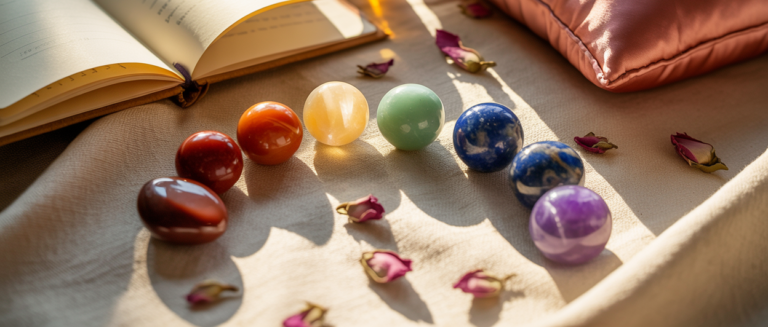
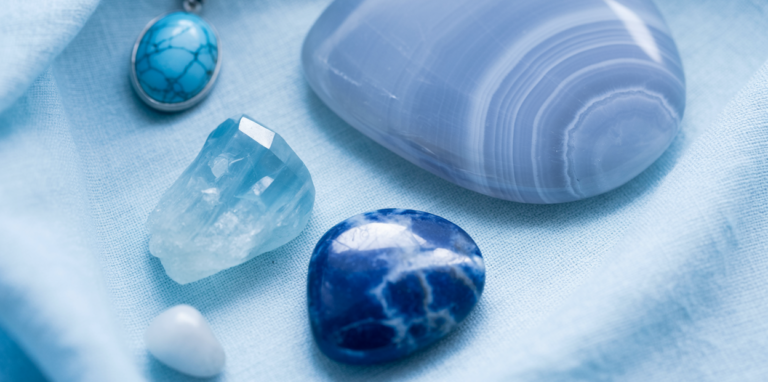
The crown chakra’s crystal palette is the most luminous in the system — violet, white, and clear, the colors of light itself. These crystals share a quality of translucency or radiance — they are the crystals that seem most to hold light within them, which is precisely the quality of the crown chakra’s energy. Working with them is immediately different from working with the denser, more earth-anchored crystals of the lower chakras: there is a quality of spaciousness, of altitude, of consciousness rather than matter.
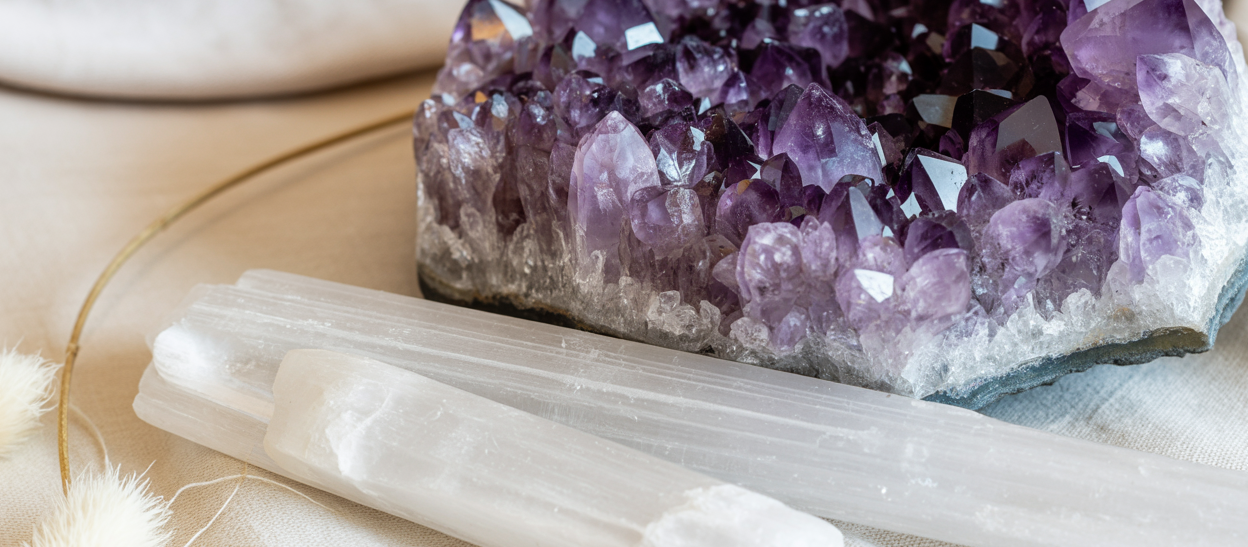
Amethyst is the crown chakra’s primary crystal — the same stone that appears in the third eye section, here in its crown function. Where the third eye uses amethyst for intuition and inner knowing, the crown uses it for spiritual connection, the calming of mental static that makes higher consciousness accessible, and the particular quality of spiritual protection it offers — the sense of being held within a larger benevolent field, which is precisely what the crown chakra wounds of chronic illness have damaged. A large amethyst cluster in the meditation space, a small tumbled piece held during the silence practice or the why-questions practice, is the most accessible and most versatile crown chakra crystal available.
Clear quartz is the crown chakra’s universal crystal — associated with clarity, amplification, and the quality of pure consciousness that is the crown chakra’s essential nature when it is open. Clear quartz does not carry its own specific energy in the way colored crystals do; it amplifies and clarifies whatever is present. Placed near other crown chakra crystals, it intensifies their effect. Placed at the crown of the head during lying-down meditation, it supports the quality of open, receptive awareness the practice cultivates. A clear quartz point oriented upward in the meditation space is the classic crown chakra crystal arrangement.
Selenite is named for the moon — luminous, translucent, and associated with higher consciousness, spiritual clarity, and the clearing of energetic blockages at every level of the system. Selenite is one of the few crystals that is self-clearing and also clears other crystals placed near it — it does not accumulate energy the way most crystals do, which makes it uniquely suited to crown chakra work where accumulation and weight are what need to be released. A selenite wand placed above the head during lying-down meditation, or held during the white light visualization, supports the clearing and opening of the crown with a quality of gentle, persistent luminosity.
Lepidolite is the crown chakra’s peace crystal — containing lithium in its mineral composition, which gives it a genuinely calming quality that is not metaphorical. Specifically associated with surrender, with the release of anxiety about the uncontrollable, and with the particular peace that comes from accepting what cannot be changed — lepidolite is the crystal for the surrender work of the crown chakra specifically. For anyone whose crown chakra wound is primarily the anxiety of unanswerable questions, lepidolite held during meditation or placed on the pillow during sleep provides a physical anchor for the practice of release.
Howlite is white, veined with gray, associated with stillness and the calming of an overactive mind — the mental noise that makes the crown chakra’s open, receptive silence nearly impossible to access. For anyone whose meditation is significantly interrupted by an unquiet mind, howlite is the pre-meditation crystal: hold it for a few minutes before beginning, let the mind quiet, then begin.
Crown chakra crystals worth adding to your practice

A substantial amethyst cluster for the meditation space — large enough to fill the area with its energy rather than sitting as a small decorative object. Place it where you practice most consistently: beside the bed, on the altar, in the corner of the room used for quiet time. The cluster form provides the radiant, multidirectional energy that suits the crown chakra’s expansive, non-directional quality.
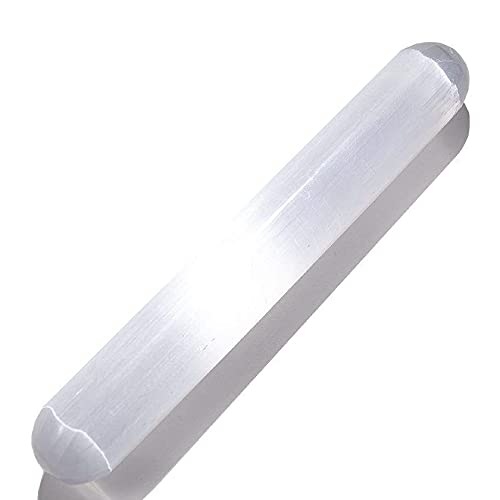
A selenite wand for use during lying-down meditation — held above the head or placed gently on the pillow above the crown — or a selenite charging plate for the altar that keeps other crystals cleared and energetically fresh. Selenite’s luminosity and self-clearing quality make it one of the most practically useful crown chakra tools available: it does its work continuously and without requiring maintenance.

A clear quartz point oriented upward in the meditation space amplifies the crown chakra’s energy and the clarity of any practice conducted nearby. The upward orientation aligns with the crown chakra’s upward direction — toward something above and beyond the individual self. A clean, well-formed point with good clarity is worth selecting carefully; the visual quality of clear quartz is part of its effect.

A curated crown chakra set covering the full range of this chakra’s crystal support — spiritual connection and protection (amethyst), clarity and amplification (clear quartz), continuous clearing and luminosity (selenite), and peace and surrender (lepidolite). The final crystal set of the series — and the one most suited to the practice of simply being present with what is, which is the crown chakra’s essential invitation.
Journaling prompts for the crown chakra
Crown chakra journaling is the deepest and the most open-ended journaling in the series. These are the large questions — the ones without answers, or with answers that change depending on the day, the season, the state of the body. They do not ask for resolution. They ask for honest engagement with the territory of meaning, surrender, and the relationship with something larger than the self.
Write slowly with these. Let the pen rest between sentences. Let the questions sit for a moment before you respond to them. Crown chakra writing often happens in pauses as much as in words — in the space between what you know and what you’re reaching toward.
For meaning and the why questions:
- What has chronic illness or pain meant in my life — not what it was supposed to mean, not what other people say it should mean, but what meaning I have actually found or made within it?
- What has this experience opened in me that might not have been opened otherwise? I am not asking you to be grateful for the suffering. I am asking what has genuinely grown within it.
- What would I want to believe about why this is my life, if I could believe anything? What would make this feel less like randomness and more like something that can be lived with?
- Where do I find moments of genuine connection to something larger than my illness, my symptoms, my daily management? What are those moments like?
For surrender and the relationship with what cannot be controlled:
- What am I still holding onto — a version of my life, a version of myself, a plan or expectation — that might be ready to be released? What would the release feel like?
- What is the difference between surrender and resignation in my specific situation? What would healthy surrender look like for me?
- What would it feel like to trust something larger than my ability to control the outcome — not naively, not at the expense of advocacy and care, but at the level of deepest peace?
For spiritual connection and the crown chakra’s gifts:
- Do I have a relationship with something larger than myself — a divine presence, the universe, nature, the collective of all humans, something else? How has chronic illness affected that relationship?
- What does spiritual care look like for me right now, in this body, in this life? Not what it looked like before or what it should look like — what it actually looks like, and what it needs.
- What would I want to say, at the end of this life, about how I lived within the constraints of chronic illness? Not what I wished had been different — what I actually did with what was given?
For your crown chakra journaling practice

A dedicated crown chakra journal in a clean, quiet color — white, cream, or soft violet — that holds the largest questions. This journal is different from the others in the series: its pages should feel spacious, its lines generous, its cover suggesting something open rather than bounded. The crown chakra’s writing tends to be sparse rather than dense — a few sentences that go very deep rather than many that cover a lot of ground. This journal should feel like it has room for that.

Writing crown chakra journal entries in silver or violet ink aligns the act of writing with the chakra’s color resonance. Silver specifically — the color of moonlight, of consciousness, of something luminous and reflective — suits the crown chakra’s quality in a way that even gold, used for the solar plexus, does not. A pen whose ink looks like something worth reading.

Crown chakra journaling is sometimes opened most effectively not by a prompt but by a few minutes of reading — a poem, a passage from a spiritual memoir, a reflection that asks the right questions in language that is more beautiful than you could access cold. Keep a book of this kind beside the crown chakra journal: something that moves at the speed of the largest questions, that can serve as the opening door when the blank page feels too open.

Crown chakra journaling — the sitting-with-large-questions variety — often happens from a reclining or semi-horizontal position, because the body that is managing chronic illness may need to be supported fully in order to have any available attention for the largest questions. A cushioned lap desk removes the postural barrier from a practice that has already asked enough just by asking you to engage with the hardest questions of your experience.
Affirmations for the crown chakra
Crown chakra affirmations for the chronic illness and pain body are the most contemplative in the series — and deliberately the most honest about what cannot be resolved. They do not claim that suffering has a purpose. They do not ask you to be grateful for difficulty. They offer something more honest and, in the long run, more useful: the practice of relating to your life — this specific life, with its specific constraints and its specific gifts — as something worth inhabiting with presence, with whatever dignity is available, and with the stubborn, quiet opening toward meaning that is possible even within pain.
Say them slowly. More slowly than any other affirmation in this series. The crown chakra’s territory is not urgency — it is depth. Let each one settle before moving to the next. Say them in the silence after OM, if you practice that. Say them looking at the sky or out a window at something growing. Say them as offerings rather than declarations.
- I am held by something larger than my illness, my symptoms, and my hardest days. I am not as alone in this as it sometimes feels.
- I release the demand that my suffering have a tidy explanation. I hold the question with openness rather than dread.
- I surrender what I cannot control — not because it doesn’t matter, but because holding it costs more than releasing it.
- I find meaning in this life — not the meaning I planned for, but the meaning that is actually here, in this body, on this day.
- I am connected to something larger than myself. That connection does not require me to be well, productive, or recovered to be real.
- I trust the larger rhythm of things, even when I cannot see where it is moving.
- My suffering has not made me less. It has made me different — deeper, more present, more aware of what actually matters.
- I am Sahasrara — thousand-petaled, open at the crown, reaching toward something I cannot fully name but can always approach.
- I am here. This life is mine. Even in its difficulty, I choose to inhabit it fully — not perfectly, but presently.
- I am more than my body’s limitations and less than my worst days. I exist in the larger context of a life that matters, even when it hurts.
The crown chakra work — the meaning-making, the surrender, the connection to something larger — is the most internal work of the series. It happens in the quiet hours. And then you have to bring yourself back into the world: into the appointments, the conversations, the rooms where your health gets decided. Say This: 30 Scripts for Chronic Pain Communication is for those rooms — the ones where the quiet inner work needs outer language to make it matter. Because all of this healing, inner and outer, is how you stay in your own life with as much wholeness as possible. Get your copy of SAY THIS here
For creating your crown chakra ritual space

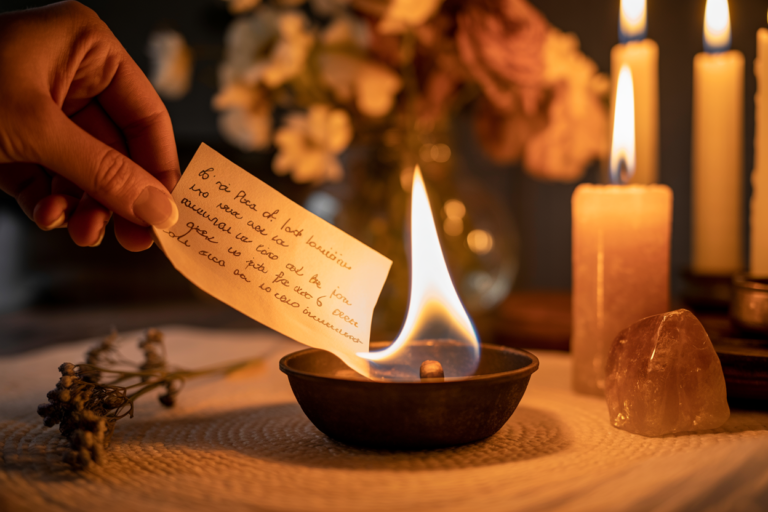
The crown chakra altar should be the simplest of the series — fewer objects, more space, the visual equivalent of the silence the chakra practices work toward. A white or natural linen tray, amethyst, a clear quartz point, a white candle, and perhaps one flower or one small note of intention. The arrangement should feel like an exhale. Let the space around the objects be part of the arrangement.

A singing bowl used for crown chakra OM practice — struck before and after the chanting, with the sustained tone holding the silence between repetitions. The resonance of a good singing bowl after OM is itself a crown chakra experience: the sound gradually fading into silence that is not absence but presence, the experience of the boundary between sound and its ground dissolving. This is the crown chakra’s quality in auditory form.

Lotus flowers — the crown chakra’s botanical symbol, their roots in mud and their blooms at the surface — are the most symbolically aligned for the crown altar. Fresh white roses or dried lavender are more practically accessible and carry the same quality of purity and spiritual opening. A single stem in a simple vase. The crown chakra’s altar does not need abundance — it needs the quality of one beautiful, intentional thing.
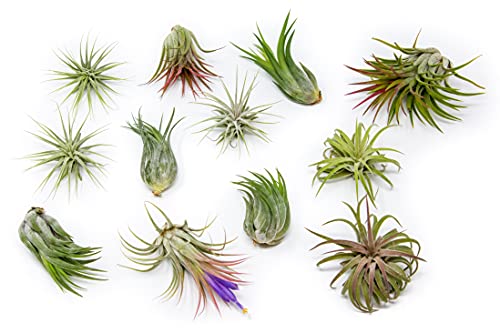
A small air plant or kokedama moss ball in the meditation space brings living presence without requiring the energy of regular care — particularly useful for anyone whose capacity for plant maintenance is limited by illness. Air plants require only occasional misting; moss balls are forgiving of irregular attention. Living things in the crown chakra space support the practice of connection to what is alive and continuous and larger than the individual — which is precisely what the crown chakra is for.
The thousand petals, and what they hold
Sahasrara — the crown chakra’s name — means the thousand-petaled lotus. A lotus that grows in mud and blooms at the water’s surface, reaching toward the light. This is the image the tradition chose for the energy center that holds the largest questions of human existence, and it is worth sitting with: the roots in the earth, in the mud, in the most difficult and least glamorous conditions. The bloom at the surface, reaching upward. Both are necessary. Neither is the whole flower.
Chronic illness is the mud. Not as metaphor for something that will lead to a beautiful outcome — the future is not promised, and this is not a story about how suffering made you better. It is more honest than that. The mud is simply the conditions in which the flower is growing. The difficulty is real. The limitation is real. The pain and the grief and the meaning questions and the unanswerable whys are all real.
And the bloom is also real. The capacity for meaning-making. The quality of presence that difficulty can, over time, cultivate. The particular compassion of someone who knows what it is to suffer and has chosen, in whatever imperfect and ongoing way, to remain open to the world anyway. The connection — to other people, to the natural world, to whatever larger thing you understand yourself to be a part of — that persists even in the hardest seasons. The stubborn, ordinary, extraordinary fact of continuing to reach toward the light, even from the mud, even when the reaching is slow.
That reaching is the crown chakra. That is Sahasrara. And it is alive in you — whether or not you have ever thought of it in these terms, whether or not the practices in this post feel like things you can do, whether or not the healing this series has described feels anywhere near complete.
The seven chakras are not a checklist. They are a system — alive, interconnected, in constant process. The root’s grounding supports the crown’s openness. The heart’s love makes the throat’s truth-telling possible. The sacral’s creativity feeds the solar plexus’s confidence. They work together, and the work is never finished, and that is not a failure. It is simply the nature of living in a body and a life that are always in process.
You have read this series, or some of it, or you found one post that reached you. That is enough. The series was designed to meet you where you are and give you what is useful now, leaving the rest for when it is needed.
The LOVEOWE Chakra Series ends here — at the crown, at the largest questions, at the flower reaching toward light from the mud. Go gently with your body. Go honestly with your questions. Go bravely with your voice. Go compassionately with your heart. Go grounded in the knowledge that you belong here, in this body, in this life, even as it is.
You are all seven chakras. You are the whole flower. Root to crown, you are worth tending.
Thank you for being here. Explore the full LOVEOWE Chakra Series here, or begin wherever you’re called.