Your Intuition Already Knows: Third Eye Awakening, Self-Trust, and the Chronic Illness Body
The content on this site was created with the help of AI. LOVEOWE LLC participates in the Amazon Services LLC Associates Program and other affiliate programs. As an Amazon Associate, I earn from qualifying purchases. This means I may earn a small commission—at no extra cost to you—when you make a purchase through links on this site. All opinions are my own. Learn more click here. Thank you for your support!

This is part of the LOVEOWE Chakra Series — seven posts exploring each energy center through the lens of chronic illness and pain. You can move through the series in any order. Each post stands on its own. New to chakras? Start with the series introduction here.
I used to think my intuition had gone quiet.
Years of chronic illness will do that. When your body is sending distress signals constantly — pain, fatigue, symptoms that don’t resolve, diagnoses that take too long — it becomes difficult to distinguish between your nervous system’s alarm bells and the quieter, steadier voice underneath them. The one that knows things. The one that says: this doctor isn’t the right one, or this treatment isn’t working, or you need to rest today even though the calendar says otherwise.
That voice is still there. In all of us. Chronic illness doesn’t silence intuition — it buries it under layers of medical noise, self-doubt, and the accumulated weight of not being believed. Learning to hear it again is one of the most important things you can do for yourself. Not just spiritually, but practically. Your intuition is a survival tool. And for a body navigating a medical system that often fails it, learning to trust your own inner knowing is a radical and necessary act of self-love.
The third eye chakra is where that work begins.
This is the first post in the LOVEOWE Chakra Series. We’re starting here — at the sixth chakra, the seat of intuition and inner sight — because for people with chronic illness, the ability to trust yourself is not a luxury or a spiritual side project. It’s the foundation of everything else.
What the third eye chakra is
The third eye chakra — known in Sanskrit as Ajna, meaning “to perceive” or “to know” — is the sixth of the seven primary chakras. It sits at the center of the forehead, between and just above the eyebrows, and is associated with the pineal gland: a small, light-sensitive structure in the brain that regulates circadian rhythms and produces melatonin, and that has been linked in both ancient tradition and modern research to heightened states of awareness and perception.
The third eye is the chakra of inner vision. Not physical sight, but the deeper seeing — intuition, insight, pattern recognition, the ability to sense what is true beneath what is visible. Where the lower chakras govern our survival, creativity, power, and love, the third eye governs our relationship with knowing itself. It is the part of us that perceives beyond the surface, that dreams, that envisions, that trusts the information arriving from somewhere below conscious thought.
Its element is light. Its color is indigo — that deep, luminous blue-purple at the edge of the visible spectrum. Its mantra is AUM or OM, the primordial sound that many traditions associate with the frequency of awareness itself.
When the third eye is balanced and open, you feel clear — decisions come from inner knowing rather than anxiety, and you’re able to navigate complexity without losing your center. When it is blocked or underactive, the experience is of mental fog, indecision, and a pervasive sense of not being able to trust yourself or see your path. When it is overactive, it can manifest as overthinking, rumination, or being overwhelmed by too much information without the grounding to process it.
The third eye doesn’t give you answers from outside yourself. It gives you clearer access to the answers that were always inside you.
The third eye and chronic illness: why this chakra matters for your body
The connection between the third eye chakra and chronic illness is both energetic and deeply practical. It shows up in three distinct ways that most chakra guides don’t talk about — because most chakra guides aren’t written for people whose relationship with their own body has been complicated by years of pain, misdiagnosis, and medical dismissal.
The self-trust wound. Chronic illness has a way of eroding self-trust in ways that are quiet and cumulative. When you spend years being told that your symptoms are anxiety, or exaggeration, or something you’d feel better from if you just exercised more — when you learn to doubt your own experience because the people with the authority to validate it have repeatedly chosen not to — your relationship with your own inner knowing fractures. The third eye chakra holds that inner knowing. A history of medical dismissal is, in energy terms, a significant third eye wound. Healing it means learning to trust your perception again. To believe what your body tells you. To know that you know things about your own experience that no one else can access.
The brain fog connection. Brain fog — one of the most consistently reported and most consistently underestimated symptoms of chronic illness — lives in the territory of the third eye. The mental cloudiness, difficulty processing information, inability to think clearly through complexity: these are not failures of intelligence. They are neurological and physiological symptoms that also happen to map onto what energetic tradition describes as a blocked or stressed third eye. Practices that support the third eye — meditation, rest, reduced sensory overwhelm, adequate sleep, and the dietary considerations below — overlap significantly with what neuroscience recommends for brain fog management. The traditions and the research are pointing in the same direction.
The body-wisdom gateway. Chronic illness bodies are producing information continuously — pain patterns, fatigue signals, the particular quality of a symptom on a given day. The third eye is the faculty that interprets that information, that notices patterns and draws connections, that distinguishes this flare from the usual kind. Learning to receive that body wisdom with accuracy and trust — rather than dismissing it or catastrophizing it — is a third eye practice as much as any meditation.
Opening and healing the third eye: practices for the chronic illness body
All of the practices in this series are designed with the chronic illness body in mind. That means every practice below has a full version and an accessible version — because some days you have thirty minutes and a quiet room, and some days you have five minutes and a heating pad and that is the whole picture. Both matter. Both count.
Meditation for the third eye
The most direct practice for the third eye is focused attention meditation — bringing your awareness deliberately to the space between and above your eyebrows, and holding it there with gentle consistency.
Full version (15–20 minutes): Find a comfortable position — seated if that’s available to you, lying down if it isn’t. Close your eyes. Take three slow breaths, exhaling longer than you inhale. Then bring your attention to the center of your forehead — not straining toward it physically, but simply directing your inner awareness there. Visualize a deep indigo light at that point, pulsing slowly with each breath. Inhaling, the light expands. Exhaling, it focuses and deepens. When your mind wanders — and it will — simply return your attention to that point of light without judgment. Stay for as long as is comfortable.
Accessible version (5 minutes): Lie down. Place one hand gently over your forehead, fingertips at the third eye point. Close your eyes. Breathe. That’s the practice. The physical contact with that area is itself a form of activation — you are placing conscious attention on the energy center, and that attention matters regardless of how elaborate the surrounding ritual is.
Alternate nostril breathing (Nadi Shodhana)
This pranayama practice is one of the most consistently recommended for balancing the third eye because it literally balances the two hemispheres of the brain — the analytical and the intuitive — through alternating breath patterns. It also calms the nervous system rapidly, which for chronic illness bodies means reducing the sympathetic activation that makes clear, intuitive thinking harder to access.
Using your right hand: close your right nostril with your thumb and inhale through the left. Then close your left nostril with your ring finger, release the right, and exhale through the right. Inhale through the right. Close the right, release the left, exhale through the left. That is one round. Begin with five rounds and work up from there. Even three rounds produces a noticeable shift in mental clarity.
Reducing sensory overwhelm
An overloaded third eye doesn’t need more stimulation — it needs space. For people with chronic illness, sensory sensitivity is frequently heightened, and the constant information-processing demand of pain, appointments, symptom management, and daily life creates a kind of static that makes it very difficult to hear intuition beneath the noise.
Deliberate periods of reduced sensory input — even ten to fifteen minutes of darkness and quiet, an eye pillow blocking light while resting, time without screens, a slow walk without headphones — are third eye healing practices. They create the conditions in which the quieter signal of intuition can be heard. This is not wasted time. It is maintenance for the most important perceptual faculty you have.
Dietary support for mental clarity
The third eye’s physical correlate, the pineal gland, is affected by what we eat and drink. Dark leafy greens support neurological health. Omega-3 rich foods — walnuts, wild salmon, chia seeds, flaxseed — support brain function and reduce neuroinflammation that contributes to brain fog. Antioxidant-rich foods, especially dark berries, protect neurons from oxidative damage. Reducing processed foods, alcohol, and excessive caffeine reduces the neurological static that makes clear thinking and intuitive access harder. For anyone already eating an anti-inflammatory diet for chronic illness management, the third eye dietary recommendations and the anti-inflammatory eating recommendations are essentially the same list.
Tools for your third eye practice

A weighted, lightly scented eye pillow placed over the eyes during third eye meditation serves multiple purposes simultaneously: it blocks light to support melatonin and the pineal gland, the gentle pressure activates the parasympathetic nervous system, and the lavender scent supports calm. For chronic illness bodies that spend significant time horizontal, this makes rest a ritual rather than just a necessity.

Frankincense is the essential oil most traditionally associated with the third eye and higher consciousness — it has been used in spiritual practice across cultures for thousands of years and has documented effects on the limbic system that support calm, clarity, and meditative states. Clary sage supports intuition and is particularly useful for people whose third eye work involves hormonal or cyclical sensitivity. Diffuse during meditation or dilute in a carrier oil and apply to the forehead before practice.

Color carries energetic resonance, and indigo is the color of the third eye chakra. A deep indigo or purple pillar candle lit during meditation or journaling anchors the practice visually and signals to the subconscious that this time is set apart for inner work. Beeswax or soy specifically — they burn cleaner than paraffin, which matters in an enclosed meditation space.

Seated meditation requires physical support to be sustainable, particularly for bodies managing back pain, joint issues, or fatigue. A quality meditation cushion or bolster that elevates the hips and allows the spine to be naturally upright — without muscular effort — makes the difference between a practice that is possible and one that creates new pain. Chair-height meditation benches are available for those who cannot sit on the floor.
Crystals and ritual tools for the third eye
Crystals work through resonance — the principle that different minerals carry different vibrational frequencies that interact with the body’s own energy field. Whether you approach this literally or metaphorically, the practice of working intentionally with objects chosen for specific qualities is itself a grounding, focusing ritual that supports the inner work of chakra healing. For people with chronic illness, the ritual aspect matters as much as the metaphysical: you are creating a deliberate space that says this time is for me, this practice is for my healing, I am worth this attention.
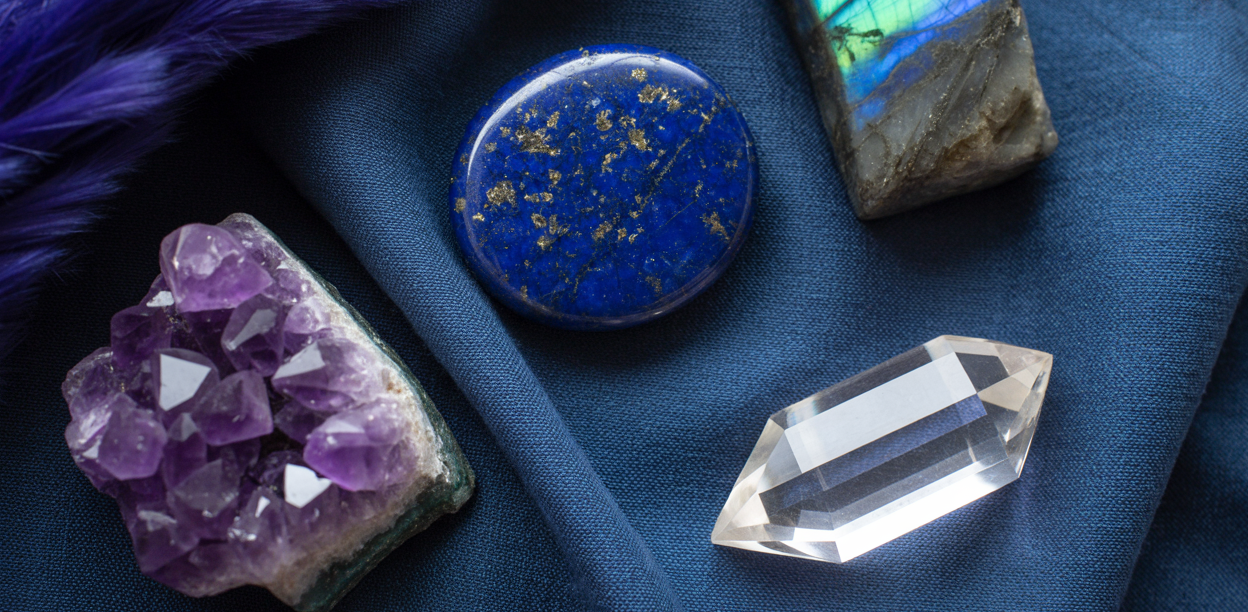
The crystals most aligned with the third eye chakra share a common quality: they tend toward indigo, deep purple, midnight blue, and luminous gray — the color palette of the chakra itself.
Amethyst is the most widely recognized third eye crystal and for good reason. Its deep purple color, its reputation for calming an overactive mind, and its traditional association with intuition and spiritual clarity make it the entry point for most people beginning third eye work. For chronic illness specifically, amethyst’s calming properties are well-suited to nervous systems that are frequently in overdrive. Place it on the forehead during meditation, keep it on your nightstand to support the dream state and sleep quality, or hold it during difficult moments when you need to access inner clarity.
Lapis lazuli is the stone of truth and inner vision — deep midnight blue with flecks of gold pyrite that catch the light. It has been used in spiritual practice for over six thousand years across Egyptian, Mesopotamian, and Persian traditions. Lapis lazuli specifically supports the aspect of third eye work around speaking and knowing your truth — relevant for anyone whose chronic illness journey has involved having their experience denied or minimized. It supports both the third eye and the throat chakra, making it particularly powerful for people working on the intersection of inner knowing and outer communication.
Labradorite is the crystal of transformation — its surface shifts and shimmers as light changes, a quality called labradorescence that makes it one of the most visually stunning crystals available. It protects the aura from energy drain (significant for people whose conditions already deplete energy), strengthens intuition, and is specifically associated with seeing patterns and connections that are not immediately obvious — relevant for anyone navigating a complex symptom picture.
Sodalite holds logic and intuition in balance — deep blue with white veining, quieter than lapis lazuli and more internally focused. It supports mental clarity and reduces mental noise in the calm, clear-headed way that brain fog obscures. Hold it when you need to make a decision and can’t access your own thinking.
Clear quartz is the universal amplifier — it doesn’t carry its own chakra-specific energy but strengthens and clarifies the energy of whatever practice and crystals it’s placed alongside. A clear quartz point near your third eye crystals amplifies their effect. It is also the most accessible and affordable crystal available, making it the right starting point for anyone building a crystal practice for the first time.
Third eye crystals worth adding to your practice

The foundational third eye crystal. A raw amethyst cluster for the altar or nightstand, or a tumbled piece small enough to place on the forehead during meditation. Look for deep, saturated purple rather than pale lavender — the depth of color generally reflects a higher mineral concentration. Natural amethyst deepens in richness rather than fading with the orange of heat-treated citrine.

A tumbled lapis lazuli or smooth palm stone for holding during meditation, journaling, or difficult appointments. The weight and coolness of the stone in the hand is itself grounding. Look for deep midnight blue with visible gold pyrite inclusions — this is the highest quality lapis, with both the truth-supporting resonance and the visual beauty the stone is known for.
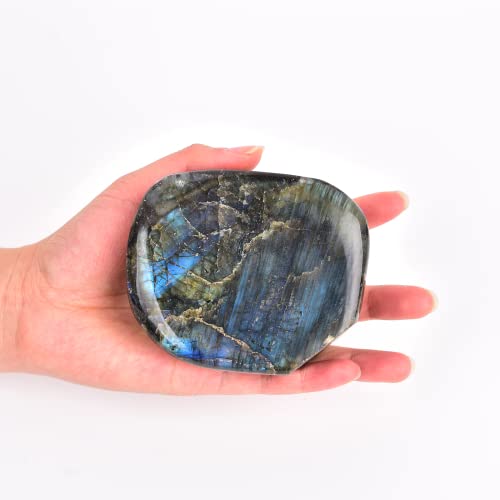
Labradorite’s visual quality — the way it shifts and shimmers — makes it one of the most immediately captivating crystals to work with, which matters for sustaining a practice. A palm stone or small freeform piece that can be turned in the hand during meditation, used as a focal point for visualization, or placed on the third eye during lying-down practice.

A curated set of third eye chakra stones gives you a complete working collection without sourcing each piece individually. Look for sets that include four or more stones in varying sizes — at least one large enough for altar placement and one small enough for meditation placement on the forehead. A set in a small pouch or box keeps everything together and signals that this is a dedicated practice, not a collection of objects.
Journaling prompts for the third eye
Journaling is one of the most powerful third eye practices available because writing makes the internal external — it gives form to the inner knowing that often remains vague and inaccessible when it stays in the mind. For chronic illness bodies, journaling also creates a record: of symptoms, of patterns, of the moments when intuition spoke and what it said, of the ways your inner knowing has been right even when external authorities disagreed.
You don’t need to answer all of these in one sitting. Choose one or two that call to you. Return to the others over time. Write without editing yourself — the third eye speaks in first drafts, not polished prose.
For knowing and self-trust:
- What do I know about my own body, my own experience, my own condition that I haven’t yet said aloud to a doctor?
- When did I know something was wrong before anyone else confirmed it? What was that knowing like — where did I feel it?
- What is my intuition telling me right now that I have been hesitant to trust?
- Where in my health journey have I been right when the medical system was wrong or slow? What does that tell me about my own inner knowing?
For clearing and releasing:
- Who or what taught me not to trust my own perception? What is the cost of carrying that lesson?
- What story about myself am I ready to stop telling? What truer story is ready to take its place?
- What fog am I carrying — mental, emotional, medical — that I’m ready to ask to lift?
For vision and intention:
- If my body could show me what it needs most right now, what would it show me?
- What does my inner knowing say about the direction of my healing?
- If I fully trusted myself, what decision would I make that I’ve been putting off?
- What does my life look like when my third eye is fully open? What am I able to see, trust, and create?
For your journaling practice

A journal that stays open on its own during writing — lay-flat binding matters for chronic illness journaling, where hand fatigue or wrist pain can make holding a book open an unnecessary obstacle. Thick cream pages that hold ink without bleed-through and a cover that feels like an object worth picking up. This is the journal you keep specifically for inner work, separate from practical tracking or daily planning.

A gel ink pen that writes smoothly with minimal pressure — relevant for anyone with hand pain, joint issues, or tremors that make writing with a standard ballpoint effortful. The physical ease of writing removes the barrier between the impulse to write and the act of writing, which is the barrier that matters most when you’re trying to access your intuition rather than manage the mechanics of the practice.

Lighting a stick of palo santo before a journaling session creates a ritual transition from the practical world into the inner one. The sweet, resinous scent is associated with clearing and grounding — it signals the beginning of intentional time. For people whose days are heavily structured around symptom management and medical logistics, this transition matters. Palo santo is generally better tolerated than white sage for people with respiratory sensitivities.

A quality lap desk with a cushioned underside gives you a stable, comfortable writing surface whether you’re sitting up or semi-reclined — making journaling possible on the days when getting to a desk isn’t. For chronic illness bodies, removing the postural requirement from a practice dramatically increases the days on which the practice is available. This is the tool that makes the journaling habit sustainable rather than aspirational.
Affirmations for the third eye
Affirmations work not by denying what’s true but by offering the mind a different direction — a statement of what you’re moving toward rather than a claim that you’ve already fully arrived. For chronic illness bodies who have spent years having their perceptions questioned or dismissed, third eye affirmations are particularly potent because they directly address the self-trust wound: they practice, repeatedly, the language of believing yourself.
Choose one or two that resonate most deeply right now. Speak them aloud if possible — the third eye’s companion chakra is the throat, and voicing an affirmation moves it from internal thought to external declaration. Say them during meditation, write them at the top of your journal page, place them where you’ll see them in the morning.
- I trust what my body tells me.
- My intuition is a source of wisdom, not a source of fear.
- I have always known things that no one else could verify. That knowing is real.
- I see clearly. I think clearly. I trust clearly.
- The fog is lifting. My mind is capable of clarity.
- I trust myself to know what I need.
- My inner knowing is valid, even when it goes unconfirmed by others.
- I am reconnecting with my intuition. It has been here all along.
- I see my path, even when it’s not fully visible yet.
- My perception is trustworthy. My experience is real. I believe myself.
Learning to trust your intuition is inner work. Learning to communicate what you know — to the doctors, the specialists, the people whose decisions affect your care — is the outer expression of that same self-trust. Say This: 30 Scripts for Chronic Pain Communication gives you the exact language for 30 real situations, so the inner knowing you’re building here can be heard in every room that matters. Get your copy of SAY THIS here →
For creating your third eye ritual space

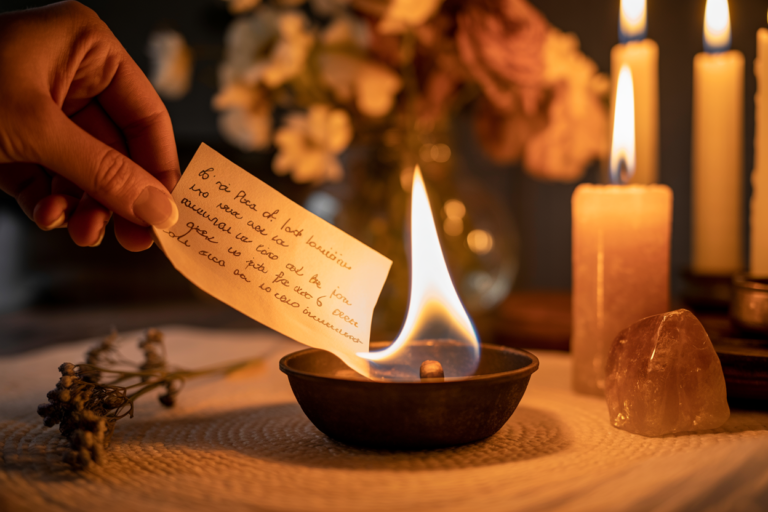
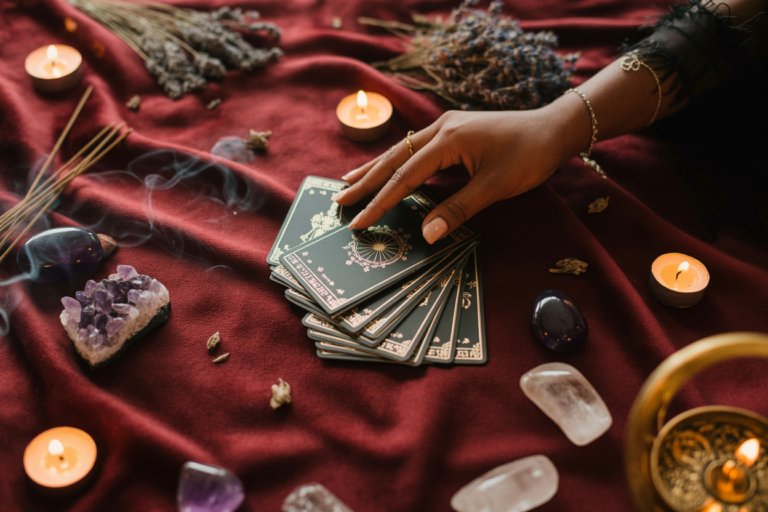
A dedicated tray for your third eye altar arrangement — crystals, candle, a small note with your current affirmation, any botanicals that belong there — creates a contained, intentional space that you can set up and maintain without it spreading into the rest of the room. The tray also makes it possible to move the entire arrangement if your rest location changes through the day.

Sandalwood incense has been used in meditation and spiritual practice across Hindu, Buddhist, and Egyptian traditions specifically for its grounding, clarity-supporting, and consciousness-elevating qualities. Nag Champa combines sandalwood with frangipani and is one of the most widely used meditation incenses available. Use sparingly and in ventilated spaces if respiratory sensitivity is part of your picture.

A small singing bowl struck or circled at the beginning and end of a meditation practice creates an auditory ritual marker — the sound signals that intentional time is beginning and ending. The resonant tone of a singing bowl also produces immediate brainwave entrainment toward calmer, more receptive states. For third eye work specifically, beginning and ending with a singing bowl grounds the practice in sound rather than just intention.

A chakra-focused affirmation or oracle card deck provides a daily practice anchor — drawing one card each morning as the day’s intention. Look for decks that include all seven chakras with multiple cards per chakra, so the practice remains varied enough to stay meaningful across a multi-week or multi-month working period. A beautiful deck you want to pick up each morning is more valuable than a comprehensive one that stays in a drawer.
The knowing that was always there
Chronic illness takes many things. Time, plans, certainty, ease. The version of your life you expected to be living by now. But it does not take your intuition — even when it buries it under so much noise that finding it again feels like excavation work.
The third eye chakra is where you begin to dig. Not dramatically, not all at once, but in five-minute meditations and honest journal pages and the small daily acts of paying attention to what your body and your inner voice are actually telling you — and choosing to believe them.
That belief is an act of radical self-love. For a body that has been doubted, by medicine and sometimes by yourself, choosing to trust your own knowing is among the most healing things available to you.
Start small. Sit quietly for five minutes with your hand over your forehead and breathe. Write down one thing you know to be true about your experience that you haven’t said aloud. Hold a piece of amethyst and ask your body what it needs today. These are not small gestures. They are the beginning of a practice that changes, over time, how you inhabit your own life.
And when the inner vision begins to clear — when you can see yourself more honestly, trust yourself more consistently, and perceive your path with something closer to clarity — the natural next question becomes: what is this clarity in service of? What is the bigger picture? What connects all of this to something larger than the daily work of managing a body in pain?
That’s where the crown chakra begins. The third eye sees. The crown understands why the seeing matters. We’ll go there next.
Next in the LOVEOWE Chakra Series: The Crown Chakra — Connection, Surrender, and Finding Meaning in the Middle of Chronic Illness