The Root Chakra: Safety, Grounding, and Coming Home to a Body That Hurts
The content on this site was created with the help of AI. LOVEOWE LLC participates in the Amazon Services LLC Associates Program and other affiliate programs. As an Amazon Associate, I earn from qualifying purchases. This means I may earn a small commission—at no extra cost to you—when you make a purchase through links on this site. All opinions are my own. Learn more click here. Thank you for your support!

This is part of the LOVEOWE Chakra Series — seven posts exploring each energy center through the lens of chronic illness and pain. You can move through the series in any order. Each post stands on its own. Start with the series introduction here if you’re new to chakras.
There is a specific kind of fear that chronic illness and pain create that most people around you will never fully understand.
It is not the fear of a single, identifiable threat. It is something quieter and more pervasive — the slow erosion of trust in your own body as a safe place to live. Every flare that arrives without warning, every plan that gets cancelled, every morning you wake up and don’t know what version of yourself you’ll have access to that day — these things accumulate. Over months and years, they teach the nervous system something it was never supposed to learn: that the ground beneath your feet is not reliable. That safety is conditional. That your body, the most fundamental home you have, cannot be trusted to hold you.
That is a root chakra wound. And it is one of the most common, most significant, and most under-addressed dimensions of what chronic illness and pain actually do to a person.
The root chakra is the first energy center — the foundation of the entire chakra system — and it governs exactly this: our sense of safety, stability, belonging, and the right to exist and take up space in our own lives. When it is wounded by illness, by pain, by the instability that comes with a body that doesn’t behave predictably, everything built on top of it feels less secure. The work of healing it is not about pretending your body is safe when it doesn’t feel safe. It is about finding, rebuilding, and deepening the sense of ground that exists even within uncertainty. It is about coming home to this body — not the body you planned to have, but the one you actually live in — with something closer to trust.
That work begins here.
What the root chakra is
The root chakra — Muladhara in Sanskrit, meaning “root support” or “foundation” — is the first of the seven primary chakras and the one closest to the earth. It sits at the base of the spine, at the perineum, and its energy extends downward through the legs and feet — the parts of the body that literally connect us to the ground.
Its element is earth. Its color is deep red — the color of blood, of soil, of the most primal life force. Its sound is LAM, a mantra whose vibration is felt low in the body, resonant and grounding. Its physical associations include the adrenal glands, the skeletal structure, the legs and feet, the large intestine, and the immune system — the body’s most fundamental survival systems.
The root chakra governs what Maslow would recognize as the base of the pyramid: survival, safety, shelter, food, belonging, and the most foundational sense that you have a right to be here and to take up space. These are not abstract spiritual concepts. They are the lived experience of feeling — or not feeling — secure in your body, your home, your community, and your life.
When the root chakra is balanced and open, the experience is one of groundedness. You feel present in your body. You trust that your basic needs will be met. Uncertainty doesn’t destabilize you completely because there is something underneath it — a steadiness, a sense of being held by the ground even when life is difficult. Decisions come from a place of relative calm rather than fear.
When it is blocked or depleted, the experience is the opposite. Fear and anxiety dominate. The body feels unsafe or unfamiliar. Financial insecurity, housing instability, disconnection from community, and a pervasive sense of not belonging all signal root chakra imbalance. Physically, lower back pain, digestive issues, immune dysregulation, fatigue in the legs and lower body, and adrenal exhaustion can all be expressions of a root chakra under stress.
When it is overactive — a common response to prolonged threat, including the prolonged threat of chronic illness — the result is hypervigilance, rigidity, and a nervous system stuck in permanent high alert.
The root chakra doesn’t ask you to feel safe before you begin healing. It asks you to begin healing so that safety becomes possible again.
The root chakra, chronic illness, and pain: why this energy center takes the heaviest hit
Of all seven chakras, the root is the one that chronic illness and chronic pain affect most directly and most immediately. The connection is not metaphorical — it is structural. Chronic illness attacks the root chakra’s core domain at every level simultaneously.
The body as unsafe home. The root chakra’s most fundamental job is to make the body feel like a safe, reliable home. Chronic illness disrupts this at a physiological level — pain signals, unpredictable symptoms, flares that arrive without warning, a body that doesn’t do what you ask of it — all of these register in the nervous system as threat. Over time, living in a body that is a source of suffering rather than safety creates a deep root chakra wound: the sense that there is no truly safe ground, because the ground itself — your own body — keeps shifting beneath you.
The survival layer. Chronic illness often threatens the most basic survival structures the root chakra governs. Medical costs that affect financial stability. The inability to work consistently, threatening housing and food security. The loss of independence that illness can bring. The way pain and fatigue can isolate you from community and belonging. These are not just practical challenges — they are direct hits to the root chakra’s territory, and they compound the energetic depletion that illness already creates.
The adrenal connection. The root chakra is physically associated with the adrenal glands — responsible for cortisol, adrenaline, and the fight-or-flight system that chronic illness keeps in near-constant activation. Adrenal fatigue and HPA axis dysregulation are root chakra manifestations as much as physiological ones. Healing the root chakra and supporting adrenal recovery are, in practice, the same work approached from different directions.
The right to exist without justification. There is a subtler wound that takes longer to name — the accumulated feeling, after years of justifying your limitations and proving your suffering, that your right to take up space is conditional on your productivity or your recovery. The root chakra holds the unconditional version of that right: you belong here simply because you are here. Illness strips that sense away slowly. Healing the root chakra means reclaiming it.
Opening and healing the root chakra: practices for the chronic illness and pain body
As with every post in this series, each practice below comes with a full version and an accessible version. Your body sets the terms. Use what’s available to you today.
Grounding meditation — coming back to the body
The root chakra meditation is the most physically anchored meditation in the series — it works by directing attention to the base of the body and the connection between the body and the earth beneath it.
Full version (15–20 minutes): Sit comfortably with your feet flat on the floor, or lie down with legs uncrossed. Close your eyes. Take three slow breaths, exhaling longer than you inhale. Bring your attention to the base of your spine — not straining toward it, simply noticing it. Visualize a deep, rich red light at that point, warm and steady like an ember. With each inhale, the light grows brighter. With each exhale, it sends roots downward — through the floor, through whatever is beneath you, into the earth itself. Feel those roots holding you. You don’t have to hold yourself up. The earth is doing that. Stay with this visualization for as long as is available to you.
Accessible version (5 minutes): Lie down. Place both hands on your lower abdomen, just below the navel. Feel the weight of your hands. Feel the surface beneath you. Breathe slowly. On each exhale, allow your body to be a little heavier — to let the surface hold you rather than holding yourself up against it. That surrender to the surface beneath you is a root chakra practice. The earth is already holding you. This practice is just remembering that.
The LAM mantra
LAM (pronounced “lum”) is the seed syllable — the bija mantra — of the root chakra. Chanting or silently repeating it creates a vibrational resonance specifically associated with this energy center. You don’t need to believe in the energetics of mantra for this to be useful — the low, grounding quality of the LAM sound activates the vagus nerve and produces measurable parasympathetic nervous system response.
Sit comfortably. On your exhale, sound LAM — either aloud or as a silent internal vibration. Feel it low in the body, at the base of the spine. Repeat for five to ten breaths. Even three rounds produces a noticeable shift in the quality of groundedness in the body.
Earthing and physical grounding
The simplest root chakra practice available requires nothing but a patch of ground. Standing or sitting barefoot on grass, soil, or sand — what’s called earthing or grounding — allows direct electrical contact between the body and the earth’s surface. Research has found that earthing reduces cortisol, decreases inflammation markers, and improves sleep quality — all of which are directly relevant to chronic illness and pain management.
Even five minutes counts. On days when going outside isn’t possible, standing barefoot on a wooden or stone floor and directing attention to the soles of the feet — the contact, the temperature, the solidity — is a meaningful substitute.
Nourishment as root chakra practice
What we eat is a form of grounding, and the root chakra has specific dietary associations. Root vegetables — carrots, beets, sweet potatoes, parsnips, turnips — grow downward into the earth and carry an energetic quality of groundedness and stabilization. Red foods — tomatoes, red bell peppers, pomegranate, cherries, red lentils — resonate with the root chakra’s color and provide the antioxidants and anti-inflammatory compounds that support the physical systems this chakra governs. Protein-rich foods support the physical body’s structural integrity — the bones, muscles, and connective tissue that are the root chakra’s physical domain.
For anyone already eating anti-inflammatory for chronic illness management, the root chakra dietary recommendations and the anti-inflammatory recommendations are largely the same list.
Tools for your root chakra practice

An earthing mat that plugs into a grounded outlet and replicates the electrical connection of bare feet on the earth — designed specifically for people who can’t regularly access outdoor grounding due to mobility, weather, or energy limitations. Place under your feet while resting, working, or meditating. Particularly useful for people with chronic pain and fatigue who spend significant time indoors.

A deep red candle lit during root chakra meditation or journaling anchors the practice in the chakra’s color and light. Red is the color of blood, earth, and primal safety — its presence in a ritual space signals to the subconscious that this time is for grounding. Beeswax or soy burns clean, which matters in a small meditation space.

These three scents are the most grounding aromatherapy options available — all deeply earthy, all associated with the root chakra, all with documented calming effects on the nervous system. Cedarwood is warm and stabilizing. Patchouli is rich and earthy. Vetiver is the most intensely grounding of the three. Diffuse during meditation, dilute in a carrier oil and apply to the soles of the feet, or inhale directly from the bottle in moments of acute anxiety or disconnection.

Deep pressure stimulation — the mechanism behind weighted blankets — activates the parasympathetic nervous system and directly supports the felt sense of safety and being held that the root chakra governs. For chronic illness and pain bodies that struggle with hypervigilance and nervous system dysregulation, a weighted blanket used during meditation, rest, or sleep is root chakra medicine in the most practical, physical sense. Choose a weight approximately ten percent of your body weight.
Crystals and ritual tools for the root chakra
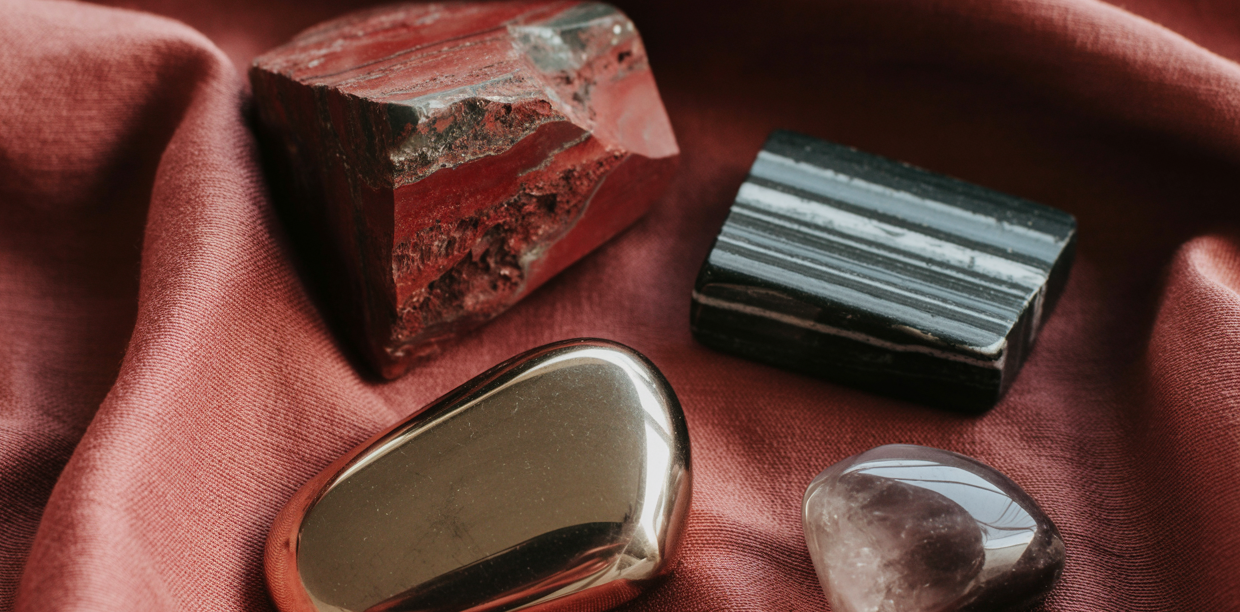
The crystals most aligned with the root chakra share a quality: they are dense, heavy, and deeply connected to the earth. They are the crystals that feel most solidly physical in the hand — grounding in a literal, tactile sense as well as an energetic one. Their colors run from deep red to black, the visual palette of earth and deep roots.
Red jasper is the foundational root chakra crystal — nurturing, stabilizing, and associated with physical strength and emotional endurance. For people with chronic illness and pain, red jasper’s particular quality is staying power. It supports stamina at an energetic level — the ability to keep going through difficulty without burning out completely. Hold it during difficult days, place it at the base of your altar, or keep it in a pocket as a physical reminder that your body has carried you through hard things before and can continue to do so.
Black tourmaline is the root chakra’s protection stone — one of the most powerful protective crystals available, associated with creating an energetic boundary between yourself and the external forces that drain, destabilize, or threaten. For people with chronic illness who are navigating medical systems, difficult relationships, or the constant external demand to justify their experience, black tourmaline is specifically useful. It creates a felt sense of boundary — of being able to say this is where I end and where the threat begins — that the root chakra needs in order to feel safe.
Hematite is heavy, metallic, and magnetic — the most physically grounding crystal available by virtue of its density alone. It is associated with the blood and the physical body, with clarity and calm under pressure, and with the dissolution of negative energy that clings. For people whose pain and illness have created a chronic background noise of anxiety and fear, hematite’s calming, physically weighty quality can provide immediate relief. Hold it during moments of acute anxiety, place it at the soles of the feet during meditation, or keep one on the nightstand for sleep support.
Smoky quartz is the transmutation stone — it is associated with taking fear, negative energy, and accumulated stress and drawing it downward into the earth for transformation. Unlike black tourmaline, which creates a boundary, smoky quartz actively processes and releases. For anyone who is carrying significant fear, grief, or stored stress in the body — which describes most people with chronic illness and pain — smoky quartz placed at the base of the spine during lying-down meditation can support genuine energetic release rather than just containment.
Obsidian is volcanic glass — intensely grounding and connected to truth. It is a challenging stone because it surfaces what is ready to be seen and released, which can bring difficult emotions to consciousness before it clears them. Start with a small piece and work with it gradually.
Root chakra crystals worth adding to your practice
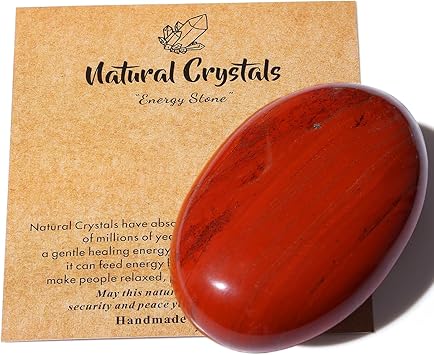
A substantial piece of red jasper for the altar or for holding during meditation — the weight and warmth of the stone matters as much as its energetic quality for root chakra work. Look for a deep, saturated brick red rather than pale or washed-out tones. Raw pieces have an earthy, unpolished quality that suits the root chakra’s earth element; tumbled pieces are smoother for holding during extended meditation.
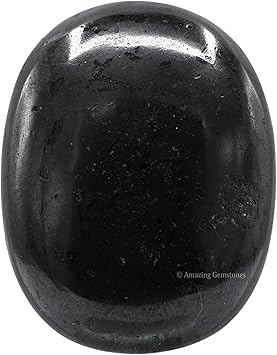
Black tourmaline for protection and boundary-setting — useful at the threshold of a room (placed near a doorway), at the corners of a bed for sleep protection, or held during any situation that requires energetic boundary maintenance. The raw variety has a striated texture that is distinctive and immediately recognizable. A piece for the altar and a smaller tumbled one for carrying are both worth having.
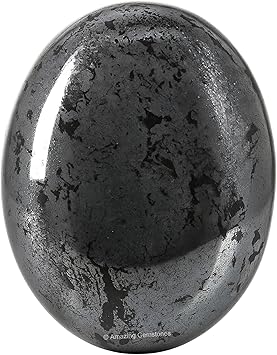
The weight of hematite is its most immediate quality — it is one of the heaviest stones relative to its size, and that physical density is itself grounding. A smooth palm stone that can be held during anxious moments, squeezed during pain peaks, or placed on the lower abdomen during lying-down meditation. Cold to the touch initially, warming with use — a tactile anchor for moments when the body needs something real to hold onto.

A curated root chakra set gives you a complete working collection — one stone for nurturing, one for protection, one for physical grounding, one for release. Look for sets where the stones are substantial enough to work with rather than decorative chips, and that include at least one piece large enough for altar placement alongside smaller pieces for meditation and carrying.
Journaling prompts for the root chakra
Root chakra journaling goes to foundational places — safety, belonging, and the right to exist and take up space. Some prompts will land immediately. Others may take time to approach. Let them sit until they’re ready. Write without censoring.
For safety and the body:
- When did my body stop feeling like a safe home? What happened, and what has that cost me?
- What does safety feel like in my body, in the moments when I can access it? Where do I feel it physically?
- What would it mean to trust my body again — not to be free of pain or illness, but to trust it even within that?
- What does my body need from me right now to feel more held and less abandoned?
For belonging and the right to exist:
- In what areas of my life has chronic illness or pain made me feel like I don’t fully belong or don’t have the right to take up space?
- What have I been told — explicitly or implicitly — about my worth being tied to my productivity or my recovery?
- What would it feel like to belong here — in this body, in this life — without any conditions attached?
For stability and grounding:
- What are the things in my life that feel genuinely stable right now, even small ones? What ground do I actually have?
- What survival fears does my illness or pain activate? Which of those fears are current and real, and which are the nervous system borrowing trouble from the future?
- What does grounding feel like for me specifically — what activities, places, people, or sensations bring me back to a felt sense of stability?
- What would I build differently in my life if I trusted that the ground beneath me would hold?
For your root chakra journaling practice

A journal that holds open on its own — lay-flat binding removes the need to hold the book while writing, which matters on days when hand pain or fatigue is part of the picture. A warm-toned cover in burgundy, rust, or deep brown aligns with the root chakra’s color palette and makes the journal feel like an object that belongs to this specific practice.

Root chakra journaling can go to heavy places — the prompts above ask real questions that deserve unhurried, unobstructed answers. A pen that writes with minimal pressure removes the physical barrier between the impulse to write and the act of writing. Gel ink specifically, in a weight that doesn’t require pressing down, makes sustained writing less effortful for hands managing pain or fatigue.
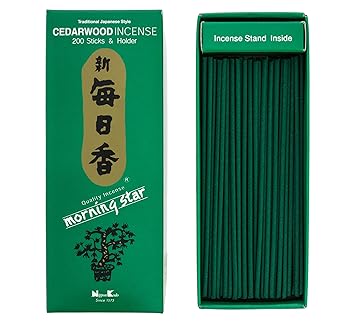
A grounding scent burned briefly before journaling marks the transition from ordinary time into intentional time and brings the root chakra’s earthy energy into the space. Cedarwood incense is particularly aligned with root chakra work — warm, woody, stabilizing. Palo santo is lighter and sweeter. Either, used in a ventilated space, supports the quality of presence that deep journaling requires.

Root chakra work sometimes needs to happen from wherever the body is — not from a desk, not sitting upright, but from the couch or the bed on the days when that’s what’s available. A cushioned lap desk with a stable surface makes journaling possible in any position, removing the postural requirement that can make the practice inaccessible on harder days.
Affirmations for the root chakra
Root chakra affirmations for the chronic illness and pain body are not about denying difficulty. They are not “everything is fine” or “my body is perfect.” They are honest, specific statements about what you are moving toward — the unconditional belonging, the foundational safety, the right to be here that illness can erode and that you are in the process of reclaiming.
Speak them aloud when possible. Feel them in the lower body rather than the head — the root chakra responds to the felt sense of the words, not just their meaning. Say them while your feet are flat on the floor, or while lying down with your hands on your lower abdomen, or while holding a piece of red jasper or hematite. Say them on the hard days especially — that is when they are most needed and most powerful.
- I belong here. My body belongs here. I have a right to take up space.
- I am allowed to be here exactly as I am — not recovered, not improved, not more functional. Exactly as I am today.
- My body is my home. I am learning to live in it with more kindness.
- I am held by the earth beneath me, even when nothing else feels stable.
- My worth is not measured by my productivity, my recovery, or what I am able to do on any given day.
- I am safe in this moment. This moment is enough.
- I trust my body to communicate with me. I am learning to listen.
- I have survived everything that has come before this. That is evidence of my strength, even when I cannot feel it.
- I am grounded. I am present. I am here.
- The ground is steadier than it feels. I am more rooted than I know.
Reclaiming your sense of safety and belonging in your own body is inner work. Reclaiming your voice in the medical spaces that shape your physical care is the outer expression of the same strength. Say This: 30 Scripts for Chronic Pain Communication gives you the exact language for 30 real situations — so that the groundedness you’re building here can show up in every room that matters. Get your copy of SAY THIS here
For creating your root chakra ritual space

A dedicated tray for your root chakra altar — red jasper, a deep red candle, a small piece of black tourmaline for protection, a note with your current affirmation — keeps the practice contained and intentional. Earth tones in the tray material: dark wood, terracotta, or unfinished natural grain suits the root chakra’s earth element better than sleek or polished surfaces.

A singing bowl struck at the beginning and end of a root chakra meditation session creates an auditory ritual boundary — this time is set apart, and it begins and ends with intention. The resonant tone also produces brainwave entrainment toward calmer states, supporting the parasympathetic activation that root chakra healing requires. Strike once at the start and once at the close, and let the sound fully fade before moving on.

Nature sounds — rain, running water, forest ambience, earth sounds — support root chakra meditation and journaling by providing a consistent, non-stimulating auditory background that the nervous system reads as safe. A white noise machine or sound machine with nature sound options is a practical, daily tool for people whose living situations include environmental noise that makes stillness difficult to access.

The lower back and base of the spine — the root chakra’s physical location — is one of the most common sites of chronic pain. A flexible heating pad that can be positioned at the lower back or sacrum during root chakra meditation serves both physical and energetic purposes simultaneously: it relieves pain in the area being worked on while the warmth supports the felt sense of safety and being held that root chakra healing is working toward. Practical self-care and spiritual practice are, at their best, the same thing.
The ground is already holding you
You have been managing something genuinely hard. Not just the physical reality of chronic illness and pain — though that alone is enough — but the deeper challenge of living in a body you can’t fully trust, navigating systems that don’t fully believe you, and maintaining some thread of stability and self-worth through all of it.
That thread is the root chakra. And it is stronger than it feels on the hardest days. The fact that you are here — reading this, still reaching toward healing, still looking for the practices and the language and the framework that might help — is evidence of a root chakra that, however depleted, has not given up. That persistence is not nothing. It is the most important thing.
The practices in this post are not a cure. They are a way of tending the energetic and emotional foundation that illness strains — of returning, again and again, to the truth that you belong here, that your body is your home regardless of how difficult a home it has been, and that the ground beneath you is steadier than it feels. That steadiness is what the rest of this series builds upon.
From the foundation of the root — from safety, grounding, and the reclaimed right to exist — we move next into the territory of pleasure, creativity, and the joy that chronic illness and pain can make it hard to access but can never fully extinguish. The sacral chakra is where we go from here.
Next in the LOVEOWE Chakra Series: The Sacral Chakra — Reclaiming Pleasure, Creativity, and Flow When Your Body Makes Everything Harder